
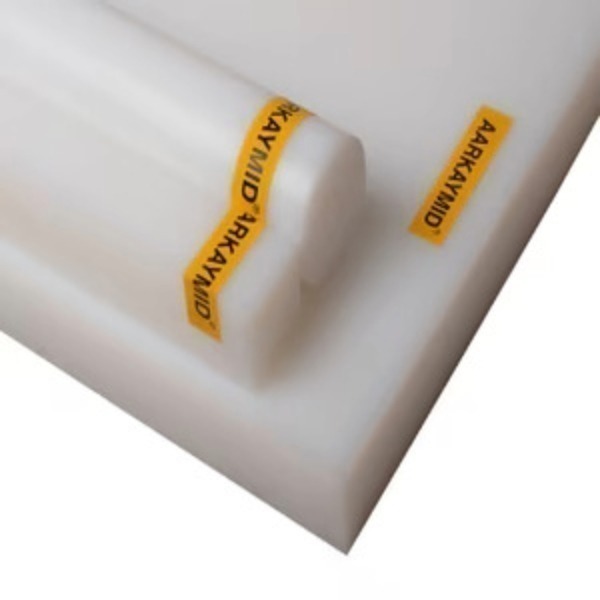
Precision machinery depends on components that behave predictably under repeated movement, contact and loading. POM can be relevant when low friction, stiffness, wear behaviour and machinability need to be balanced.
The usefulness of POM Components depends heavily on their function. Gears, rollers, guides, bushes and spacers can all impose different demands on the material. A rotating gear may require attention to tooth loading and wear, while a guide may place greater emphasis on sliding behaviour and dimensional control.
POM is often considered for precision-machined parts because its combination of mechanical properties and relatively low friction can support moving assemblies. However, temperature, load, speed and mating-material conditions still need to be reviewed before final selection.
One practical way to improve specification quality is to identify the component's dominant operating condition. If friction is the principal concern, the evaluation should focus on contact and movement. If dimensional accuracy is more critical, thermal and environmental conditions may deserve greater attention.
For machinery manufacturers and maintenance teams in Ahmedabad, a technical enquiry should ideally include a drawing, component function, operating temperature, load and movement conditions. These details allow material suitability to be considered alongside machining requirements.
POM should also be compared with alternatives when the service environment demands properties beyond its intended application range. Material selection should follow the actual duty rather than familiarity with a particular polymer.
For precision component requirements in Ahmedabad, provide the component function and operating conditions to Classic Polymers & Resins for an application-led assessment.