
A polyurethane plate is useful only when its grade, hardness, dimensions and service conditions match the part you are making. By the end, you will know which polyurethane plate uses justify one material family, when another plastic or metal is safer, and what evidence to request before standardising it across precision components.
Key takeaways
- Match polyurethane hardness to load, impact, abrasion and deformation risks.
- Choose polyurethane when wear resistance and cushioning matter more than heat resistance.
- Control machining tolerances, edge quality and thickness before approving a working part.
- Request the exact polyurethane grade, hardness scale, tolerance and test documents.
What a polyurethane plate becomes in a working part
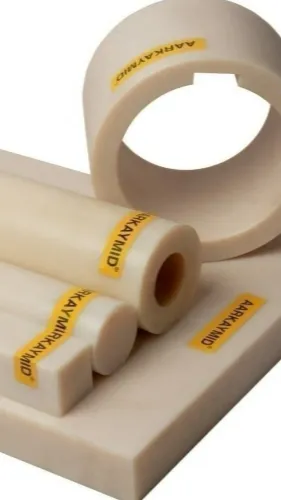
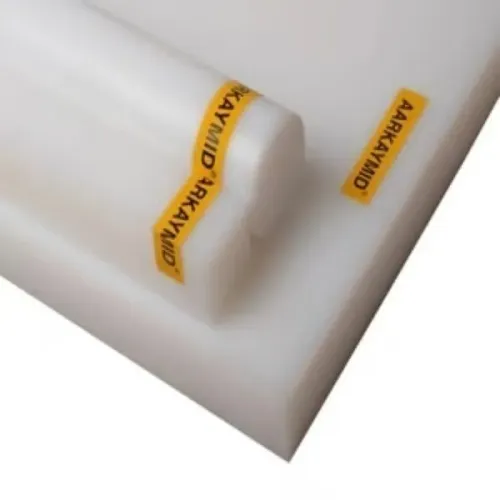
A polyurethane plate is flat stock that becomes a working part after sawing, drilling, milling or waterjet cutting. The same sheet can become a wear strip, chute liner, scraper blade, gasket, guide pad, bumper or cushioning block, with the final geometry directing how it carries force.
Each polyurethane plate use converts a material property into a specific duty:
- A chute or hopper liner receives repeated impact from bulk material, then sheds sliding abrasion.
- A conveyor wear strip carries contact pressure while limiting noise and vibration.
- A scraper blade needs a compliant edge that maintains contact without damaging the belt or surface.
- A guide pad supports a moving member under bearing pressure and intermittent sliding.
- A die-protection pad absorbs impact and distributes clamping force across a broader area.
- A seal or gasket compresses against a mating face and must recover after release.
- A bumper or isolation pad converts impact energy into controlled deformation.
Specify the load, not just “toughness.” Record contact pressure or compressive force, impact energy or drop height, sliding speed, counterface roughness, cycle count and exposure to oil, water or heat. These conditions determine whether abrasion, compression set, tearing or frictional heating causes failure.
Hardness helps define the starting grade, but identify the scale: Shore A and Shore D are not interchangeable, so do not compare their numbers directly.
For precision parts, separate the cast polyurethane plate’s thickness and flatness tolerance from the finished-part tolerance; machining a controlled blank can remove molded skin, cure gradients and stress before critical dimensions are established.
Choose hardness, then verify the forces that cause failure
Choose Shore hardness as a starting point, not as the specification. Use Shore A for softer, more flexible grades and Shore D for harder grades; never compare a Shore A number directly with a Shore D number.
ASTM D2240 defines the indentation test, but two plates with the same reading can differ sharply in tensile strength, tear resistance, abrasion loss and compression set.
| Failure demand | What to assess | Why hardness alone fails |
|---|---|---|
| Compression | Compression set, creep and load at operating temperature | A pad that supports a static load can permanently flatten under sustained pressure |
| Impact | Resilience, tensile strength and tear resistance at the impact temperature | A hard surface can still crack or split at a notch |
| Abrasion | Application-specific wear under load, speed, counterface roughness and lubrication | Frictional heating can overwhelm a good generic abrasion result |
| Tear | Tear strength, edge design and cut resistance | A drilled hole or sharp corner can turn a small cut into a running split |
For an industrial polyurethane plate, match the grade to the dominant force, then request evidence for the actual duty:
- State load, contact area, dwell time and temperature for compression.
- State impact energy, strike frequency and minimum temperature for impact.
- State pressure, sliding speed, mating material, surface roughness and lubrication for abrasion.
- State edge geometry, hole locations and expected cuts for tear.
Request the complete grade data sheet and application-specific wear or compression results. Intermittent impact and sliding wear suit many polyurethane parts, but continuous high-temperature sliding demands a separate heat-and-friction review.
Where polyurethane beats other materials—and where it does not
Choose polyurethane when the part must absorb impact, resist abrasion and retain grip without the brittleness of a hard plastic. Specific polyurethane plate uses include chute liners, conveyor wear strips, screening parts, bumpers and vibration pads; each benefits from resilience, tear resistance and damping.
| Material | Choose polyurethane for | Choose the alternative when |
|---|---|---|
| UHMW-PE | Impact, sliding wear and a non-brittle liner | Very low friction, strong chemical resistance or continuous high-speed sliding dominates |
| HDPE | Better abrasion resistance, impact absorption and load-bearing wear | Low cost, chemical exposure and simple low-friction service matter more |
| Nylon | Tough, quiet contact parts with higher resilience | Greater stiffness, dimensional stability or continuous-temperature capability is needed |
| POM | Shock-absorbing guides and wear parts | Precision, rigidity, low moisture uptake and low friction are primary |
| Rubber | Higher load-bearing wear and tear resistance | Maximum flexibility, very soft sealing or a known rubber compound fits the exposure |
| Metal | Impact protection with damping and lower noise | High stiffness, tight load deflection, heat transfer or extreme temperature controls the design |
Polyurethane plate uses become poor choices when sustained heat, frictional heating or dimensional stability controls failure. Do not select a grade without checking:
- Continuous temperature, because creep and compression set increase under heat.
- Oils, fuels, solvents, cleaners, acids or bases against the exact formulation and exposure time.
- Sliding speed, contact pressure, counterface roughness and lubrication through application-specific wear testing.
- Long-term stiffness, because viscoelastic polyurethane creeps under sustained compression while metal, POM or nylon may hold dimensions better.
Make the plate precise through machining and dimensional control
Control the blank before you chase a finished dimension. Cast polyurethane plate can contain a molded skin, cure gradient and residual stress; removing one face can release movement or expose a different surface condition. Establish thickness, flatness and parallelism from a prepared reference blank, then separate the supplier’s raw-plate tolerance from your finished-part tolerance.
Use these controls during cutting and machining:
- Sawing: support the plate continuously, use a sharp blade and leave machining allowance; unsupported stock can flex and produce a tapered cut.
- Drilling: clamp close to the hole, clear chips and control feed so rubbing does not melt or smear the bore.
- Milling: use rigid workholding, sharp tools, light enough engagement to prevent deflection and active heat removal; friction can soften the surface and shift dimensions.
- Waterjet-cutting: verify kerf width, taper, edge finish and support conditions before accepting the programmed profile.
Inspect critical parts for thickness, flatness, parallelism, hole position and profile after the part reaches its specified temperature. A spacer, spring element or compressed seal also needs a creep and compression-set check; ASTM D395 provides a recognised compression-set method for rubber-like materials.
One polyurethane plastic plate family can reduce inventory, cutting setups and qualification records across liners, pads, seals and impact parts. Do not treat identical colour or nominal hardness as identical specification: record polymer family, cure system, reinforcement, colourant, hardness, thickness and test data for each approved grade.
Sustained compression, flexing, hydrolysis, oil or heat can demand another formulation—or another material.
Specify the exact grade before you standardise one material family
Do not approve one polyurethane family for liners, seals, pads and wear parts until the supplier names the exact formulation: cast polyurethane elastomer or TPU, polyester or polyether chemistry, Shore hardness, cure system, reinforcement and colorant. A polyurethane plate is not a universal grade; those choices change machining, hydrolysis resistance, compression set and service temperature.
1. Request the grade code, hardness scale and tolerance, then confirm that the value suits each load. Never compare Shore A directly with Shore D.
2. Request the continuous and peak service-temperature limits, including the temperature at the seal or liner, not just ambient air. Ask how heat changes hardness and compression set.
3. List every fluid and exposure condition: oil, fuel, solvent, detergent, acid, alkali, concentration, temperature and contact time. Require immersion or compatibility data for the named grade; a generic polyurethane chart is only screening evidence.
4. For wet service, ask whether the chemistry is hydrolysis-resistant and request test conditions, duration and retained properties. Polyester and polyether grades must not be treated as interchangeable.
5. For compressed seals, pads and spacers, request compression-set results to ASTM D395 at the stated temperature, time and strain, plus creep data if load remains constant.
6. Require a technical data sheet, certificate of analysis for the supplied lot, traceable batch number and sample test report. Confirm that Classic Polymers & Resins will identify the same grade on quotations and replacement plates.
A pu plate supplier that cannot provide this evidence has not supplied a standard; it has supplied a colour and hardness. Qualify the industrial polyurethane plate in the actual fluid, temperature and load before reducing inventory.
Frequently asked questions
What does a polyurethane plate become in a working part?
After sawing, drilling, milling or waterjet cutting, it can become a wear strip, chute liner, scraper blade, gasket, guide pad, bumper or cushioning block.
How do you choose polyurethane plate hardness?
Start with the load, impact, abrasion, compression and deformation forces that could cause failure, then verify the selected hardness against those conditions.
Where does polyurethane plate outperform other materials?
It suits applications that need wear resistance, impact absorption, flexibility, sealing or noise reduction. It is a weaker choice when continuous high temperature, extreme dimensional stability or rigid structural strength dominates.
How do you make a polyurethane plate precise after machining?
Define thickness and dimensional tolerances, account for material flexibility during cutting and fixturing, and inspect holes, edges, flatness and finished dimensions.