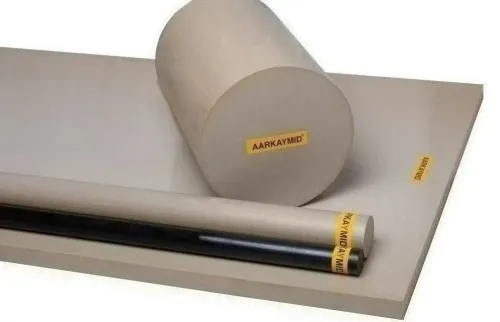

Material-handling equipment can place repeated loads and friction on rollers, guides, bushes and wear parts. Cast nylon can be evaluated where reduced weight and suitable mechanical performance are valuable.
The selection of Cast Nylon Components should reflect the actual load, movement, contact area, impact and environmental conditions. A roller, guide and stationary wear pad may all require different considerations.
Component geometry is particularly important when replacing a metal part. Matching the original dimensions does not necessarily guarantee equivalent performance because polymers and metals respond differently to loading, temperature and contact conditions.
Moisture should also be considered for nylon-based components. Where dimensional clearances are important, environmental exposure may influence the design requirements and expected component behaviour.
For equipment manufacturers and maintenance teams in Mumbai, the previous component's failure mode can provide valuable selection information. Excessive wear, deformation, impact damage or dimensional changes each point toward different material requirements.
Cast nylon can be useful for selected mechanical applications, but applications involving demanding temperatures, aggressive chemicals or unusual loading may require comparison with other engineering polymers.
A replacement decision becomes more reliable when the engineering team first identifies why the existing component is failing and then selects material properties that address that problem.
For material-handling component requirements in Mumbai, share the application history and operating conditions with Classic Polymers & Resins for a replacement-material assessment.