
Cracking, leaks, swelling, ovality and sudden brittle breaks can originate in the resin, extrusion process, installation, environment or service load. You will be able to separate those causes, measure the failed tube correctly and define a replacement specification that addresses pressure, temperature, moisture and fitting conditions.
Key takeaways
- Inspect the fitting, cut edge and stress points before blaming the nylon grade.
- Separate installation damage from extrusion defects using visual checks and dimensional measurements.
- Control moisture exposure and match the nylon grade to temperature, chemicals and pressure.
- Measure wall thickness, ovality and bore size before judging pressure capability.
Start with the failure symptom, not the material name
Cracking, leakage or a sudden loss of burst strength points to a different investigation than ovality or swelling. Start with the visible failure and inspect the tube, fitting, cut edge and processing history before blaming the nylon grade. These extruded nylon tube problems frequently begin at a local stress concentration.
| Symptom | Investigate first | What it suggests |
|---|---|---|
| Cracks or splits at fittings | Ferrule torque, insertion depth, sharp tube edge and support insert | Local crushing, installation damage or moisture-softened nylon |
| Bubbles, splay or foaming | Resin moisture, dryer performance and pellet history | Hydrolytic chain scission during extrusion; check drying before changing the die |
| Leakage with pull-out | Actual OD and wall, fitting compatibility and unsupported span | Poor tube-to-fitting engagement, creep or a fitting not qualified for that tube |
| Ovality, kinks or dimensional drift | Die calibration, cooling, storage, bend radius and machining heat | Uneven extrusion, residual stress, bending damage or heat-induced distortion |
| Brittle sections or low burst strength | Moisture history, wall thickness and temperature exposure | Degraded molecular weight, thin spots or service conditions beyond the design |
| Abrasion or premature wear | Clamp pressure, movement, contact edge and surface finish | External damage rather than an intrinsic material defect |
Separate installation damage from a tube-wide defect by comparing failed and unused sections, measuring OD, ID and wall around the failure, and inspecting the cut and fitting marks. A short-time hydraulic result under ASTM D1599 is a failure test, not a service-pressure rating; creep, heat, moisture and cyclic loading can govern nylon tube part failures.
Separate installation damage from an extrusion or material defect
A leak that appears only beside a fitting, clamp or cut end points first to installation damage, not an unsuitable nylon. Inspect the failed area before cleaning or trimming it: look for a sharp crescent, clamp imprint, whitening, scoring, burrs, heat smear or a flattened cross-section. These marks show where an external force acted.
Use a controlled comparison rather than relying on appearance:
- Test an uninstalled tube from the same lot at the same pressure, temperature and conditioning state. If it passes while the fitted part leaks, focus on assembly.
- Reinstall a fresh sample using the specified bend radius, fitting insertion depth, clamp load and support spacing. A repeatable failure at the same assembly feature identifies the installation condition.
- Measure OD, wall thickness and ovality beside the failure and at unaffected locations. A local dent or thin wall near a clamp supports handling damage; matching eccentricity along several samples supports an extrusion issue.
- Section the area under magnification. Scratches, crushed layers and a directional crack indicate installation; voids, inclusions, weld interfaces or a continuous thin quadrant indicate material or processing trouble.
- Repeat leak and burst tests after conditioning. A failure before installation, or repeated failures across correctly assembled samples, warrants resin-moisture and extrusion review rather than a fitting change.
This sequence makes extruded polyamide troubleshooting less speculative. Record lot, drying history, machining method and assembly torque; aggressive cutting can add heat, smear the surface and expose residual stress, creating extruded nylon tube problems that resemble a defective grade.
Account for moisture, grade selection and environmental exposure
For extruded polyamide troubleshooting, select PA 6, PA 12 or PA 66 against the conditioned service environment, not the dry datasheet alone. Absorbed water plasticises nylon, changing stiffness, toughness, dimensions and sealing behaviour; the ranking between grades can reverse above ambient temperature.
| Polyamide | Tube-service tendency | Moisture and exposure consequence |
|---|---|---|
| PA 6 | Balanced stiffness, toughness and chemical resistance; suitable for moderate temperature service | Takes up more water than PA 12, so modulus, dimensions and pressure performance shift after conditioning |
| PA 12 | Lower moisture uptake, good flexibility, impact resistance and dimensional stability | Better for humid or wet service, but its lower stiffness and temperature capability can limit pressure retention |
| PA 66 | Highest dry stiffness and higher melting and heat capability than PA 6 | Moisture still reduces stiffness and changes dimensions; crystallisation, grade and additives control actual stability |
Inspect failed tubes in the same moisture state used for service. Record resin or tube moisture content, test temperature, ID, OD and wall thickness, then compare dry and conditioned specimens; a tube measured immediately after extrusion is not equivalent to one after water conditioning.
A wet tube that looks intact can crush under a fitting or lose long-term pressure capacity.
Specify the exact grade, reinforcement or stabiliser package, conditioning state and allowable moisture range. Request grade-specific creep, temperature, pressure-cycle and chemical-compatibility data at the intended humidity, fluid exposure and temperature.
If extrusion shows bubbles, splay, foaming or brittle sections, check pellet moisture and drying performance before changing the die; hydrolytic chain scission can contribute to nylon tube part failures.
Measure the tube before judging its pressure capability
A tube's pressure capability is meaningless until you record its OD, ID, wall thickness and ovality in the same conditioning state and temperature used for service. Measure several points along the length, and record cut length, bend radius, unsupported span and fitting engagement; one end measurement can hide extrusion drift or local crushing.
Record:
- PA grade, moisture condition or conditioning time, test temperature, and whether the tube was annealed; remeasure after full cooling and conditioning because annealing can change OD, ID, wall, ovality and length.
- Internal pressure, external pressure or vacuum, pressure cycles, hold time, temperature cycles and ramp rates.
- Fitting type, ferrule torque, support insert, insertion depth and clamp locations. Soft, wet nylon and excessive torque can create failures that look like a weak tube.
- Fluid, chemical exposure, abrasion, bend movement and required service life.
| Service question | Measurements and conditions to use | Do not infer |
|---|---|---|
| Positive pressure | ID, wall, temperature, moisture state, pressure cycle and hold time | A short-time burst result is a service rating; ASTM D1599 is a short-time hydraulic failure test |
| Vacuum or external pressure | OD, wall, ovality, span, supports, worst temperature and conditioning state | Collapse resistance from positive-pressure strength |
| Cyclic duty | Dimensions after cycling, temperature and moisture changes, fittings and bend radius | Life from one burst test |
Use the worst recorded state in the design calculation. The thin-wall screen, hoop stress ≈ pressure × diameter ÷ (2 × wall thickness), ignores creep and local stress, so it cannot clear nylon tube part failures by itself.
Turn the investigation into a qualified replacement specification
Approve a replacement only after the supplier converts your failure evidence into measurable acceptance criteria. “Nylon tube” is not a specification: request grade-specific data for the actual diameter, wall, moisture state, temperature and duty cycle.
1. Confirm the polymer grade, additives, colourant and resin batch. Request dry and conditioned tensile strength, modulus, elongation, creep and burst data at your maximum continuous and peak temperatures.
2. State the conditioning state for every dimension. Require ID, OD, wall thickness and ovality measured after the complete drying, cooling and conditioning cycle, at a named temperature and moisture condition.
3. Verify the extrusion controls behind bubbles, splay or brittle sections. Ask for resin moisture before extrusion, dryer dew point, drying time and temperature, melt pressure, residence time and wall-thickness mapping.
4. Qualify annealing separately if it is proposed. Require evidence from the actual grade, OD and wall, with ID, OD, ovality and length recorded after annealing, cooling and conditioning; annealing can change the dimensions you are trying to control.
5. Test the tube with the production fitting, not a metal-tube assumption. Specify insertion depth, ferrule torque, support inserts, bend radius, pull-out force, leak pressure and pressure-cycle results at temperature.
6. Demand traceability: certificate of analysis, batch number, dimensional inspection records, test methods and retained samples. Classic Polymers & Resins can help compare candidate polyamide grades, but approval still depends on this evidence.
Use the same checklist during extruded polyamide troubleshooting. Reject a sample that passes a room-temperature burst test but fails the conditioned, assembled and temperature-cycled test your part actually experiences.
Related products
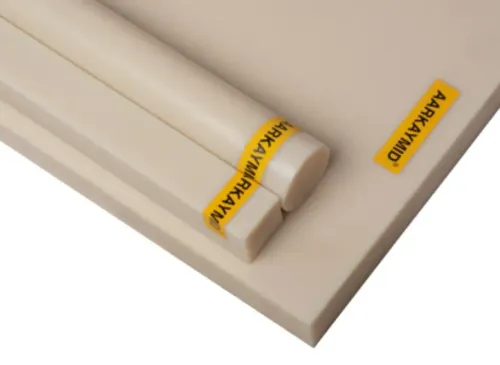
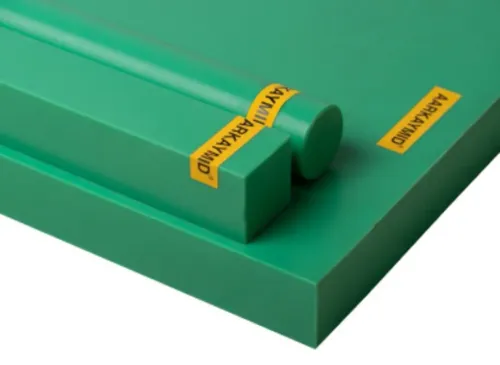
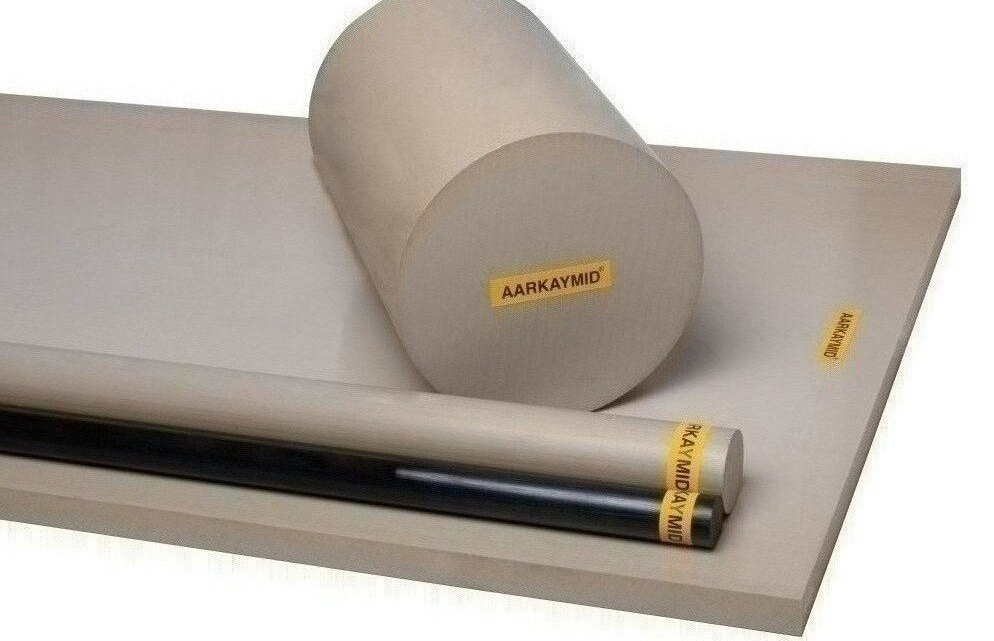
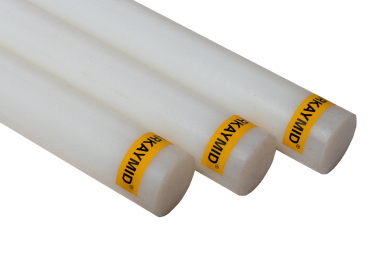 | Polyamide Extruded Extruded Polyamide / Nylon Plastic material, is available in standard stock shapes such as sheets, rods or tubes and can be machined to requirement. View product → |
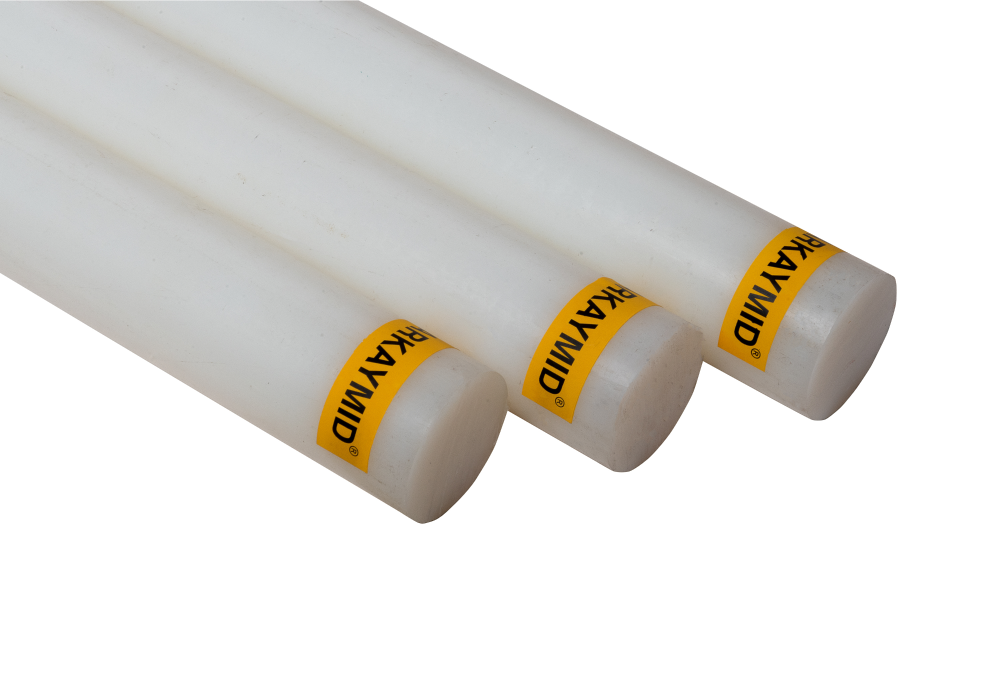 | Polyamide - Extruded Nylon PA 6 Polyamide - Extruded Nylon PA 6 Extruded Polyamide / Nylon Plastic material, is available in standard stock shapes such as sheets, rods or tubes and can be machined to requirement. |
Frequently asked questions
How do you investigate extruded nylon tube problems?
Start with the failure symptom, then inspect the tube, fitting, cut edge and processing history for local stress concentrations.
How can you separate installation damage from an extrusion or material defect?
Compare the damage location and pattern with fitting contact, cutting marks, bend radius, dimensions and production records.
How do moisture, grade selection and environmental exposure affect nylon tube failures?
Check moisture conditioning, nylon grade, operating temperature, chemicals, ultraviolet exposure and pressure against the tube specification.
What should you measure before judging an extruded nylon tube’s pressure capability?
Measure outside diameter, bore, wall thickness, ovality and cut-end condition, then compare the results with the qualified design basis.
How do you specify a qualified replacement for a failed nylon tube?
Document dimensions, grade, pressure, temperature, chemical exposure, bend radius, fittings, moisture condition and required inspection records.