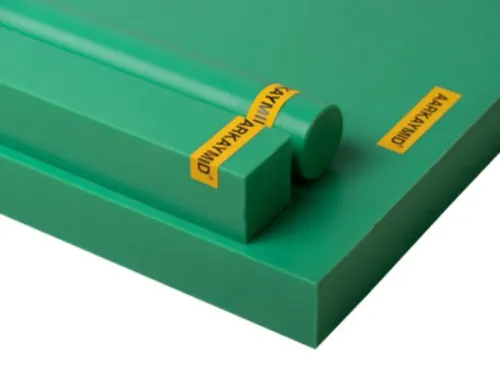

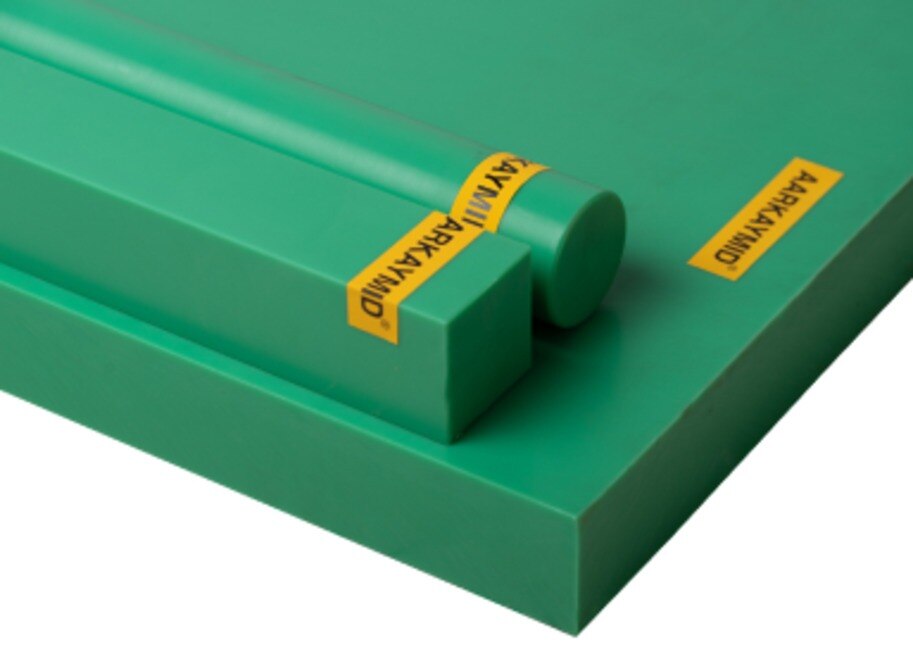
A worn green UHMW-PE liner is not automatically a material failure: the pattern can point to trapped grit, impact, excessive pressure, heat, misalignment or a mounting defect. By the end, you will be able to document the damage, identify its cause, choose between repair and replacement, and decide when polyurethane is a better fit.
Key takeaways
- Map grooves, gouges and thinning before removing the UHMW part.
- Check alignment, fasteners, clearances, contamination and counterface roughness.
- Replace severely damaged parts; reposition them only when wear is uneven.
- Compare UHMW green with a polyurethane plate under the actual load.
Read the Wear Pattern Before Removing the Part
The wear pattern tells you more than the colour of the plastic. Uniform thinning across the working face points to distributed abrasion, while parallel grooves indicate a rough or contaminated counterface. Deep gouges, chipped corners and impact dents indicate loose grit, hard particles or repeated impact rather than ordinary sliding wear.
1. Photograph the part before cleaning or removal. Retain images of transfer film, embedded grit, discoloured areas and fresh scratches; washing can erase the evidence that separates abrasion from chemical attack or frictional heating.
2. Measure the original thickness against the remaining thickness at a fixed grid of locations. Record groove depth, edge loss, pits, cracks, flatness and any dish-shaped or extruded area, then note operating hours or cycles, load, speed, temperature and contamination.
3. Treat one-sided wear as a geometry clue. Wear concentrated at one edge, corner or fastener line points to misalignment, shaft runout, conveyor tracking, uneven support, weld distortion or a local gap.
4. Look for deformation as well as material loss. A loose, bowed or permanently compressed part indicates creep from sustained contact pressure, heat or inadequate support, even when abrasion is modest.
5. Inspect the mating surface for burrs, rough welds, corrosion, embedded particles and an unsuitable counterface. These observations make uhmw wear troubleshooting more reliable and expose uhmw green wear problems that replacing the resin alone will not solve.
Green identifies colour, not a performance grade; confirm the resin specification before blaming the material.
Inspect the Installation, Not Just the Plastic
A green UHMW-PE part is not automatically the cause of wear. Uniform thinning across a correctly supported surface points to material wear; thinning at fasteners, corners or one edge points to poor mounting, misalignment or excessive local pressure. A bowed liner indicates creep from sustained compression or heat, not simply an undersized wear allowance.
- Photograph the part before washing it. Grit, transfer film and product residue can identify abrasion, adhesive wear or contamination.
- Measure remaining thickness on a fixed grid and compare it with the original thickness. Record groove depth, flatness, operating hours or cycles, load, speed and temperature.
- Check the mating surface with a straightedge. A bent rail, rough weld, sharp step or unsuitable counterface can concentrate pressure and cut the polymer.
- Inspect fasteners and holes for tight spots. Clamping UHMW-PE without room for movement can create cracks, edge crumbling or accelerated wear around the hardware.
- Look for trapped hard debris, chemical exposure and cleaning heat. Steam, hot product, frictional heating or a nearby heater can reduce stiffness and accelerate creep.
Treat green as a colour, not a performance grade. Confirm the resin formulation, virgin or reprocessed content, stabilisers and certificate before comparing service life. UHMW wear troubleshooting should match the actual load, speed, temperature, counterface and contamination; ASTM G137 ranks sliding wear comparatively, but it does not predict your assembly’s life by itself.
Choose Between Repositioning, Repair, Replacement and Redesign
A part with one worn face does not automatically need replacement. For uhmw green wear problems, compare remaining thickness with the original drawing, measure groove depth on a fixed grid, and check whether the mounting allows a second usable face.
| Option | What it means | When it applies |
|---|---|---|
| Rotate or reposition | Present an unworn face or shift the contact zone | Use when wear is localized, the part is symmetrical, and the remaining section is flat and structurally sound |
| Machine a fresh surface | Remove scoring or transfer film while preserving thickness | Use for shallow uniform wear when enough material remains; machining cannot restore lost load capacity |
| Add a wear strip | Protect only the high-wear contact area | Use when one corner, entry point, or impact zone fails faster than the rest; fasteners must sit below the sliding surface |
| Attempt green UHMW part repair | Patch or rebuild the damaged area | Reserve for noncritical, shallow damage after checking the repair method; ordinary adhesive is unreliable on UHMW-PE because its surface energy is very low |
| Replace the liner | Install a new part with verified dimensions and grade | Choose this for deep gouges, cracks, edge crumbling, permanent bowing, excessive thinning, or fastener pull-through |
| Redesign the assembly | Change load path, alignment, clearance, counterface, or restraint | Choose this when the same location fails again, heat or contamination persists, or contact pressure exceeds the grade’s capability |
Before ordering, give Classic Polymers & Resins the resin grade, original thickness, operating temperature, load, speed, counterface and contamination history. That information prevents a thicker green sheet from hiding the same failure. A replacement is wasted if misalignment, trapped grit or a sharp corner remains.
Related products
 | UHMW Green UHMW is an exceptional material known for its lightweight nature and non-hygroscopic properties. View product → |
 | UHMW Black UHMW is an exceptional material known for its lightweight nature and non-hygroscopic properties. View product → |
Know Which Repair Methods Work for UHMW-PE
A bolted replacement or mechanically retained wear strip is usually the most dependable green UHMW part repair; rebuilding the worn face with adhesive is not. UHMW-PE’s low surface energy defeats ordinary structural adhesives, and solvent cleaning alone does not create a reliable joint.
Before welding, confirm the resin grade and filler rod; “green” identifies colour, not wear performance or food-contact status.
| Method | Suitable use | Limitation |
|---|---|---|
| Patching | Fast, mechanically captured cover over localized damage | Adhesive-only patches can peel; exposed edges catch product and the patch changes clearance. |
| Thermal or extrusion welding | Joining compatible UHMW-PE where a groove can be prepared and heat controlled | Use matching filler rod and consolidate fully. Porosity, residual stress and a weaker heat-affected zone can remain; wear resistance and dimensions will not automatically match the original. |
| Bonding | Noncritical, lightly loaded attachment with a validated surface-treatment system | Ordinary epoxy or polyurethane adhesive is a poor choice. Heat, moisture, peel and creep can release the joint. |
| Bolting | Replacing a strip or liner with accessible backing and controlled clamp load | Holes reduce section, fasteners loosen under creep, and proud heads create wear points. Use countersunk hardware only where the design supports it. |
| Machining | Removing scoring, restoring flatness or cutting a fresh face | It cannot restore lost thickness. Excessive stock removal leaves a flexible part and may destroy molded-in tolerances. |
A weld or patch suits a controlled temporary repair; choose a replacement when load, alignment, food-contact status or wear life matters.
Compare UHMW Green With a Polyurethane Plate at the Actual Load
A polyurethane plate is the better replacement when the actual failure is impact, rebound, or loss of grip—not simply because an abrasion chart ranks it higher. UHMW-PE remains the stronger choice for low-friction sliding, tight clearances, and a liner you need to machine accurately.
| Condition at the interface | Better candidate | Why |
|---|---|---|
| Repeated impact, shock loading, or a need to cushion contact | Polyurethane wear component | Elastic recovery absorbs energy and reduces rebound |
| Continuous sliding under moderate pressure where drag matters | UHMW-PE | Low friction limits drive force and heat |
| Abrasive material pressing into a compliant surface | Polyurethane, after load testing | Resilience can resist gouging, but softness can increase drag |
| High point load, narrow gap, or rigid alignment requirement | UHMW-PE or harder polyurethane | Soft polyurethane can deflect into the gap, creep, and wear rapidly |
Do not treat a polyurethane plate as a drop-in substitute. Compare a named grade and hardness against the specific UHMW grade at the real load, contact area, speed, temperature, mating material, oil or chemical exposure, and contamination level. Check deformation and hysteresis heating; hydrolysis matters in hot, wet service.
ASTM G137 can rank sliding wear, but it does not predict service life by itself. A qualification test must reproduce the interface.
Record thickness loss, groove depth, operating cycles, and temperature before changing materials. That uhmw wear troubleshooting record shows whether polyurethane addresses the mechanism or merely hides an overloaded, misaligned assembly.
Frequently asked questions
What does the wear pattern reveal about a green UHMW part?
Uniform thinning suggests distributed abrasion, parallel grooves point to a rough or contaminated counterface, and gouges or dents indicate grit, hard particles or impact.
What should you inspect before repairing a UHMW-PE part?
Inspect alignment, fasteners, mounting holes, clearances, trapped debris, the mating surface and the load path instead of examining the plastic alone.
When should you reposition, repair or replace a worn UHMW part?
Reposition an unevenly worn part when unused surface remains, repair only minor damage with a sound mounting base, and replace parts with deep gouges, cracks, missing material or lost dimensional clearance.
How does a polyurethane plate compare with green UHMW?
Compare both materials at the actual load, impact level, sliding speed, temperature, chemical exposure, pressure distribution and required coefficient of friction.
Related products
 | UHMW White UHMW is an exceptional material known for its lightweight nature and non-hygroscopic properties. View product → |
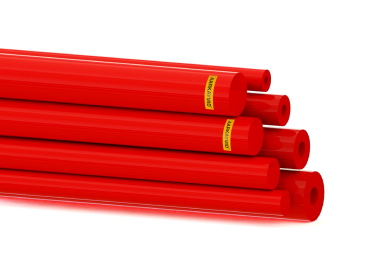 | PU (Polyurethane) Polyurethane is an extraordinary elastomeric material renowned for its exceptional physical properties. View product → |