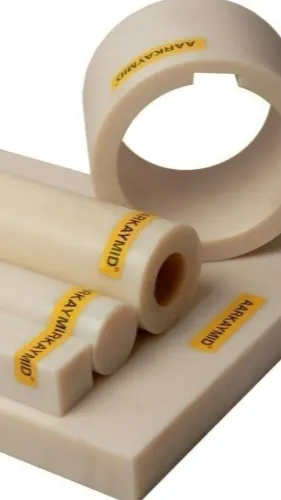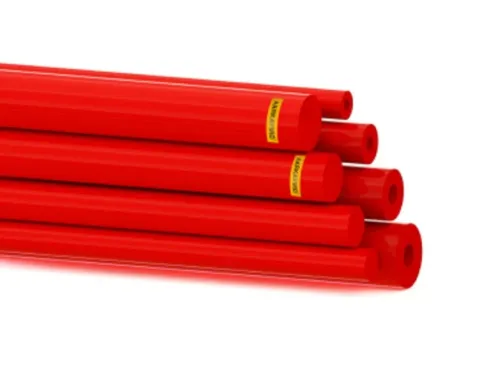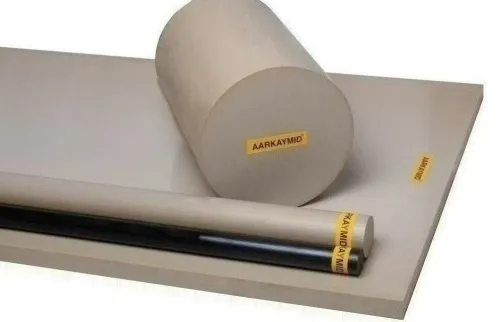

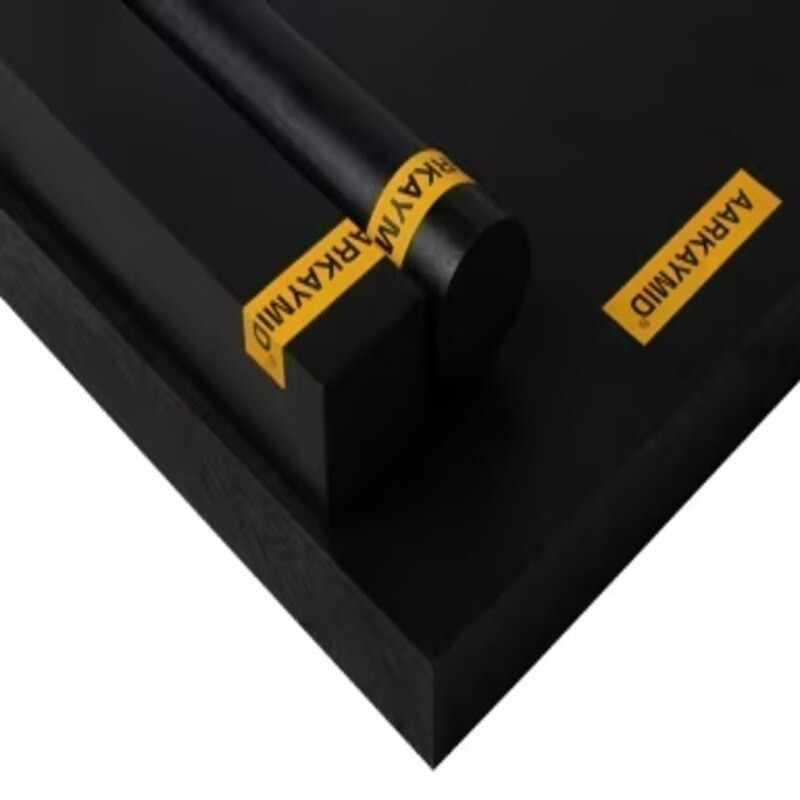
A UHMW tube is a hollow polymer section chosen mainly for sliding, abrasion and impact service, not as a universal replacement for metal pressure pipe. By the end, you will be able to distinguish UHMW, UHMWPE and ordinary polyethylene, match the material to a specific application, identify its limits and give a UHMW white tube supplier the specifications needed for a usable quote.
Key takeaways
- Use UHMW tube for low-friction sliding, guiding and wear protection.
- Do not treat white color as proof of polymer grade or performance.
- Check temperature, pressure, chemical exposure, abrasion and dimensional stability before selection.
- Specify inside diameter, outside diameter, length, tolerance, grade and inspection documents.
What a UHMW Tube Is—and How It Differs from Pipe, Hose and Sleeve
A UHMW tube is a rigid, hollow cylindrical section made from ultra-high-molecular-weight polyethylene. It is usually selected for sliding, guide and wear service, not as a default pressure vessel.
| Tube | A rigid hollow section for guides, spacers, bushings, rollers or wear surfaces |
|---|---|
| Pipe | A pressure-oriented hollow component designed around pressure, wall stress and containment |
| Hose | A flexible conduit for movement, bending or fluid transfer |
| Liner | A flat or formed layer fitted to protect a chute, vessel or other surface |
| Sleeve | A part fitted over or inside another component to reduce wear, friction or damage |
UHMW, UHMWPE and UHMW-PE describe the same material family. Ordinary polyethylene is broader and includes lower-molecular-weight grades such as HDPE, so “polyethylene” alone does not identify UHMW performance.
Commonly published UHMW molecular masses range from about 3–9 million g/mol. Those exceptionally long molecular chains improve abrasion resistance, impact toughness and sliding behavior: particles struggle to cut the surface, impacts spread through the material, and contacting parts move with low friction. A uhmw white tube therefore suits wear guides more naturally than pressure piping.
The same chain length makes conventional melt processing difficult. Manufacturers may ram-extrude or mold tubes, or machine them from solid stock; the route affects size, tolerances, internal stress, length limits and cost. A pressure application needs a separately verified design—UHMW tube’s typical role is replaceable wear and guide service.
UHMW White Tube Uses and the Reason Color Is Not the Specification
Natural-white UHMW tube suits sliding and wear duty, not a pressure claim. Common uhmw white tube uses include wear sleeves, guide tubes, spacers, rollers, bushings, bearings, chute liners, conveyor wear parts and low-friction material-transfer guides.
- Food-handling equipment: guide tubes, spacers, bushings and transfer guides.
- Packaging lines: rollers, bearings, wear sleeves and conveyor parts for film, cartons and bottles.
- Chemical handling: guide tubes, bushings and chute liners, after substance-specific compatibility checks.
- Mining: chute liners, wear sleeves and conveyor parts exposed to abrasive solids.
- Bulk-material conveying: rollers, bearings, spacers and low-friction guides that reduce adhesion.
- Textile machinery: yarn-contact guide tubes, bushings, rollers and wear sleeves.
- General mechanical equipment: replaceable sleeves, bearings, spacers and guides where abrasion dominates.
Natural white makes visual inspection easier, keeps equipment looking clean and helps you spot contamination, scoring or surface damage. Black, green and other colors can identify a modified compound, or simply reflect a manufacturer’s coding choice.
White does not prove FDA compliance, food-contact suitability, UV stabilization, antistatic performance or chemical compatibility. For direct food contact, request the exact compound, a food-contact declaration and traceability documents. For chemicals, check compatibility against the named substance, its concentration and operating temperature; the word polyethylene is not enough.
These uhmw white tube applications require the grade to match the hazard, not the color.
Which Operating Conditions Decide Whether UHMW Tube Will Work
A tube that resists abrasion at 20 °C can still fail under sustained heat or clamp force. Check continuous and peak temperature first: UHMW-PE serves approximately from −200 to +80 °C, while melting begins around 130–136 °C. Elevated-temperature service requires a creep and dimensional-growth check, not a room-temperature strength comparison.
Before selecting it, record:
- Abrasion severity, impact energy, load type and allowable deformation.
- Unsupported length, wall thickness, sliding speed and counterface finish.
- Moisture, chemical exposure, and whether electrical insulation is required.
- Compression, clamp force, internal pressure or bearing load, plus duration and safety factor.
Creep is progressive deformation under sustained stress. Evaluate wall thickness, duration, temperature and safety factor together; tensile strength alone cannot establish a pressure rating. Dry friction values around 0.1–0.2 depend on load, speed, counterface, finish, lubrication and test method, so they are not universal design constants.
| Condition | What to verify | Selection consequence |
|---|---|---|
| Temperature | Continuous and peak exposure; thermal growth | Heat can loosen fits or accelerate creep |
| Load and span | Pressure, bearing load, clamp force and unsupported length | Excess deflection or collapse can follow |
| Chemistry | Concentration and temperature of acids, alkalis, salts or solvents | Strong oxidizing acids and some aromatic or halogenated solvents can attack it |
| Static control | Combustible dust, electronics or static-sensitive conveying | Choose conductive or antistatic grade instead of natural white UHMW |
| Application fit | uhmw white tube applications and moisture conditions | Confirm dimensional stability and allowable deformation |
How UHMW Tube Compares with PTFE, Nylon, Acetal, Polyurethane and Metal
Another material is better when stiffness, temperature stability, pressure containment or dimensional precision matters more than sliding wear and impact toughness.
| Material | Choose it over UHMW when | Trade-off compared with UHMW |
|---|---|---|
| PTFE | Extreme chemical resistance or continuous high-temperature service governs. | Lower abrasion and impact performance can make replacement wear parts less economical. |
| Nylon | You need greater stiffness and bearing-load capacity. | Moisture absorption changes dimensions, while impact and sliding service are less forgiving. |
| Acetal (POM) | You need dimensional stability, clean machining and precision fits. | Some service conditions expose its lower impact tolerance. |
| Polyurethane | Elastic impact absorption and strong abrasion performance are priorities. | It brings higher friction, different stiffness, and processing constraints for certain tube designs. |
| Metal | Rigidity, pressure capability, temperature stability and tight tolerances control the design. | Metal adds weight, corrosion concerns and harder contact; galling or wear can create costly replacement and downtime. |
UHMW is the practical choice when low friction, particle abrasion, impact toughness and replaceable wear parts dominate. UHMW white tube uses include guide sleeves, bushings, rollers, spacers and material-transfer guides.
Avoid it when high stiffness, precision bearing loads, tight thermal tolerances, high-pressure containment or long-term dimensional stability at heat governs the design. Severe impact, ultraviolet exposure, static control or food contact can require a modified grade rather than standard natural UHMW. Verify the compound, because white color alone proves none of those properties.
What to Specify When Buying UHMW White Tube
A usable UHMW white tube quote starts with service and dimensional data, not the words “UHMW white tube” alone.
1. Give the UHMW white tube supplier the grade and compound identification, then state whether you need natural or white material. Specify inside diameter, outside diameter or wall thickness, length, dimensional tolerances and straightness. Also provide operating temperature, pressure or applied load, unsupported span, chemical exposure, food-contact requirement and required traceability documents.
2. Ask whether the tube is ram-extruded, molded or machined from solid stock. The process route affects available sizes, internal stress, tolerances, length limits and cost. Short runs and unusual dimensions may favor machining; repeat standard sizes usually favor an extruded or molded tube.
3. Define how the tube will stay in place. Polyethylene’s low surface energy makes ordinary adhesive bonding unreliable, so interference fits, flanges, clamps or threads are usually more dependable. If adhesive bonding is unavoidable, require a polyethylene-qualified system and documented surface treatment.
4. If machining is required, request sharp-tool practice, adequate chip clearance and heat control. UHMW can spring back after cutting, form burrs and melt locally, leaving a bore that fails to fit even when the nominal dimensions look correct.
Classic Polymers & Resins, a Mumbai-based manufacturer, supplier and exporter, can match material selection, custom dimensions or machined polymer components to the stated load, temperature and chemical conditions.
Related product
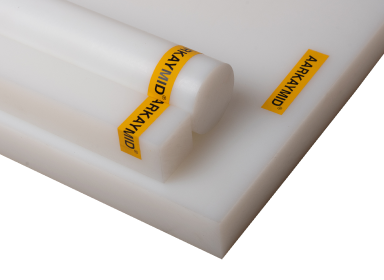 | UHMW White UHMW is an exceptional material known for its lightweight nature and non-hygroscopic properties. View product → |
Frequently asked questions
What is a UHMW tube?
A UHMW tube is a rigid, hollow cylindrical section made from ultra-high-molecular-weight polyethylene. It is used mainly for sliding, guiding and wear service rather than as a default pressure vessel.
What are common UHMW white tube uses?
Common uses include wear liners, guide tubes, bushings, conveyor components, material-handling equipment and protective sleeves where low friction and abrasion resistance matter.
Does white color identify the UHMW tube specification?
No. White identifies appearance, not polymer grade, molecular weight, additives, dimensions or operating performance. Request the material designation and technical data.
When will UHMW tube work in service?
Check the tube against operating temperature, pressure, chemical exposure, abrasion, impact, speed, load and dimensional stability. Select another material when those conditions exceed UHMW polyethylene’s limits.
What should you specify when buying UHMW white tube?
Specify inside diameter, outside diameter, wall thickness, length, dimensional tolerances, material grade, color, operating conditions, required finish, quantity and inspection or compliance documents.