
A single-grade nylon part can crack, swell, warp, seize or wear rapidly without any polymer being mixed into it. By separating moisture, heat, geometry, machining, installation and traceability causes, you can identify whether the resin is at fault and reproduce the failure before ordering a replacement.
Key takeaways
- Measure moisture and dimensions at the same conditioning state.
- Trace heat, load, chemicals and duty cycles before replacing the part.
- Verify the exact polyamide MC grade, lot number and additives.
- Reproduce the service cycle before redesigning or blaming mixed materials.
Start with the failure symptom, not the material label
A cracked, swollen, warped, brittle, worn or seized part does not prove mixed materials. Narrow the industrial nylon failure by matching the symptom to its service history, geometry, machining and conditioning state before blaming the resin.
1. Preserve the failed part and record the damage before cleaning it. Photograph fracture surfaces, wear patterns, transfer film, edge loading and the counterface. A bearing that seized under excessive pressure-velocity duty, misalignment, poor finish, heat buildup or abrasive contamination has an application clue, not automatic evidence of material mixing.
2. Measure moisture and dimensions in the same condition. Weigh and measure the failed part and an unused part from the same lot after controlled conditioning, then repeat after drying. Absorbed water can increase dimensions, reduce stiffness and yield strength, and increase elongation; dry inspection alone can make a correctly made PA6 part look defective.
3. Trace heat, load and environment through the part’s history. Record temperature, speed, load, humidity, chemicals, electrical exposure, assembly interference and coolant use. Inspect machined surfaces for smearing, local melting or a brittle heat-affected layer caused by dull tools, rubbing or poor chip removal.
4. Verify the exact grade, lot and additives. Obtain the resin designation, additive package, colour, reinforcement, conditioning state and certificate. Compare the failed part with retained material using mass, hardness, microscopy and, where available, FTIR or DSC; also check for oil, solvent, coolant, metal debris or absorbed water.
5. Reproduce the duty cycle before replacing or redesigning the component. Test retained or newly machined samples under the same load, speed, temperature, humidity and counterface condition. A replacement can repeat a geometry, installation or delayed-creep failure.
Measure moisture and dimensions in the same condition
A dry part can pass inspection yet appear weak, oversized or warped after absorbing water. Polyamide 6 takes up moisture; that water increases mass and dimensions while reducing tensile modulus and yield strength, and increasing elongation and impact toughness.
The result can resemble poor machining, mixed material or a failed design. A bushing may tighten as its bore changes, while a gear or guide loses stiffness and creeps under load. Friction and electrical insulation performance can also shift with moisture content.
Measure the failed part and an unused part from the same lot under the same condition:
- Record the conditioning temperature and relative humidity.
- Weigh each part before and after conditioning to identify moisture uptake.
- Measure critical dimensions at the same temperature, including bore, outside diameter, thickness and flatness.
- Test hardness and mechanical properties only after recording the moisture state.
- Compare results with samples dried or conditioned to the expected service state.
ASTM D570 and ISO 62 provide water-absorption procedures, but they do not reproduce every operating environment. Condition samples to the humidity and temperature the component actually sees, then repeat the dimensional and functional checks.
Comparing a dry-machined part with a humidified production part can manufacture an apparent material defect where moisture-driven swelling or softening is the real cause.
Trace heat, load and environment through the part’s history
A polyamide MC stabilized part can fail even when it contains one correctly identified material. Trace temperature, load, processing history and exposure from casting or machining through installation and service; each can change performance without changing polymer identity.
| Condition | What to verify | Failure it can produce |
|---|---|---|
| Heat plus sustained load | Part temperature, contact pressure, speed, PV value, duty cycle and allowable deformation | Progressive softening, creep, clearance loss or seizure; a short-term tensile result cannot predict service life |
| Moisture, steam or hot water | Humidity, immersion temperature, exposure time and conditioning state during inspection | Swelling, reduced stiffness and strength, warping, altered friction or cracking under load |
| Casting and machining history | Whether the MC part was cast, machining stock removal, wall thickness, shrinkage and skin-to-core differences | Distortion or changed clearances when an injection-moulded PA6 replacement is judged equivalent by polymer name |
| Chemical and cleaning exposure | Acid or alkaline concentration, temperature, duration, solvent contact and cleaning cycle | Hydrolysis, embrittlement, surface cracking or loss of dimensions |
| Assembly and environment | Misalignment, press-fit interference, UV exposure, vibration and trapped heat | Local stress cracks, uneven wear, brittle surfaces or premature deformation |
Record the hottest measured part temperature, not only ambient air temperature, and calculate load at that temperature. Compare the failed part with a part conditioned to its actual service moisture and temperature state; ASTM D570 or ISO 62 procedures help quantify absorption, but neither replaces service-state conditioning.
A “stabilized” label alone does not identify whether the protection targets heat, UV, hydrolysis or lubrication.
Verify the exact grade, lot and additives
Prove identity through traceability and testing, not through the part’s colour or appearance. A purchase description that says only “polyamide MC stabilized” cannot distinguish heat stabilization from UV stabilization, internal lubrication, reinforcement, or a different nylon grade.
Request and record:
- The exact resin designation, cast or injection-moulded form, colour, additive package, reinforcement, and conditioning state
- The supplier’s certificate of analysis, batch number, production date, and certificate-to-lot link
- The original purchase order and machining records, including any material substitution or rework
- A retained unused piece from the same lot, kept with the failed part’s chain-of-custody record
Compare the failed piece with that unused piece before cleaning, grinding or cutting away the fracture. Measure mass, density where practical, dimensions, hardness and moisture; inspect cross-sections by microscopy. FTIR can confirm a polyamide family, while DSC can reveal melting behaviour and crystallinity, but neither test alone proves the complete additive package.
Ask the laboratory to check for filler, lubricant and stabilizer content using a method suited to the suspected additive.
This MC nylon troubleshooting step also separates a wrong grade from reprocessed mixture or non-polymer contamination. Oil, coolant, solvent, metal debris and absorbed water can alter performance without changing the resin identity.
Classic Polymers & Resins can help you specify the exact Polyamide MC stabilized grade and lot evidence rather than accepting “nylon” as the material record.
Related products
 | Polyamide MC Stabilized Grade Cast Polyamide 6 (Cast Nylon 6 or PA 6) is one of the most versatile thermoplastics. View product → |
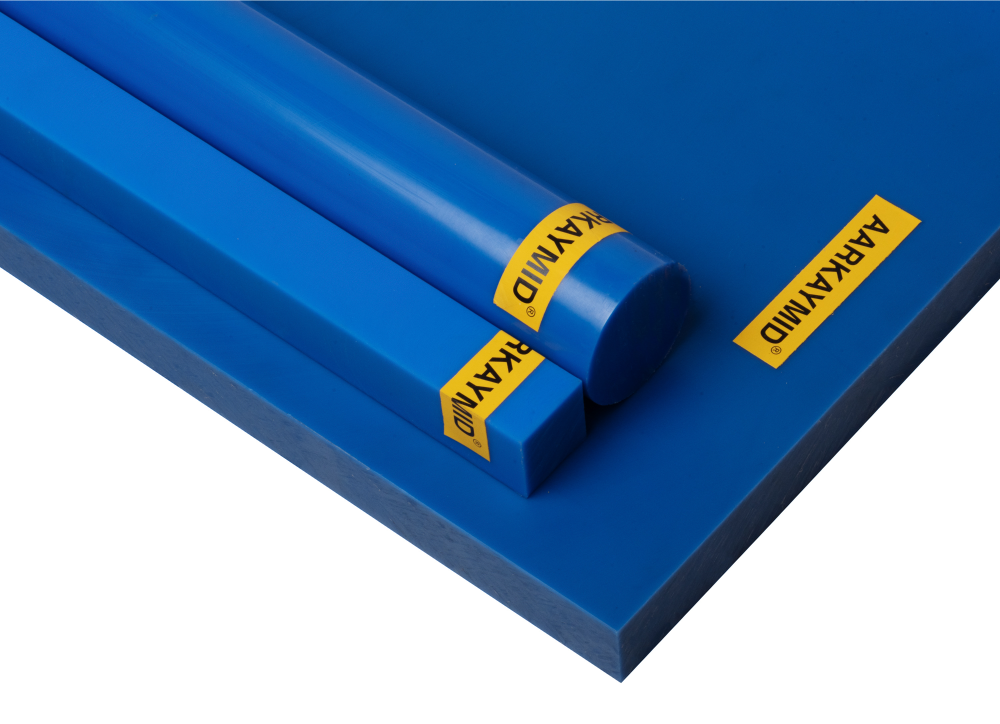 | Polyamide - Cast Heat Stabilised Grade Polyamide - Cast Heat Stabilised Grade Cast Polyamide 6 (Cast Nylon 6 or PA 6) is one of the most versatile thermoplastics. View product → |
Reproduce the duty cycle before redesigning or replacing the part
Do not redesign or replace the component until you have run the failed duty cycle on a retained sample or a newly machined sample from the verified lot. A replacement can hide creep, moisture conditioning, thermal damage, residual stress, or a geometry-driven failure that will return.
1. Preserve the fracture surface and photograph wear, cracking, transfer film, seizure marks, and counterface damage before cleaning. Record load, speed, temperature, humidity, chemicals, alignment, clearances, lubrication, and assembly force.
2. Measure the failed part’s moisture state, mass, critical dimensions, and hardness. Condition comparison samples to the service state; use ASTM D570 or ISO 62 for water-absorption testing, then measure at the same temperature and moisture condition.
3. Calculate pressure-velocity duty for bushings, rollers, gears, or guides. Test sustained load at the actual contact pressure, speed, temperature, cycle duration, and allowable deformation; tensile strength alone cannot predict creep or service life.
4. Inspect machining sequence, surface finish, sharp corners, grooves, press fits, and alignment. Rough-machine large blanks, allow controlled relaxation, then finish-machine; uneven stock removal can cause bowing, ovality, and delayed cracking.
5. Compare a correctly identified control with the failed part under the same cycle. If both fail, investigate design, installation, heat removal, contamination, or counterface finish before blaming mixed material.
This mc nylon troubleshooting sequence separates an industrial nylon failure caused by service conditions from a resin problem and gives stabilized nylon parts a repeatable acceptance test before release.
Frequently asked questions
What should you check first when a stabilized nylon part fails?
Start with the failure symptom—cracking, swelling, warping, brittleness, wear or seizure—then compare it with the part’s geometry, machining and service history.
Why must you measure moisture and dimensions in the same condition?
Polyamide MC changes dimensions as it absorbs or loses moisture. Measure both moisture content and part dimensions after the same conditioning period to avoid misleading comparisons.
Which service conditions matter in an industrial nylon failure investigation?
Trace the part’s heat exposure, mechanical load, chemicals, humidity, speed, lubrication and complete duty cycle from installation through failure.
What should you verify before replacing a failed polyamide MC part?
Confirm the exact grade, lot number, stabilizer or additive package, machining records and supplier documents, then reproduce the duty cycle before redesigning or replacing it.