
An XLU tube is not automatically a pressure-rated hose, and “XLU” alone does not identify a universally standardised material. You will be able to match the tube to its load, speed, moisture, temperature and chemical conditions, then specify dimensions, tolerances and documentation that make the part suitable for service.
Key takeaways
- Confirm load, temperature, chemicals, speed and moisture before choosing XLU.
- Calculate bore, wall thickness and machining allowance from the finished part.
- Compare XLU with PTFE, acetal, bronze and other bearing materials.
- Reject XLU when temperature, chemical exposure or dimensional stability exceeds its limits.
What an XLU tube is and where industry uses it
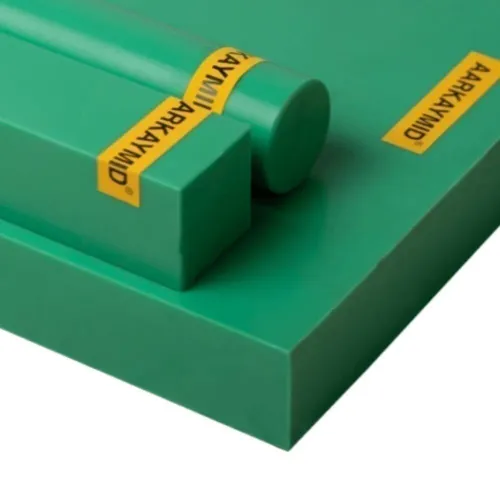
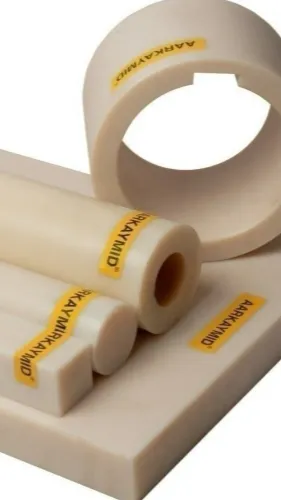
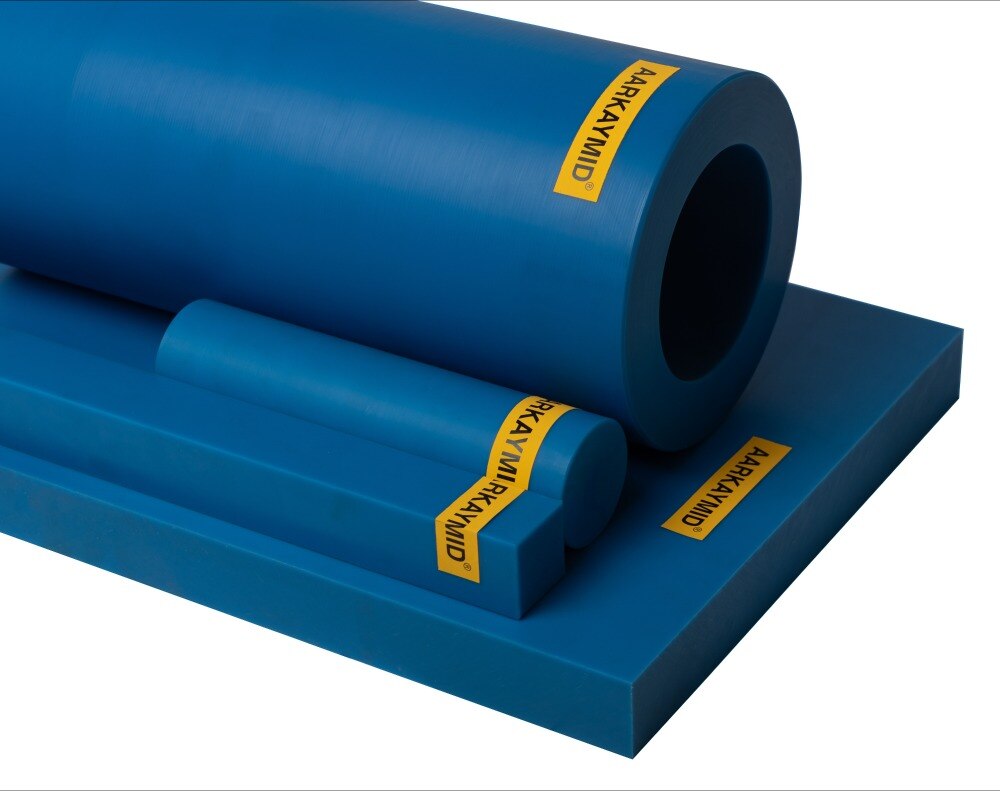
An XLU grade engineering plastic tube is usually hollow, semi-finished cast polyamide 6 stock. The polymer is cast into a mould to form a tube blank, which is later cut and machined into a finished part.
XLU is commonly a manufacturer-specific grade name, not a universal ISO or ASTM designation, so the name alone does not define performance.
| Option | What it means | What to verify |
|---|---|---|
| Cast tube blank | Bore and faces are machined from cast stock; internal stress, wall variation and machining allowance depend on the casting process | Finished bore accuracy, concentricity, roundness and available sizes |
| Solid PA 6 rod | A bore is drilled or bored into solid material, creating different stress redistribution and material waste | Bore stability, tool access and remaining wall thickness |
| Extruded nylon tube | Continuous tube produced through a die, with different orientation, stress, wall uniformity and size limits | Extrusion tolerances and whether the profile supports the required machining allowance |
For a practical specification, check:
- Request the exact polymer family, XLU variant, reinforcement or internal-lubricant package, density, hardness, moisture condition and current technical data sheet.
- Practical XLU grade tube uses include bushes, bearing sleeves, wear rings, rollers, pulleys, spacers, guides, wear liners, suitable seals and low-noise sliding parts.
- Treat the blank as a machining stock component, not a hose. Use it for pressure conveyance only when the supplier provides tubing manufacture, pressure testing, temperature, permeability and compatibility data.
Match the tube to the complete operating duty
Choose the tube from the complete operating duty, not tensile strength alone. For xlu engineering tube applications such as bushes, guide rings and rollers, calculate projected bearing pressure and sliding or oscillating speed, then check the combined pressure–velocity (PV) value, duty cycle and allowable wear.
- Record shaft hardness, surface roughness, alignment and edge loading; a misaligned shaft can overload one tube edge and cause rapid bore growth.
- State whether contamination is intermittent dust, abrasive grit or liquid. Abrasive particles require seals, grooves or another way to exclude grit because trapped particles create three-body wear.
- Specify lubrication, including dry running, grease, oil or water exposure. Do not assume a lubricated grade has the toughness needed for impact.
- Check heat rejection at the actual speed and load. High-speed or high-load service needs verified PV data, not a catalogue tensile value.
| Condition | Likely outcome | Selection response |
|---|---|---|
| Intermittent contamination and moderate sliding | Low noise and useful wear life | Consider XLU for bushes, sleeves, rollers and wear rings |
| Impact or shock loading | Brittle or highly lubricated grades can chip | Choose a tougher formulation |
| High speed or high load | Friction heat can soften the polymer and increase wear | Verify PV data and provide heat rejection |
| Pressure-bearing tube | Hoop stress, creep and leakage become design risks | Review it separately from a sleeve |
| Pneumatic or fluid handling | Permeation, swelling or rupture can stop service | Require pressure, temperature, permeability and compatibility data |
For electrical insulation, verify dielectric performance at the actual voltage, frequency, temperature and moisture exposure. Before selecting a grade, check temperature cycling, water contact, chemical concentration, exposure time and applied stress; PA 6 moisture uptake can change clearance, stiffness, friction and wear.
Calculate dimensions, clearance and wall suitability before ordering
Begin with the finished part, not the stock size. Your polyamide XLU tube selection must define the outside diameter, inside diameter, wall thickness, length, concentricity, roundness and straightness required after machining.
1. Request the manufacturer’s wall-thickness variation and eccentricity before adding machining allowance. A large bore can remove the thinnest side of a cast tube and leave an unusable wall. Specify the moisture state for dimensions, the installation condition and the operating clearance.
2. For a pressure-containing cylindrical wall, use the preliminary check t ≥ pD/(2Sη − p). Here, t is wall thickness, p is design pressure, D is the outside or mean diameter defined by the design method, S is allowable long-term stress at operating temperature and moisture, and η is joint or design efficiency.
This is only a screening calculation; final design must include creep, temperature, cyclic pressure, end loads, buckling, chemical exposure, safety factors and supplier test data.
3. For a bush, sleeve, bearing or spacer, do not use a pressure-vessel formula as the main selection method. Calculate bearing pressure, PV duty, shaft clearance, thermal expansion and expected moisture swelling instead.
4. PA 6 absorbs water, changing diameter, stiffness, strength, friction and wear. A bore machined dry can tighten after humid storage or immersion, while a metal shaft can lose clearance as temperature rises.
5. Inspect the finished part after thermal stabilisation and confirm dimensions at the actual moisture state before installation.
Compare XLU with other tube and bearing materials
Choose the material against the failure you expect, not against a generic “engineering plastic” label. The wrong comparison can produce creep, seizure, impact cracking, excessive wear or a distorted bore.
| Material | Main comparison | Failure mode or duty |
|---|---|---|
| XLU | Stiffer than UHMW-PE and easier to support during machining | Use for rigid sleeves and wear parts; verify creep, temperature and wear at the actual load |
| UHMW-PE | Lower moisture uptake, strong impact tolerance and very low-friction sliding | Prefer it when impact and low friction dominate; check creep and temperature limits |
| POM or Delrin | Better dimensional stability and lower moisture sensitivity | Prefer tight wet tolerances; XLU can suit tougher wear duties |
| Polyurethane | Elastic, shock-absorbing and abrasion-resistant | Prefer flexible rollers; choose XLU for a rigid machined sleeve |
| PTFE | Very low friction, chemical resistance and non-stick behaviour | Expect creep, low stiffness and difficult machining; consider filled PTFE or a lined bearing |
| Metal bushing | Handles high load, speed and heat rejection | Requires lubrication or a compatible bearing system and transmits more noise |
| Extruded nylon | Economical continuous tube stock with consistent profiles | Compare against cast XLU’s grade-specific wear modification, wall quality and machining allowance |
Friction-reducing additives can sacrifice toughness, ductility, strength, surface finish or bonding performance. Select the formulation around the dominant risk: wear, impact, creep, temperature, chemical attack or dimensional change. A polymer bearing that runs quietly without routine grease is not automatically suitable for high-load, high-speed service.
Recognise unsuitable service and write a procurement-ready specification
Reject an xlu grade engineering plastic tube as the default for continuously hot water, steam, strong acids, strong oxidisers, submerged service, or high humidity without a defined swelling allowance. Do not use it for tight-tolerance wet assemblies, very low-friction or non-stick duties, or pressure service without verified design data.
Confirm every limit in the current grade datasheet: XLU has no universal temperature or pressure rating. Chemical compatibility depends on concentration, temperature, exposure time, stress and formulation; request immersion or stress-cracking results for critical service.
Machine the tube with sharp tooling, controlled feeds and speeds, staged roughing and finishing, and thin-wall support where needed. Inspect the bore after cooling and stabilisation because cutting heat and residual stress can distort it.
Write the purchase record as a controlled condition, not merely “polyamide XLU tube selection”:
- Polymer designation, exact XLU variant, reinforcement or lubricant package, manufacturing method, colour and moisture condition.
- Finished outside diameter, inside diameter, length, tolerances, concentricity, roundness and straightness.
- Lot traceability, current technical datasheet and required test certificates.
- Wear, pressure–velocity (PV), hardness, moisture-conditioning, chemical-compatibility and pressure data when relevant.
Classic Polymers & Resins can confirm whether available stock is a cast tube blank or a tested pressure tube, preventing a machining blank from being specified as fluid-conveyance tubing.
Related products
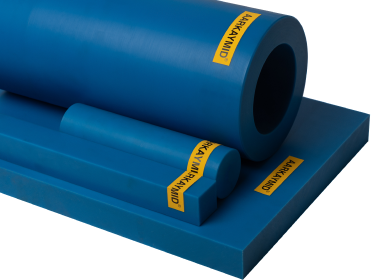 | Polyamide XLU Grade Cast Polyamide 6 (Cast Nylon 6 or PA 6) is one of the most versatile thermoplastics. View product → |
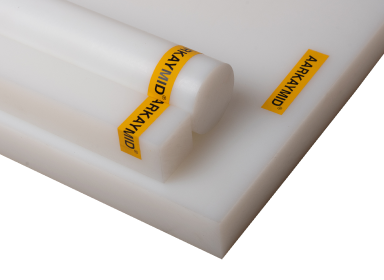 | UHMW White UHMW is an exceptional material known for its lightweight nature and non-hygroscopic properties. View product → |
Frequently asked questions
What is an XLU grade engineering plastic tube?
It is usually hollow, semi-finished cast polyamide 6 stock formed in a mould, then cut and machined into a finished component.
Where are XLU tubes used?
Industries machine them into bushes, sleeves, rollers, spacers, guides and other parts requiring mechanical strength, wear resistance and electrical insulation.
How do you select the right XLU tube dimensions?
Define the finished bore, outside diameter, length, load, speed and machining allowance, then check wall thickness and running clearance.
When is XLU unsuitable?
Choose another material when continuous temperature, chemical exposure, moisture-driven expansion, speed or load exceeds the tube's verified service limits.