
A tube becomes a useful manufactured component only after its geometry, material response and machining route match the load, temperature, moisture and mating parts. By the end, you will be able to map tube stock to a specific component, define the dimensions that control fit and decide when nylon, another polymer, metal or a moulded part is the safer choice.
Key takeaways
- Match tube stock to load, motion, temperature and chemical exposure.
- Machine extruded tube into sleeves, bushings, spacers and guide rings.
- Specify running clearance after accounting for moisture and temperature changes.
- Compare polymer choice and machining route before requesting a quotation.
Match Tube Stock to the Component You Need
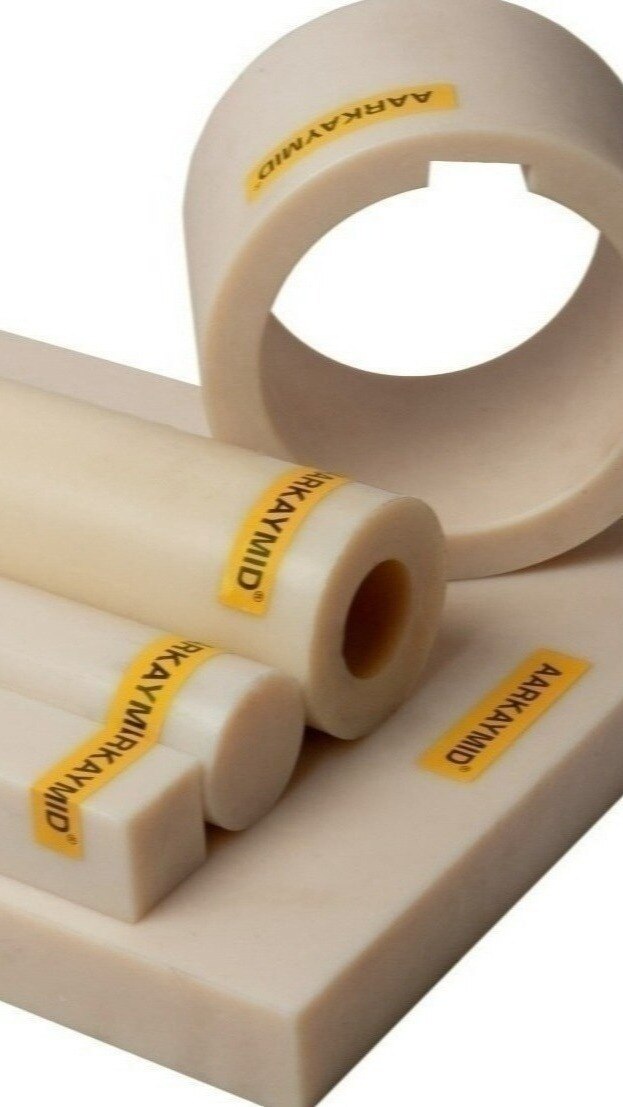
Bushings, sleeves, spacers, rollers, guide rings, cable guides, bearing isolators, seals, wear liners and fluid-routing liners can all start as extruded engineering plastic tube. Choose the tube by the component’s load, motion, temperature, chemical exposure and required fit—not by shape alone.
| Component | Tube-stock requirement | What the finished application requires |
|---|---|---|
| Bushing or bearing sleeve | Wear-grade PA6, PA12, PEEK or PTFE with adequate wall | Check contact pressure, sliding speed, counterface roughness, lubrication and PV limits; “self-lubricating” does not prove bearing life. |
| Spacer or standoff | Stable tube with sufficient wall for facing and drilling | Control length, bore, outside diameter and compressive creep so clamping does not shorten or split the part. |
| Roller | Thick-wall, round stock in a wear-resistant grade | Balance the bore, control runout and confirm that impact, shaft load and speed will not distort the tube. |
| Guide ring or cable guide | Low-friction, smooth-bore stock with a clean surface | Specify bend radius, edge finish and resistance to abrasion; sharp grooves can cut cables. |
| Insulator or bearing isolator | Electrically insulating polymer with the required temperature rating | Verify dielectric clearance, moisture exposure and dimensional stability. |
| Fluid liner or seal | Chemically compatible PVDF, PTFE, PEEK or nylon stock | Confirm fluid temperature, permeation, wall thickness and connection method; nylon tube is not automatically pressure-rated. |
| Wear insert or liner | Thick enough to machine grooves and retain a continuous wall | Match hardness, heat resistance and wear data to the mating surface. |
These extruded engineering plastic tube applications benefit from lower waste than machining solid bar, but stock tolerances in ovality, wall thickness and concentricity consume machining allowance. Industrial nylon tube uses also require a defined moisture condition because PA6 absorbs more water than PA12, changing dimensions and stiffness.
How Extruded Tube Becomes a Finished Part
Accuracy starts with support, not the cutting tool: convert tube stock into a controlled sequence of cutting, fixturing, turning, boring, finishing and inspection. That sequence prevents the wall from collapsing or springing out of shape after release.
- Inspect the tube before machining. Measure outside diameter, inside diameter, ovality, wall thickness and straightness, then confirm that the remaining stock exceeds the final machining allowance.
- Cut blanks slightly longer than the finished part with a sharp, fine-tooth saw. Support the tube close to the cut to prevent crushing and leave enough material for facing.
- Clamp each blank in soft jaws, a close-fitting internal mandrel or an expanding arbor. Do not grip thin-wall tube directly in a hard three-jaw chuck.
- Face one end, reverse the part against a fixed stop, and face it to length. This establishes a square reference before other features are cut.
- Turn the outside diameter, then bore or ream the inside diameter. Take light cuts, use sharp tools and finish the functionally critical diameter last.
- Drill holes, cut threads, machine grooves or turn shoulders while the part remains supported. Control cutting heat; local overheating can distort the bore.
- Break sharp edges, remove burrs from both tube ends and release the part slowly. Inspect diameter, wall thickness, length, concentricity and roundness after unclamping.
For extruded nylon tube parts, record the conditioning state during inspection because moisture changes bore and outside dimensions. Successful extruded tube machining produces the specified fit after release, not merely a correct dimension while the workpiece is clamped.
Specify Fit Before Load and Moisture Change It
A tube can fit on the inspection bench and bind after installation. Define the functional diameters first: outside diameter for a housing or clamp, inside diameter for a shaft or fluid passage, wall thickness for pressure or stiffness, and finished length for axial location.
Specify these component requirements:
- Measure outside diameter, inside diameter, wall thickness, length, roundness, ovality, concentricity, straightness and surface finish.
- State which diameter controls the fit and give its tolerance separately from the other dimensions.
- Set the stock’s outside- and inside-diameter tolerances separately from the finished-part tolerances; excessive ovality or eccentricity can consume the machining allowance.
- Check the bore at several angular and axial positions, not at one convenient point.
- Inspect mating fits, thread depth, grooves and edge condition after deburring; a raised burr can defeat an otherwise correct clearance.
The inspection condition is part of the specification, especially for polyamide tube components.
| Condition | Inspection approach | Why it matters |
|---|---|---|
| Dry as machined | Record dimensions immediately after machining | Establishes a manufacturing baseline, not service fit |
| Standard conditioned state | Condition and test under ASTM D618 or ISO 291 at the stated humidity and duration | Reveals moisture-driven growth and stiffness change |
| Service-simulated state | Expose the part to its actual humidity, water, steam or washdown cycle, then remeasure | Shows whether the installed clearance will survive use |
PA6 usually absorbs more water than PA12, so a close-tolerance bushing can swell after assembly while drying causes shrinkage and higher stiffness. Design the clearance for the humidity range, or choose PA12 when dimensional stability outweighs maximum stiffness. Check bore growth, creep under load and thermal expansion before approval.
Choose the Polymer and Manufacturing Route Together
Select the polymer and manufacturing route as one decision. An extruded tube suits bushings, sleeves, spacers and liners when the required bore already resembles tube stock; moulded or cast parts suit high volumes, complex profiles or integrated features, while solid bar suits unusual geometry but creates more machining waste.
| Option | Advantages | Limits and best route |
|---|---|---|
| PA6 | High stiffness and wear resistance; economical extruded nylon tube parts | Absorbs substantial moisture, changes size and stiffness, and creeps under compression; machine and inspect after defined conditioning |
| PA66 | Stiffer and more heat-capable than PA6 | Still absorbs moisture and creeps; use extrusion plus machining only after checking long-term load |
| PA12 | Lower moisture uptake and better dimensional stability | Lower stiffness than PA6 or PA66; useful for close-fit parts exposed to humidity |
| PEEK | High continuous-temperature, chemical and wear performance | High material cost; use for severe service where moulding or machining cost is justified |
| PTFE | Very low friction and broad chemical resistance | Low stiffness and pronounced creep; avoid load-bearing interference fits |
| PVDF | Chemical resistance and purity | Lower stiffness than PEEK; choose it for aggressive or clean fluid service |
| PET | Good dimensional stability and wear | Less suitable for high heat or harsh chemical duty |
| HDPE | Low friction, chemical resistance and low cost | High creep and lower stiffness; reserve for lightly loaded guides or liners |
| Metal | Highest stiffness, temperature capability and pressure capacity | Adds mass and corrosion risk; consider it for high structural load |
| Moulded or cast polymer | Efficient for complex shapes and large volumes | Needs tooling and process control; poor choice for low quantities or tube-like parts |
Define load, temperature, humidity, chemicals, duty cycle and quantity before choosing. An extruded nylon tube is not automatically pressure-rated: verify wall thickness, connections and long-term creep, not just burst strength.
Turn the Application Into a Purchasing Specification
A production quote is incomplete without the service conditions and acceptance measurements. State the component’s function, mating parts, load, speed, temperature range, chemicals, humidity or washdown exposure, and whether it belongs to one of your extruded engineering plastic tube applications.
1. Name the polymer grade and colour, then specify stock outside diameter, inside diameter, wall thickness, length, straightness and machining allowance separately from finished-part tolerances. Identify the critical diameter; a tight bore tolerance is useless if the supplier controls only the outside diameter.
2. Provide the finished drawing with datum references, concentricity, roundness, grooves, threads, holes, edge breaks and surface-finish limits. State whether measurements apply at 23°C, after machining, or after conditioning.
3. Require a sample inspection report covering outside diameter, bore, wall thickness, length, ovality, concentricity, straightness and surface finish. Check the part against the mating shaft, housing or seal rather than approving dimensions alone.
4. Test the sample at assembly temperature and under representative load. Measure bore growth, friction, leakage, wear and permanent deformation after the planned dwell time; PTFE and other creep-prone materials can pass an initial fit check and fail later.
5. For polyamide tube components, define moisture conditioning using ASTM D618 or ISO 291, including humidity and duration. Compare dry and conditioned dimensions, stiffness and fit, because a dry-as-machined nylon sample can approve a component that grows after installation.
Ask Classic Polymers & Resins to report the extrusion stock tolerances and the machined-part results as separate records; combining them hides where the available machining allowance was consumed.
Related products
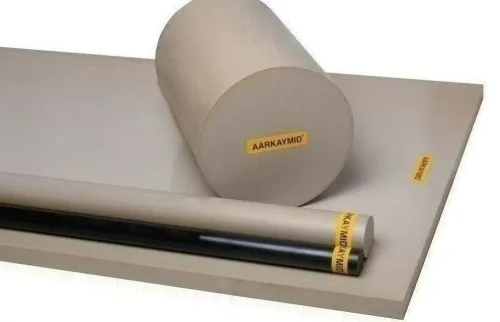
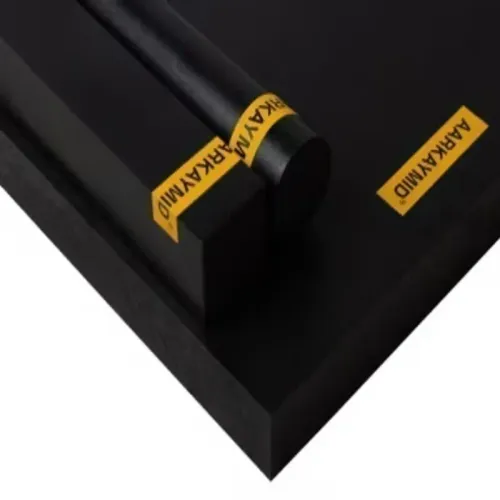
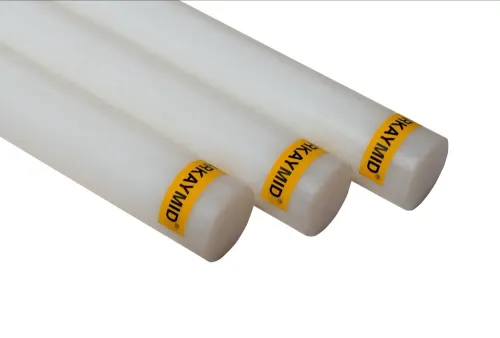
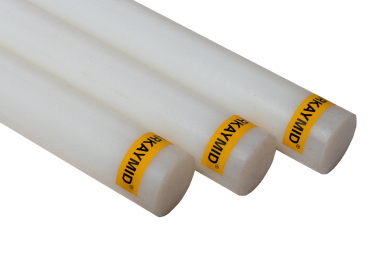 | Polyamide Extruded Extruded Polyamide / Nylon Plastic material, is available in standard stock shapes such as sheets, rods or tubes and can be machined to requirement. View product → |
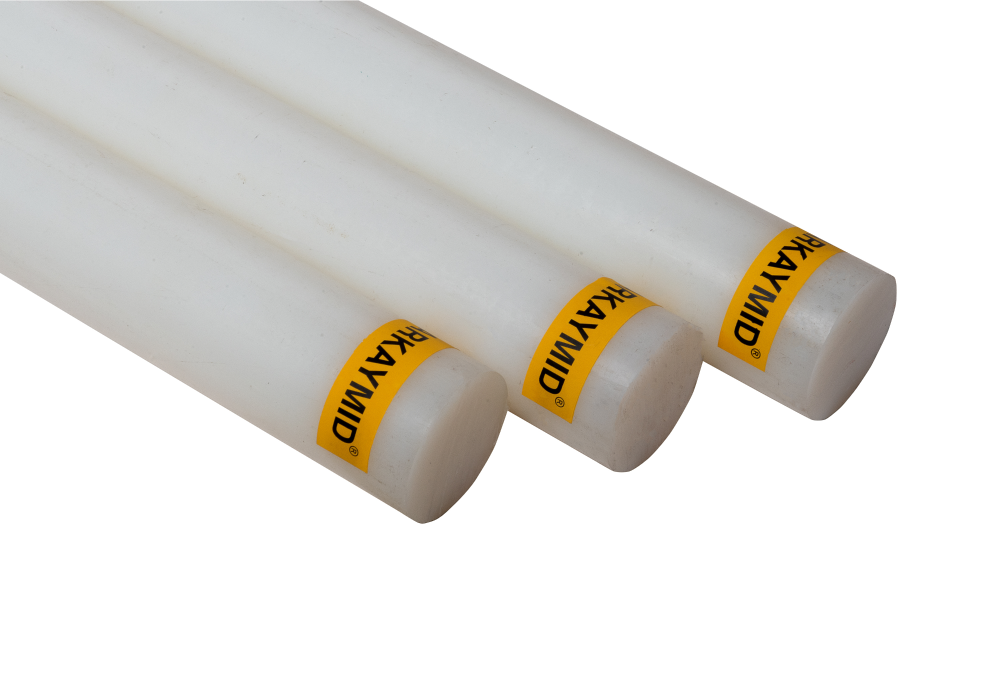 | Polyamide - Extruded Nylon PA 6 Polyamide - Extruded Nylon PA 6 Extruded Polyamide / Nylon Plastic material, is available in standard stock shapes such as sheets, rods or tubes and can be machined to requirement. |
Frequently asked questions
Which components can start as extruded engineering plastic tube?
Extruded tube can be machined into bushings, sleeves, spacers, rollers, guide rings, cable guides, bearing isolators, seals and wear liners.
How do you turn extruded tube into a finished component?
Cut the tube to length, then machine the bore, outside diameter, faces, grooves, chamfers or other features required by the drawing.
Why must you specify fit after considering moisture and temperature?
Moisture and temperature change polymer dimensions, so the finished bore, outside diameter and running clearance must suit actual operating conditions.
How should you choose between polymer grades and manufacturing routes?
Compare the component's load, motion, temperature, chemicals, wear and fit requirements with the polymer's properties and the machining route.
Related products
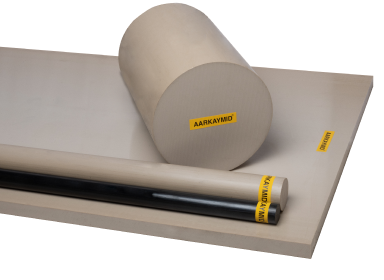 | PEEK Natural PEEK material (chemically known as Polyetheretherketone) is extruded in sheet, rod and tube that may use Victrex® PEEK or Solvay polymer as a raw... View product → |
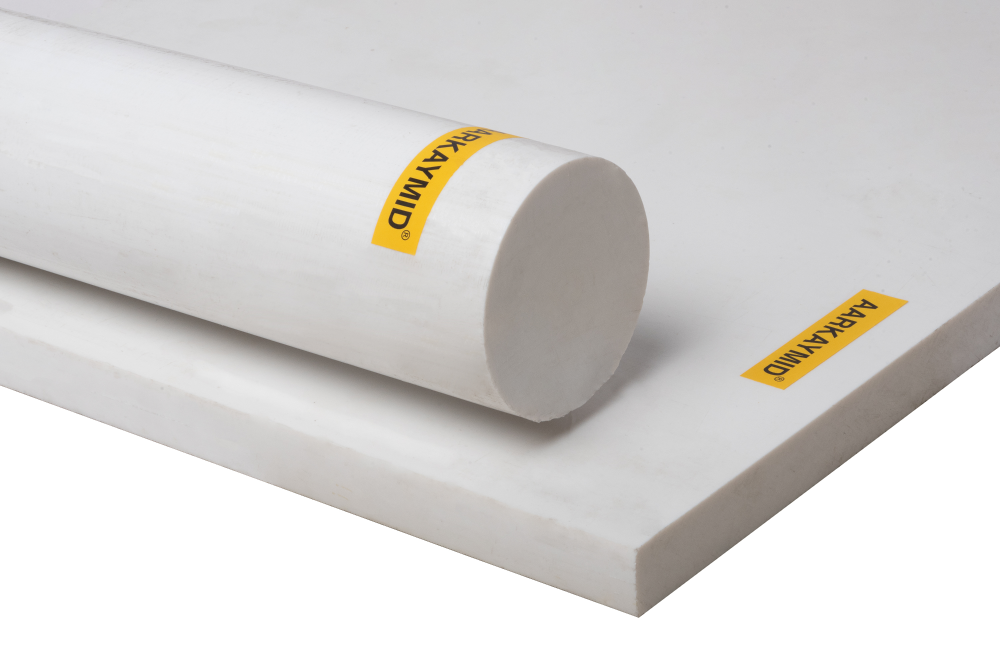 | PET PET HPM – PET is a widely utilised engineering plastic with relatively high density that shares its popularity with materials such as POM-C and MC-Nylon. |