
A nylon part that survives at room temperature can soften, creep or seize when friction and heat raise its actual interface temperature. By the end, you will be able to match heat-stabilised cast nylon to suitable machinery duties, check the thermal and load limits, design for moisture and expansion, and specify a prototype or production part without treating a grade recommendation as final design approval.
Key takeaways
- Use cast nylon for moderately loaded, intermittent hot duties—not continuous high-temperature service.
- Match the grade to counterface material, load, speed and duty cycle.
- Calculate PV value, clearance and creep risk before machining heat-resistant nylon components.
- Investigate discoloration, swelling and distortion as evidence of overheating or moisture absorption.
Where heat-stabilised cast nylon works—and where its temperature limit begins
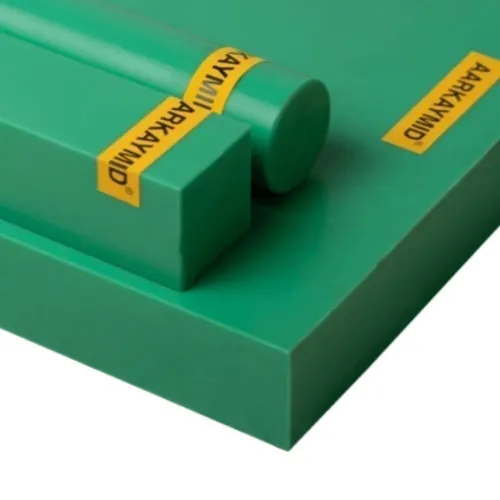
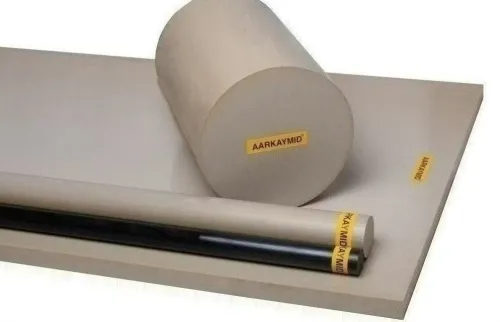
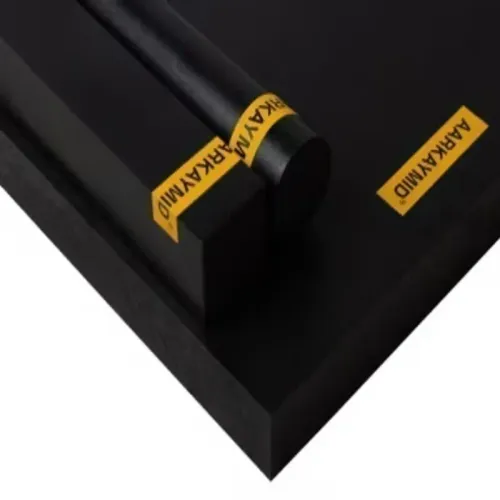
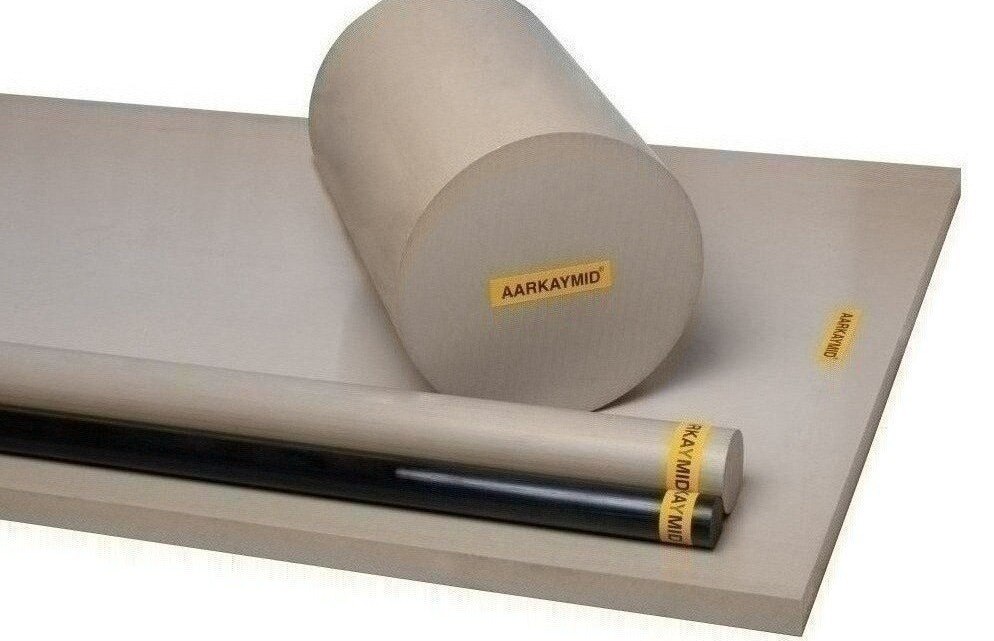
Heat-stabilised cast nylon suits moderately loaded, intermittent hot duties where low mass, quiet running and wear resistance matter. Typical heat stabilised cast nylon applications include guide rollers, wear pads, bushings, thrust washers, chain guides, sprockets, gears, seals, scrapers and insulating supports.
For cast nylon hot machinery, reject it as a default for continuously loaded precision parts near the upper range, high-pressure steam, fire-critical service or very low-expansion designs.
Find the nylon’s real operating temperature at the contact zone, not just in the surrounding air:
- Measure the part after heat soak under its actual load and speed; friction can make a bush or wear pad hotter than the housing.
- Record peak temperature during startup, braking, jams and wash cycles, then separate brief peaks from continuous exposure.
- Check the supplier’s rating against load, humidity, chemicals and test method. A short-term temperature rating does not validate continuous load-bearing service.
| Material | Practical continuous range for unfilled grades | Suitable interpretation |
|---|---|---|
| Standard cast PA6 | About 90–105 °C | Moderate heat with greater stiffness and creep margin below this range |
| Heat-stabilised cast PA6 | About 110–120 °C | Higher-temperature intermittent or moderately loaded duties |
| Either nylon grade in hot water or steam | Not established by dry-air rating | Require grade-specific hydrolysis and ageing evidence |
Heat stabilisation slows thermal oxidation; it does not prevent stiffness loss, moisture absorption, expansion or creep, and it does not make nylon equivalent to PEEK or PPS.
Match the nylon grade to the counterface, load and duty cycle
Choose heat stabilised nylon parts for intermittent or moderately loaded sliding duties where low noise, low mass and electrical insulation matter more than maximum temperature or dimensional stability. Match the grade to the counterface: a rough steel surface accelerates wear, while a polished, hardened counterface can extend service life.
Heat stabilisation improves temperature retention over standard cast Nylon 6; it does not make the material self-lubricating or eliminate creep.
| Material | Counterface and duty | Advantage | Reject it when |
|---|---|---|---|
| Standard cast nylon | Clean steel; light, intermittent duty | Lowest cost and easy machining | Heat soak or continuous load raises the part above its design range |
| Heat-stabilised cast nylon | Steel or aluminium; intermittent guides, bushings and thrust washers | Better hot-duty retention than standard nylon; quiet and insulating | Continuous high pressure, tight clearances or poor heat removal dominate |
| Oil-filled nylon | Steel; sliding contact with limited relubrication | Lower friction and improved seizure resistance | Contamination, high stiffness or fire control is critical |
| POM | Smooth metal; moderate precision duty | Lower moisture uptake and better dimensional stability | Higher heat, severe wear or electrical insulation is decisive |
| PTFE | Metal; low-speed, low-load sliding | Very low friction | Creep, wear or load capacity limits the design |
| PEEK or bronze | High-load, continuous hot duty | Greater temperature and creep resistance | Cost, weight or electrical insulation rules them out |
For cast polyamide applications, reduce bearing pressure or interrupt the cycle before upgrading the colour or grade. Select bronze or steel for continuous load; select PEEK when heat and creep control justify its cost.
Calculate pressure, velocity, clearance and creep before choosing a part
A proposed part is credible only when its load, speed, temperature and dimensional change are calculated together. For heat resistant nylon components, melting point is a poor design limit: creep, bearing pressure and frictional heating usually cause failure first.
Collect these inputs before selecting a grade or blank:
- Radial or thrust load, projected bearing area and load distribution.
- Shaft speed, sliding distance, start-stop frequency and duty-cycle duration.
- Temperature at the nylon-counterface interface after heat soak, not just surrounding air temperature.
- Shaft diameter, housing diameter, initial clearance, moisture exposure and expected thermal movement.
- Acceptable permanent deformation and service life.
| Input | Calculation | Failure indicated by |
|---|---|---|
| Load and area | Pressure = load ÷ projected area | Excess pressure crushes a bush or wear pad |
| Pressure and speed | PV = pressure × sliding velocity | Excess PV overheats the interface |
| Temperature and duty time | Record peak and continuous part temperature | Creep grows during sustained loading |
| Diameter and environment | Add thermal expansion and moisture swelling | Clearance closes, causing seizure |
Use PV data from the exact grade and geometry; shaft finish, hardness, alignment, lubrication and heat removal change the allowable value. Check clearance at the wettest and hottest service condition, then validate creep with a loaded, heated test. Reject a nylon design if deformation remains unacceptable after that test.
Use failure evidence to identify overheating, moisture and unsuitable service
A failed part rarely points to temperature alone. Brown or blackening and a glossy melted track indicate that the sliding interface exceeded the polymer’s ability to shed frictional heat. Distortion or sudden wear confirms that heat stabilised nylon parts have softened or lost load capacity; the grade does not make dry-running contact immune to seizure.
Swelling and tight running clearance identify moisture, not necessarily overheating. Wash-down water and humid air expand nylon, while hot cleaning can hydrolytically degrade Nylon 6. Cracks or chalking after cleaning require a chemical and ageing check; embrittlement or mass loss is further evidence of unsuitable wet service. Compare failed dimensions with dry and conditioned measurements.
For cast nylon hot machinery, reject nylon when any of these conditions governs the duty:
- Continuous load keeps the actual part above about 110–120 °C for an unfilled heat-stabilised grade. Do not use a short-term exposure rating as a continuous design temperature.
- Steam, hot water or aggressive aqueous cleaning is routine without grade-specific ageing evidence.
- The clearance cannot accommodate moisture swelling and thermal expansion.
- Fire-critical duty, sustained high pressure or precision dimensions demand a more stable material near the upper temperature range.
Control dimensions through blank selection, conditioning and machining
Do not finish-machine a large cast nylon blank to drawing size in one operation. Moisture redistribution and machining heat can move the finished part out of tolerance before installation. For cast polyamide applications, select a blank with machining allowance, then rough-machine, condition, and finish-machine.
Use this sequence:
- Rough-machine the blank while leaving enough stock for the final pass; support thin walls and avoid clamping that distorts the part.
- Condition the rough part at the intended service humidity and temperature until repeated measurements stabilise. A dry bearing and a humid guide component need different conditioning environments.
- Finish-machine with sharp tools and light cuts that do not heat the surface, then measure at the reference temperature stated on the drawing.
- Check the assembled fit at operating temperature. Cast nylon expands far more than steel—about 80–100 × 10⁻⁶/K in the dry state—and moisture increases its effective dimensional response.
Specify clearance rather than copying a room-temperature metal fit. Record blank batch, conditioning conditions, final dimensions and measurement temperature. This process is essential for heat resistant nylon components used as bushings, wear pads or guides, where a tight cold fit can seize after heat soak or moisture uptake.
Build a supplier brief and validate the grade before production
Approve the part only after the supplier identifies the exact cast PA6 formulation, batch and test method. A “heat-stabilised” label does not establish a continuous rating, especially for heat resistant nylon components exposed to water, steam or cleaning chemicals.
1. Ask for the grade datasheet, certificate of analysis, batch number, moulding date, recommended continuous and intermittent temperatures, moisture-conditioning state, tensile strength, modulus, hardness, creep data and thermal-expansion values. Confirm whether figures apply to dry air, wet service or a defined load.
2. Request evidence for the actual heat stabilised cast nylon applications: bearing PV tests, shaft material and finish, pressure, speed, lubrication, alignment and heat-removal conditions. Reject catalogue PV figures that use a different grade or geometry.
3. Send the production geometry, not a generic material name, for dimensional review. Measure bore, wall thickness, flatness and clearance after the supplier’s stated conditioning procedure, then repeat measurements at the expected humidity and operating temperature.
4. Test representative parts under real load and duty cycle. Record temperature at the nylon surface, wear, friction, deformation and noise; include start-stop cycling rather than a short unloaded heat exposure.
5. If hot washing, steam or continuous wet contact exists, require immersion or ageing data in that fluid. Classic Polymers & Resins can be asked to identify the supplied grade and conditioning state before you compare test results across batches.
Approve production only when the measured deformation, wear and temperature remain within your drawing limits.
Related products
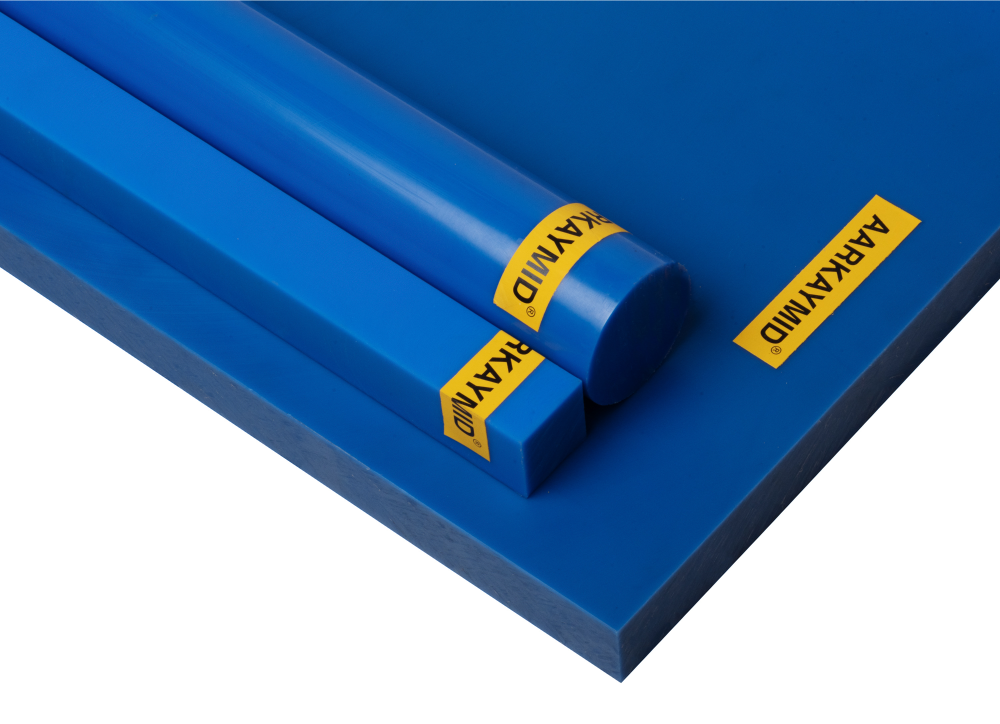 | Polyamide - Cast Heat Stabilised Grade Polyamide - Cast Heat Stabilised Grade Cast Polyamide 6 (Cast Nylon 6 or PA 6) is one of the most versatile thermoplastics. View product → |
 | Polyamide MC Stabilized Grade Cast Polyamide 6 (Cast Nylon 6 or PA 6) is one of the most versatile thermoplastics. View product → |
Frequently asked questions
Where does heat-stabilised cast nylon work in hot machinery?
It suits moderately loaded, intermittent duties such as guide rollers, wear pads, bushings, thrust washers, chain guides, sprockets, gears, seals, scrapers and insulating supports.
How do you choose a heat-stabilised nylon grade?
Match the grade to the counterface, bearing pressure, sliding velocity, duty cycle, temperature and exposure to moisture or chemicals.
What calculations should you make before choosing a cast nylon part?
Calculate bearing pressure, sliding velocity, pressure-velocity value, operating clearance and creep risk before approving the part.
What signs indicate a cast nylon part is unsuitable for service?
Discoloration, melting, scoring, swelling, cracking, distortion and excessive wear can indicate overheating, moisture absorption, excessive load or an unsuitable counterface.
Related products
 | Polyamide Natural Cast Polyamide 6 (Cast Nylon 6 or PA 6) is one of the most versatile thermoplastics. View product → |
 | Polyamide Yellow Dimensional Stable Polyamide Yellow Dimensional Stable Cast Polyamide 6 (Cast Nylon 6 or PA 6) is one of the most versatile thermoplastics. View product → |
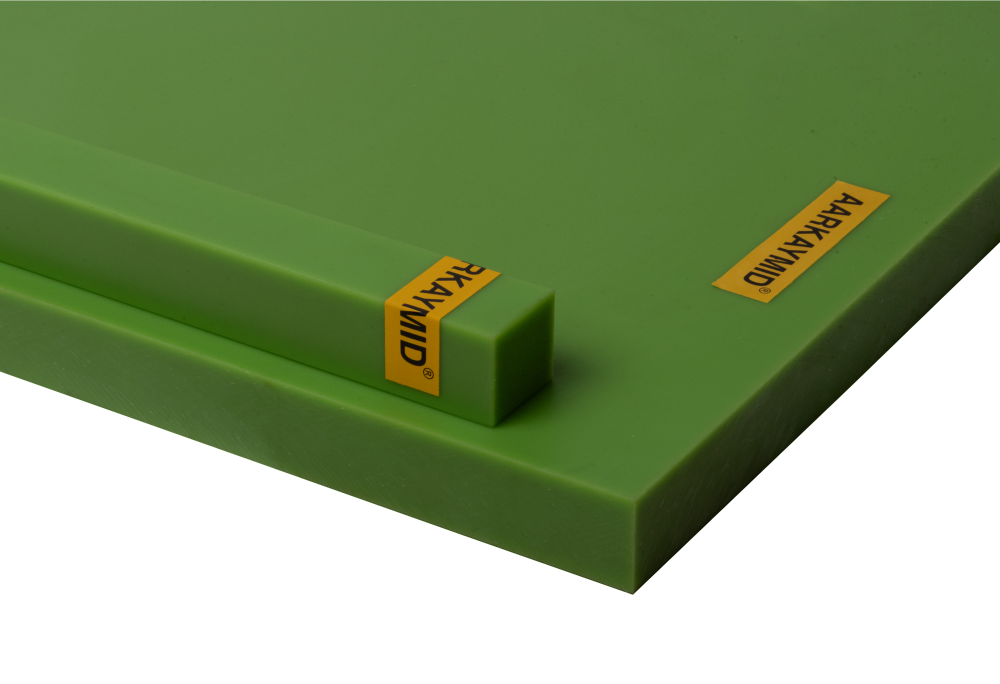 | Polyamide Green Cast Polyamide 6 (Cast Nylon 6 or PA 6) is one of the most versatile thermoplastics. View product → |
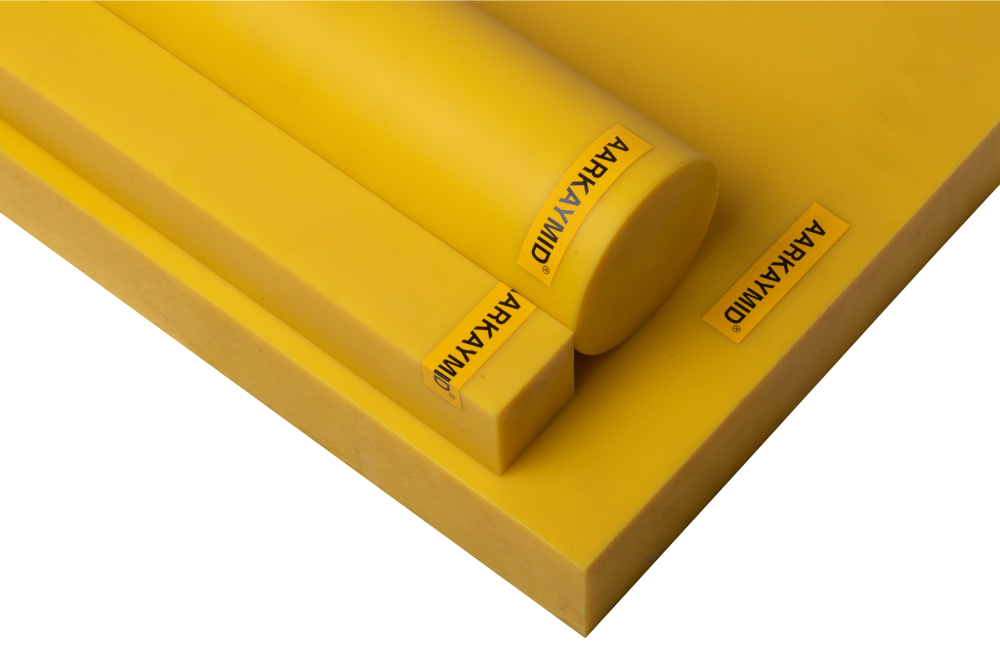 | Polyamide - Dimensionally Stable (Yellow) Polyamide - Dimensionally Stable (Yellow) Cast Polyamide 6 (Cast Nylon 6 or PA 6) is one of the most versatile thermoplastics. View product → |