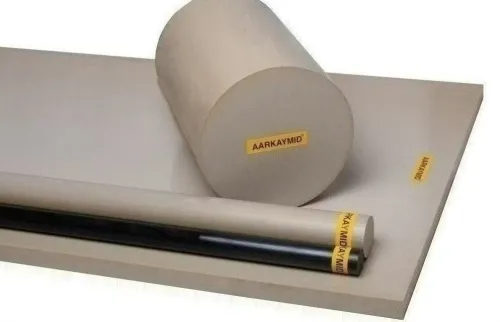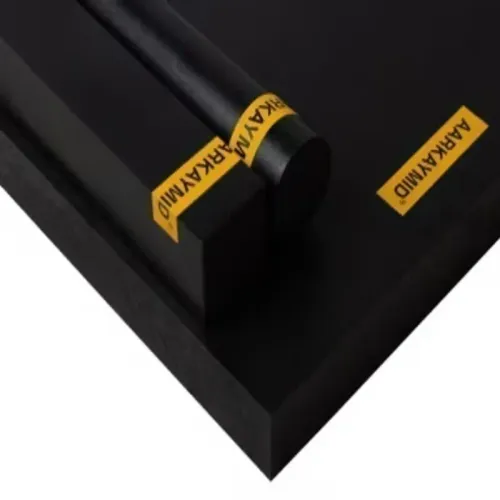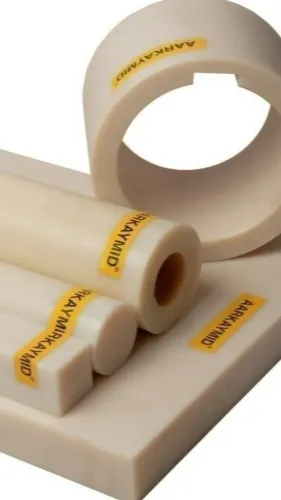

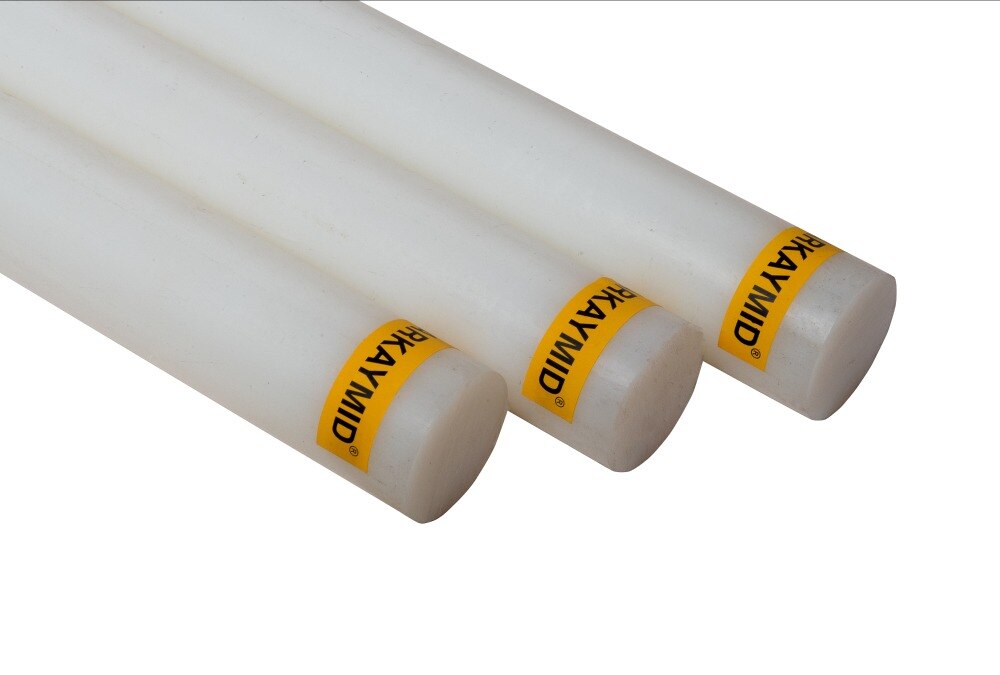
An extruded PA 6 panel can block access to moving parts, contain swarf and coolant, and separate operators from abrasive machinery, but it is not automatically a structural frame or a compliant safety guard. You will be able to match the panel to the hazard, set its geometry and fixings, allow for moisture and heat, and prepare a purchase specification that avoids fit and safety failures.
Key takeaways
- Use opaque PA 6 panels for non-viewing barriers, not transparent windows or structural frames.
- Select panel thickness, openings and edges around the specific access and ejection hazard.
- Machine and mount panels with generous radii, supported holes and clearance for moisture movement.
- Specify moisture condition, temperature, chemicals, electrical duty, tolerances and inspection documents.
Where extruded PA 6 panels work in a machine guard
An opaque extruded PA 6 panel suits non-viewing barriers that block access to moving parts, contain debris and withstand repeated rubbing or handling. It is a guard surface, not a transparent viewing window or a load-bearing machine frame.
| Job | Where it fits | Protection provided |
|---|---|---|
| Fixed machine guard | Enclosed sides, rear sections and internal partitions | Prevents incidental contact with shafts, couplings and pinch points |
| Belt or chain guard | Covers around drives and sprockets | Separates operators from entanglement hazards and contains a broken belt or chain |
| Chip and splash barrier | CNC enclosures, machining cells and coolant-facing panels | Deflects swarf, coolant spray, dust and minor incidental impact |
| Removable access door | Hinged or bolted covers for adjustment and maintenance zones | Restricts access during operation while allowing controlled servicing |
| Guide or divider panel | Sliding doors, guide plates, chute liners and spacer panels | Resists rubbing, sliding contact and abrasive chip movement |
These extruded nylon PA 6 panel applications favour replaceable sections where wear matters more than visibility. Use polycarbonate or laminated safety glass when an operator must see the hazard without opening the guard.
Nylon PA 6 machine guards still require a machinery risk assessment. Design the panel and its frame to meet the access-prevention, rigidity, retention and removal principles in EN ISO 14120; the polymer grade alone proves nothing. Use metal framing or another structural material when the guard carries loads, supports equipment or spans a large opening.
Choose the panel geometry around the hazard
Select thickness and support spacing from the hazard, panel span and expected impact, not from a generic “nylon 6” label. A thin sheet can flex into a rotating part, pull fasteners through its edge or open an access path; an untested panel must not be called impact-rated.
| Geometry choice | Design decision | Consequence |
|---|---|---|
| Short span with four-sided restraint | Use closer frame spacing and edge support | Reduces deflection and fastener loading |
| Long unsupported span | Increase thickness or add intermediate rails | Limits bowing, vibration and impact damage |
| Panel beside a rotating or pinch hazard | Leave clearance for maximum deflection and moving-part travel | Prevents contact without creating a reach-through route |
| Panel with a cut-out or access door | Reinforce the opening perimeter and retain the door positively | Stops local flexure from defeating the guard |
| Edge-only fixing | Keep the unsupported area small and place supports near the perimeter | Reduces peeling and pull-out forces |
Choose the smallest unsupported span that fits the machine, then check deflection at the worst impact location, including temperature and moisture effects. Put supports at corners, along long edges and beside large openings; a centre rail often does more than simply adding thickness.
Round internal corners to reduce crack initiation, and keep moving assemblies outside the panel’s maximum deflection envelope.
Set openings and clearances against the hazard assessment and EN ISO 13857 reach-distance requirements, not visual judgement. Verify retention, rigidity and access prevention under EN ISO 14120; nylon guard components and nylon protective panel parts remain safeguarding components, not structural machine frames.
Machine and mount PA 6 without creating weak points
A hot, unsupported cut can leave an extruded PA 6 panel with a wavy edge, smeared chips and residual-stress distortion. Support the sheet close to the cut, use a sharp cutter with generous chip clearance, and keep the tool moving rather than rubbing in one place.
- Clamp the panel without crushing it, then cut with a sharp carbide saw or milling tool.
- Reduce heat with controlled feed, intermittent cutting and compressed air; use a compatible coolant when the process permits it.
- Drill with a sharp, relieved bit and back the exit side with sacrificial material to prevent breakout.
- Deburr with a fine scraper or light chamfer, not aggressive sanding that reheats the edge.
- Let the panel return to room temperature before checking dimensions or fitting hardware.
Keep holes and slots well inside the supported edge, and add a radius at internal slot corners. A sharp corner or edge-near hole concentrates stress and can split during tightening or vibration. Condition the material at its expected service humidity before finalising close fits, because PA 6 changes dimension as it absorbs moisture.
Use clearance holes, broad washers or a backing strip, and tighten only enough to prevent movement. Do not clamp the panel directly against a small bolt head.
For extruded nylon enclosure parts that require repeated removal, use metal threaded inserts or captive hardware; for nylon protective panel parts exposed to vibration, secure the nut and recheck joint preload after installation. Oversize or slot holes where thermal and moisture movement must be accommodated.
Account for moisture, temperature, chemicals and electrical duty
Nylon PA 6 machine guards can lose stiffness, change size and creep under load when humidity and temperature rise, so dry-condition data is not enough for a wet or heated machine.
Absorbed water plasticizes PA 6, reducing strength and insulation resistance while increasing dimensions. Specify holes, fits and sliding clearances for the expected conditioned state, not only for the dry machined panel. Large panels also need slotted or compliant mounts because moisture-related expansion and thermal movement can bow a sheet or load its fasteners.
Sustained loading becomes more hazardous at elevated temperature and humidity. Do not use an unsupported PA 6 panel as a structural frame; reduce span, support it, or choose a material with better creep resistance.
PA 6 generally handles oils, greases, many hydrocarbons and common machine fluids. Strong mineral acids, oxidizers, and hot or concentrated chemicals require a compatibility check using the actual concentration, temperature and exposure time. Outdoor service adds UV exposure: specify a UV-stabilised grade and require exposure data if sunlight is continuous.
Extruded nylon enclosure parts can separate terminals, sensors and motors electrically, but moisture and heat alter dielectric behaviour. Check insulation resistance and dielectric performance at the service humidity and temperature rather than relying on a dry datasheet value.
Standard natural or black PA 6 is not automatically flame-retardant or low-smoke. For equipment near ignition sources, state the required UL 94 rating and order a compound tested to that classification. Also state:
- Moisture condition for dimensional data
- Operating temperature and fluid exposure
- UV requirement and electrical insulation test conditions
Turn the application into a verifiable buying specification
A purchase order that says “black PA 6, 10 mm” is not a verifiable specification. It identifies colour and thickness, but not the material behaviour your extruded nylon PA 6 panel applications require.
State these items on the drawing and order:
- Exact grade: PA 6, with reinforcement, heat stabiliser, lubricant package or other modification named
- Panel dimensions, machined-part dimensions, hole positions, edge radii and tolerances
- Moisture condition for dimensional data: dry-as-moulded, conditioned, or the humidity and temperature expected in service
- Surface finish, flatness and allowable warpage
- Flammability requirement, such as a specified UL 94 rating, when the machine risk assessment demands it
- Chemical, coolant, cleaning-agent or UV exposure, including any required test evidence
- Fixing method, insert material, clearance-hole size and whether the part is removable
For nylon guard components, verify the supplier’s certificate against the drawing, not against a generic catalogue description. Check the batch or lot number, measured thickness, moisture condition, tolerance basis and test method; dry-machined PA 6 can change size after absorbing water.
Ask Classic Polymers & Resins to identify the proposed grade and provide confirmation for the finished part, especially where outdoor exposure, flame performance or chemical testing affects acceptance.
Finally, record the guard’s risk-assessment basis and verify strength, rigidity, retention and access prevention against EN ISO 14120. A material certificate alone does not prove machine-guard compliance.
Related products
 | Polyamide - Extruded Nylon PA 6 Polyamide - Extruded Nylon PA 6 Extruded Polyamide / Nylon Plastic material, is available in standard stock shapes such as sheets, rods or tubes and can be machined to requirement. |
 | Polyamide Extruded Extruded Polyamide / Nylon Plastic material, is available in standard stock shapes such as sheets, rods or tubes and can be machined to requirement. View product → |
Frequently asked questions
Where do extruded PA 6 panels work in a machine guard?
Use them for opaque, non-viewing barriers that block access to moving parts, contain debris and tolerate repeated rubbing or handling. Do not use them as transparent viewing windows or load-bearing machine frames.
How should you choose PA 6 panel geometry around a hazard?
Choose thickness, openings, overlaps, edge returns and access points from the hazard’s reach, ejection path and cleaning requirements. Keep openings small enough to prevent contact with moving parts and support unsupported spans.
How do you machine and mount PA 6 without creating weak points?
Use sharp, maintained tools, avoid overheated edges, add generous corner radii and support holes with washers or backing plates. Allow clearance for dimensional movement and avoid placing fasteners too close to edges.
Which environmental conditions must a PA 6 machine guard specification include?
State the moisture condition, operating temperature, chemical exposures, rubbing or impact duty and electrical insulation requirement. Nylon 6 absorbs moisture, so distinguish dry-as-supplied properties from conditioned service performance.
What should you include in a buying specification for an extruded PA 6 guard panel?
Specify PA 6 grade, extrusion dimensions, thickness, cut sizes, tolerances, surface condition, hole locations, mounting details, operating environment, inspection requirements and batch or material documentation.