
A PTFE tube can look clean while retaining corrosive residue, trapped vapour, permeation damage or permanent deformation at a fitting. You will be able to isolate, clean, inspect, test and either return the tube to service or replace it using evidence rather than appearance alone.
Key takeaways
- Record fluid, temperature, pressure and thermal cycles before disconnection.
- Treat trapped PTFE tube liquid and vapour as hazardous until decontamination is confirmed.
- Discard tubing with cracks, blisters, exposed reinforcement or failed integrity tests.
- Match replacement PTFE tube size, pressure, temperature, vacuum and chemical requirements.
How do you isolate, flush and dry a PTFE tube safely?
A controlled PTFE tube maintenance routine starts before disconnection: record the service fluid, temperature, pressure, vacuum exposure, cleaning chemical and number of thermal cycles. Treat trapped liquid and vapour as hazardous until the process owner confirms decontamination.
1. Isolate the equipment, shut off the source, depressurize both ends and drain the PTFE tube into a compatible collection container. Do not cut or open it while pressure, corrosive fluid or solvent vapour remains trapped.
2. Flush toward the approved waste outlet so residue follows the intended flow path. Reverse-flush only when the equipment procedure requires it to clear a known blockage. Select the rinse fluid after checking compatibility with the process chemical, PTFE, fittings, ferrules and downstream equipment.
3. Never mix oxidizers, acids, solvents or alkaline cleaners inside the tube. Use clean, filtered rinse fluid until the discharge contains no visible particles, colour or odour. Do not use wire brushes, drills or sharp probes; they score the bore and create crack origins.
4. Drain both ends, then dry with filtered, oil-free air or nitrogen at a pressure permitted by the equipment specification. Do not trap solvent vapour behind closed valves.
5. Cap clean, dry ends with compatible plugs. Store the tube straight and supported, away from sunlight, heat, sharp edges and heavy objects, and keep it sealed until installation.
Which damage means clean, test or discard?
Inspect the full tube before deciding that cleaning is enough. Look for white or coloured residue, staining, odour, blistering and liquid trapped under fittings; these indicate retained contamination or permeation, not just a dirty surface. Check both ends, the bore, bends, clamps and supports.
| Decision | Inspect for | Action |
|---|---|---|
| Clean and return | Intact bore and exterior, removed contamination, dimensions within equipment specification, undamaged connection | Clean, dry and document |
| Test before reuse | Unknown pressure event, sustained compression, repeated thermal cycling, leak, fitting change or undocumented service | Perform pressure or vacuum testing to the equipment limit |
| Discard | Permanent kink, flattened section, blister, split, pinhole, exposed reinforcement, severe abrasion, swelling, embrittlement or permanent ovalization | Replace the tube |
| Discard for integrity | Cracked or crazed surface, crushed cut, flared damage, cold-flowed end, corroded fitting body or distorted ferrule gripping surface | Replace the damaged tube or connection |
A low-pressure leak check does not clear a cracked, crazed or embrittled tube. These defects can fail later under pressure or thermal cycling. Inspect for sharp abrasion lines, compression marks, rubbing and insufficient bend radius around every support.
For high-purity, hazardous-containment or contamination-control service, discard the tube when residual chemical or permeation damage has no acceptable margin, even if flushing leaves the bore visibly clean. Record the findings in your ptfe tube maintenance history; that record makes ptfe tube service recovery decisions traceable.
How do you recover tubing exposed to chemicals, heat, pressure or abrasion?
Match the recovery action to the exposure history; one cleaning routine cannot correct chemical permeation, heat damage or mechanical collapse. For chemical exposure, record the exact chemical, concentration, temperature and contact time.
A room-temperature compatibility chart is inadequate for hot, pressurized service: hot elemental fluorine, chlorine trifluoride, molten alkali metals and high-temperature fluorinating environments require specific manufacturer confirmation.
- Flush compatible residue, then replace the PTFE tube if it remains swollen, brittle, stained internally or permeated.
- After overheating, inspect discolouration, distortion, soft sections and lost end geometry. Standard unfilled PTFE is generally limited to about 260°C continuous service; its melting transition near 327°C is not a permissible operating temperature. Replace material that exceeded the equipment or product rating.
- After overpressure or vacuum collapse, check bore shape, wall thickness, flattening and end seating. Rinsing will not restore a buckled or permanently ovalized tube.
- After abrasive service, inspect every clamp, guide, bend and support for wear grooves. Replace any section with a sharp abrasion line or exposed reinforcement.
| Exposure | Check | Recovery decision |
|---|---|---|
| Chemical | Internal staining, swelling, brittleness or permeation | Flush only compatible residue; replace if damage remains |
| Heat | Discolouration, distortion, soft sections or altered ends | Replace after exceeding the equipment or product rating |
| Pressure or vacuum | Flattening, ovalization, wall loss or poor end seating | Test only if geometry remains sound; replace permanent deformation |
| Abrasion | Wear grooves or exposed reinforcement | Replace the damaged section |
For gas or volatile-liquid service, investigate permeation when the exterior looks intact but pressure, odour or mass balance changes. Ordinary white PTFE provides no static control; specify conductive or dissipative construction with bonding and grounding for flammable fluids or vapours.
How do you prove a recovered PTFE tube is safe to reinstall?
Reinstallation is justified only after mechanical verification. Measure outside diameter, inside diameter and wall thickness at undamaged, suspect and end sections, then compare every reading with the tube drawing, purchase specification or equipment manual. Check the bore for obstruction, ovalization and residue using an approved visual or dimensional method.
Cut a replacement end square and burr-free, remove loose particles, and avoid crushing the tube with a saw or cutter. Do not reuse an end cold-flowed by a ferrule, flare or compression fitting. Assemble the specified fitting to its required insertion depth using the stated tightening method; extra torque does not reliably correct PTFE creep.
Sustained compression can permanently deform PTFE and leave a leak path.
A supplier’s maximum pressure figure does not transfer between constructions:
| Construction | Why the rating changes | Verify before testing |
|---|---|---|
| Plain PTFE tube | Wall thickness and bore control strength | Exact product datasheet |
| Convoluted tube | Corrugations affect pressure, vacuum and bend limits | Construction and bend radius |
| Braided PTFE hose | Braid, fittings and pulsation alter containment | Assembly instructions and end fittings |
Check construction, bore, wall thickness, temperature, pulsation, vacuum exposure, bend radius and fittings before selecting limits.
For this ptfe tube service recovery gate, perform a leak test with a medium approved for the equipment and process hazard. Use barriers, calibrated gauges, the documented pressure or vacuum limit and a controlled hold period. Record pressure, vacuum, hold time, temperature, result and inspector.
Recheck after the first heat cycle; PTFE expands more than metals and can loosen connections. Return it only when every result meets the equipment specification.
How do you extend service life and specify a replacement PTFE tube?
Extend service life by controlling the conditions that damage PTFE, not by relying on cleaning alone. Support long runs without crushing the tube, prevent bends from rubbing, and keep every bend above the manufacturer’s minimum radius.
Derate pressure as temperature rises, account for pulsation, and avoid sustained vacuum unless the exact construction is rated for it. Limit unnecessary flexing. Record each major thermal excursion, leak, cleaning chemical and fitting change; this history separates chemical attack, permeation, abrasion, overheating and fitting creep during the next PTFE tube maintenance inspection.
Specify these details for a replacement:
- PTFE grade or filler content
- ID and OD tolerances, wall thickness and length
- Pressure-temperature rating, pulsation limits and minimum bend radius
- Construction type, cleanliness status and lot traceability
- Fitting type, insertion dimensions and static-control requirement
- Application approvals for potable water, pharmaceutical, food, hazardous-chemical or analytical-gas service
| Construction | Pressure and vacuum implication | Selection check |
|---|---|---|
| Plain PTFE tube | Rating depends on bore, wall, temperature and support | Use the exact datasheet |
| Convoluted PTFE tube | Flexibility reduces pressure and vacuum capability | Confirm collapse resistance |
| Braided PTFE hose | Braid improves containment but does not remove temperature derating | Verify braid, fittings and bend radius |
For a ptfe tube supplier in navi mumbai, provide the fluid, concentration, temperature range, pressure and vacuum profile, bend pattern, fittings and permeation limit. Classic Polymers & Resins can help match engineering-plastic support to those operating details.
Compare the datasheet with the equipment specification, then retain the batch record and test certificate with the maintenance history.
Related product
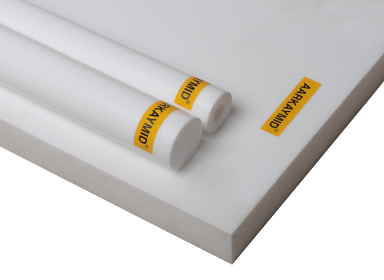 | PTFE PTFE material (polytetrafluoroethylene commonly referred to as Teflon) is a highly dense material, semi crystalline in nature, renowned for its... |
Frequently asked questions
How do you isolate, flush and dry a PTFE tube safely?
Record the service history, isolate and depressurise the line, contain trapped fluid, and confirm decontamination with the process owner. Flush with a compatible medium, collect the discharge safely, and dry the tube with clean, dry air or nitrogen before inspection.
Which PTFE tube damage means you should clean, test or discard it?
Clean and test tubing with removable residue and an intact bore, wall and end fitting. Discard tubing with cracks, cuts, blisters, kinks, severe flattening, exposed reinforcement, chemical swelling or failed leak and pressure tests.
How do you recover PTFE tubing exposed to chemicals, heat, pressure or abrasion?
Identify the exact exposure and compare it with the tube specification. Remove compatible contamination, inspect for swelling and distortion, check heat and pressure damage, and replace tubing when abrasion has reduced the wall or the material history is unknown.
How do you prove a recovered PTFE tube is safe to reinstall?
Document its service history, cleaning method, inspection findings and traceability. Confirm bore and fitting condition, then perform the specified leak, pressure, vacuum or electrical test and record the result against the acceptance limit.
How do you extend PTFE tube service life and specify a replacement?
Prevent sharp bends, unsupported spans, external abrasion and repeated over-temperature exposure. Specify bore and outside diameter, length, end connections, pressure, vacuum, temperature, chemical service, bend requirements and test documentation.