
Choosing an extruded nylon tube requires more than matching a nominal diameter: polymer grade, moisture condition, pressure, temperature, fluid compatibility and fitting method all affect service performance. By the end, you will know how to map applications, specify dimensions and testing, compare alternatives, and verify what a supplier includes in the shipment.
Key takeaways
- Choose PA 12 for flexibility and moisture stability; select PA 6 or PA 66 for higher stiffness.
- Specify bore, wall thickness, pressure, temperature and conditioning state together.
- Request dimensions, tolerances, batch traceability and test records with every tube supply.
- Validate fittings, bend radius and machining before installing the tube in service.
Where Extruded Nylon Tube Fits—and Where Service Validation Starts
Extruded nylon tube applications suit pneumatic-control and instrumentation lines, wire and cable sleeving, low-pressure conveying, insulation, guide sleeves, rollers and bushings. Its low weight, abrasion resistance and useful flexibility make it practical for moving assemblies and compressed-air circuits, but the tube must match the service rather than the label “nylon.”
| Application | Why it fits | Confirm before use |
|---|---|---|
| Pneumatic or instrumentation line | Flexible, light and abrasion-resistant | Air pressure, temperature, fittings and permeation |
| Hydraulic or fluid-transfer line | Tough bore and manageable routing | Fluid compatibility, pressure, vacuum and burst safety factor |
| Sleeve, guide or bushing | Electrical insulation and low-friction wear surface | Load, shaft speed, friction, heat and dimensional change |
| Outdoor routing | Protective barrier for cables or lines | UV-stabilized or carbon-black grade and weathering evidence |
Treat fuel, brake fluid, hydraulic oil and refrigerant as separate validation cases. A tube with adequate tensile strength can still swell, embrittle, lose additives, permeate or develop stress cracks during the actual fluid and temperature cycle. Confirm the exact polymer grade—PA 6, PA 12, PA 66, PA 11 or PA 612—not merely “nylon.”
A pressure value means little without outside diameter, wall thickness, medium, temperature, test method and safety factor. Re-rate it for heat; a room-temperature catalogue value is not a rating for hot oil or hydraulic service. For vehicle air-brake tubing, specify the applicable vehicle-tubing standard.
Also verify extrusion capability, dimensional control, batch traceability and application-specific test support; a machining or trading capability does not prove tube-manufacturing capability.
PA 6, PA 12 or PA 66: Match the Grade to the Job
PA 6 and PA 66 suit stiffer, wear-loaded tubing; PA 12 suits movement and humidity. Compare the grades before treating “nylon” as a complete specification.
| Grade | Moisture and dimensions | Flexibility and temperature | Chemical and wear fit |
|---|---|---|---|
| PA 6 | Higher moisture uptake; bore and wall dimensions change with humidity | Flexible, with moderate stiffness and good mechanical strength; suitable for moderate-to-high service temperatures | Good general wear resistance; confirm compatibility with acids, strong alkalis, fuels and oils |
| PA 66 | Moisture uptake remains significant, though often lower than PA 6; conditioning still affects size | Stiffer and less flexible than PA 6, with better heat capability and load retention | Strong choice for wear, guides and higher mechanical loads; verify the actual temperature limit and medium |
| PA 12 | Lowest moisture response of these three; best dimensional stability in humid service | Most flexible, with lower stiffness and heat capability than PA 66 | Good fit for fuels, oils, pneumatic lines and moving routes; pressure, solvent and temperature limits remain grade-specific |
PA 12 is not a universal replacement. A pressure rating for an extruded polyamide tube applies only to the stated outside diameter, wall, temperature, medium, test method and safety factor; heat can reduce allowable pressure sharply.
Choose PTFE or PFA for severe chemical exposure, low friction or higher continuous temperature. Choose PEEK when high temperature and load retention dominate, or polyurethane when exceptional flexibility and abrasion resistance matter. For outdoor routing, specify UV-stabilised or carbon-black material and request weathering evidence.
Specify Bore, Wall, Pressure and Conditioning State Together
Specify bore, wall, pressure rating and conditioning state as one specification, not as separate catalogue choices. State the exact polymer grade, finished outside diameter and inside diameter, wall thickness, ovality, concentricity and dimensional tolerances at the moisture condition used for assembly.
Put these values on the drawing or purchase order:
- Define the bore from required flow, fitting engagement and allowable restriction; define the outside diameter from clamp, guide or push-in fitting limits.
- Require pressure data tied to temperature, medium, test method, service life and safety factor. Derate the room-temperature value before using the extruded polyamide tube with hot air, oil or hydraulic fluid.
- Qualify vacuum separately. Specify absolute pressure, temperature, unsupported length and collapse criterion; a tube that holds internal pressure can still buckle under vacuum.
- Confirm the minimum bend radius at the actual installation temperature, with ovality and bore reduction limits. A nominal radius alone does not prevent kinking.
- Request permeation data for the actual fuel, refrigerant or gas, because pressure integrity does not prove containment.
Name the conditioning state as supplied, dried, or humidity-conditioned, and record moisture history before inspection and pressure testing. Water uptake changes polyamide dimensions, stiffness and elongation, so inspect the OD, ID and ovality after conditioning in the state of use.
The polyamide tube supply should also identify whether pressure tests, cut lengths and conditioning records are included or separately chargeable.
What a Complete Polyamide Tube Supply Package Should Prove
Require a package that identifies the tube you will receive, proves how it was tested and shows what arrives in the box. A catalogue line alone cannot confirm extrusion capability; a supplier answering “nylon tube manufacturer in Thane” should identify its extrusion route, dimensional controls and application-specific testing.
Ask for these details in the quotation and order acknowledgement:
- PA grade and compound, colour, hardness where relevant, OD, ID or wall, concentricity, ovality and tolerances
- Operating-temperature range, pressure basis, vacuum limit, conditioning state and coil or straight-length format
- Minimum order quantity, cut-piece lengths, end caps, labels, inspection reports and whether each is included or charged separately
- Lot or batch number linking the tube to resin identification, production date, test results and the certificate of conformity
- Packaging that prevents kinking, crushing, contamination and moisture-related dimensional change; specify sealed bags, core-supported coils or capped straight lengths when needed
| Document | What it must prove | Reject or clarify when |
|---|---|---|
| Dimensional report | Measurements after the stated humidity or conditioning exposure | It reports nominal size only |
| Test certificate | Pressure, leak, hardness or other agreed tests, with method and results | It gives “passed” without values |
| Regulatory declaration | Exact use, formulation and jurisdiction; for food contact, address 21 CFR 177.1500 conditions | It says “food grade” without conditions |
| Traceability record | Batch, resin lot and manufacturing link | Tube and certificate carry different identifiers |
Classic Polymers & Resins should be evaluated against this same evidence, not merely its location or machining capability.
Related products
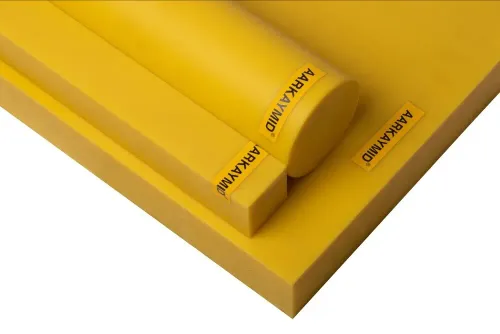
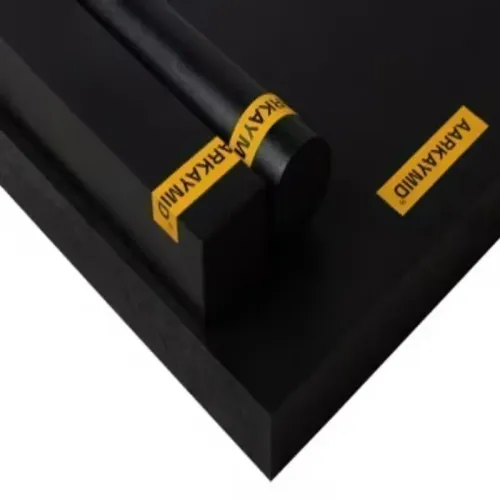
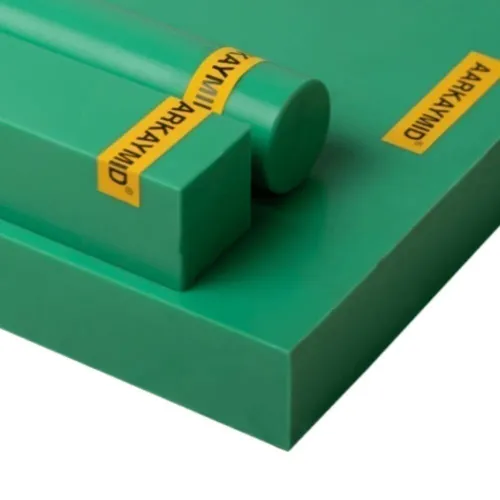
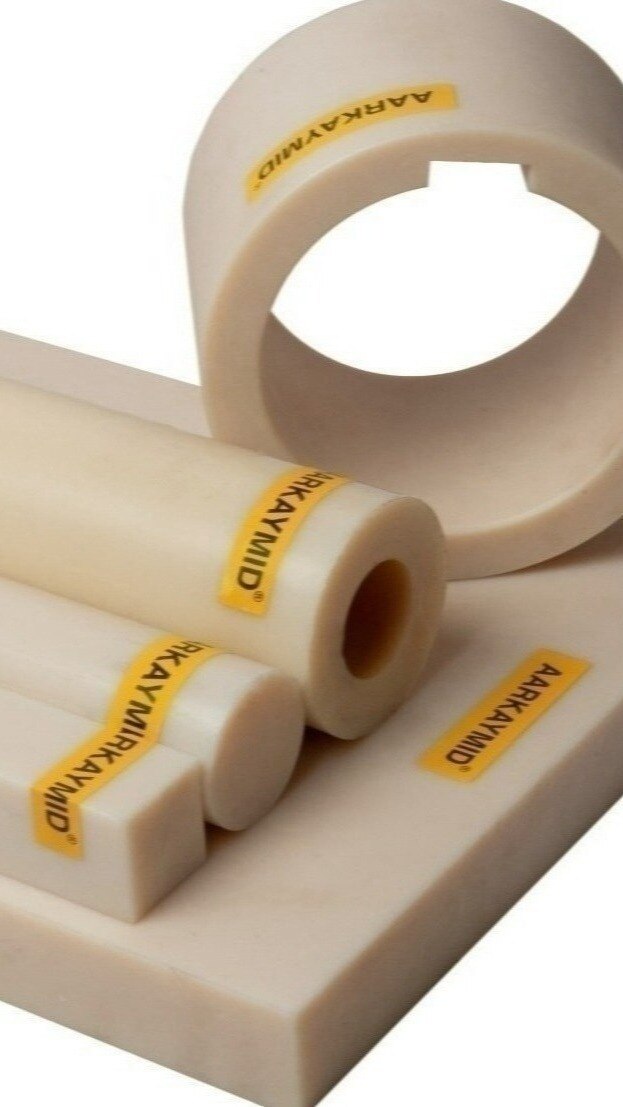
 | Polyamide Extruded Extruded Polyamide / Nylon Plastic material, is available in standard stock shapes such as sheets, rods or tubes and can be machined to requirement. View product → |
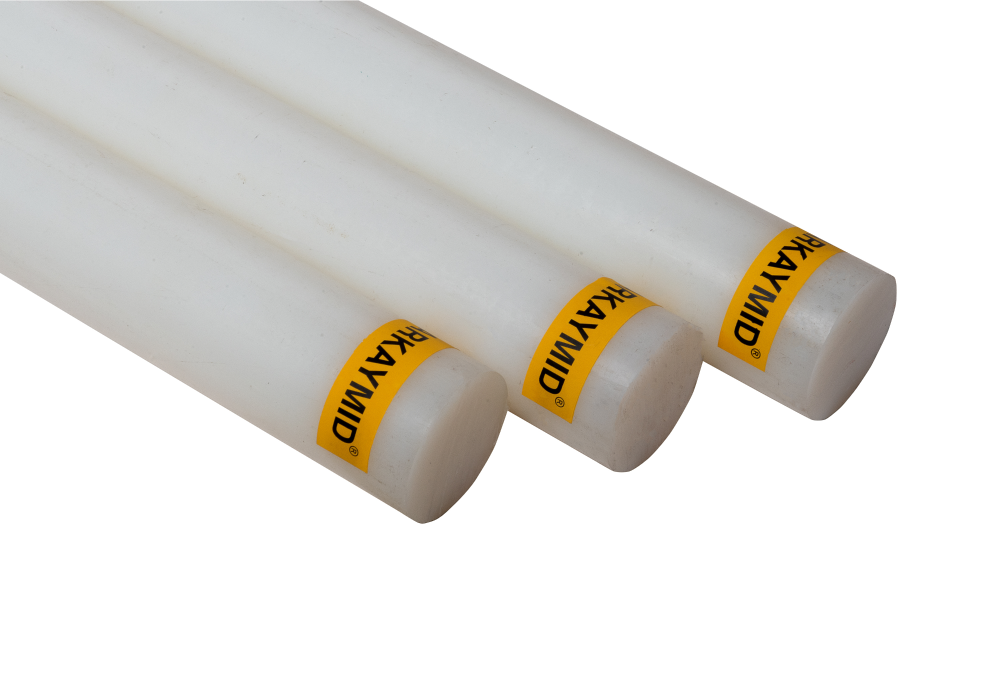 | Polyamide - Extruded Nylon PA 6 Polyamide - Extruded Nylon PA 6 Extruded Polyamide / Nylon Plastic material, is available in standard stock shapes such as sheets, rods or tubes and can be machined to requirement. |
Prepare the Tube for Fittings, Routing and Machined Components
A square, burr-free cut preserves the bore and gives a fitting its best chance of sealing. Do not use side cutters: they flatten the extruded engineering plastic tube at the joint.
1. Uncoil the length and let it relax before measuring or routing. Coil set can distort ovality and bend radius, especially in larger or stiffer PA grades; choose straight-cut lengths when fitting insertion or geometry must repeat.
2. Cut with a sharp, guided tube cutter or fine-tooth saw that does not compress the wall. Remove the external burr, keep chips out of the bore, and reject any end showing a crack, split or crushed section.
3. Check the outside diameter, ovality, bore, wall appearance and cut squareness at the conditioned assembly state. For push-in fittings, outside diameter and surface condition control sealing more directly than nominal wall thickness.
4. Push the tube fully into the specified fitting and verify the tube reaches the internal stop. Use the manufacturer’s insert depth and fitting compatibility; do not soften the end with heat or solvent unless the fitting system permits it.
5. Route it without forcing a bend below the specified radius. Place clamps close enough to prevent vibration, but do not tighten them until they flatten the tube or restrict thermal movement.
Machine tube ends, grooves or holes only from an approved drawing. After machining, inspect the remaining wall and bore, then identify the part as a finished component; an unmodified stock tube is not evidence of machined-component dimensions. These controls apply across extruded nylon tube applications, from pneumatic lines to guide sleeves and low-pressure conveying.
Frequently asked questions
Where do extruded nylon tubes fit in industrial applications?
Extruded nylon tubes suit pneumatic-control and instrumentation lines, wire sleeving, low-pressure conveying, insulation, guide sleeves, rollers and bushings. Validate pressure, temperature, chemicals and movement before service.
How do PA 6, PA 12 and PA 66 differ?
PA 12 offers greater flexibility and lower moisture uptake. PA 6 provides balanced strength and cost. PA 66 offers higher stiffness and temperature capability, but absorbs moisture and needs tighter conditioning control.
What should you specify when ordering polyamide tube?
State the inside diameter, outside diameter or wall thickness, dimensional tolerances, working pressure, temperature range, bend radius, colour, length and dry or conditioned material state.
What should a complete polyamide tube supply package include?
Request the grade, dimensions, tolerances, batch number, certificate of conformity, test results, packaging details and storage guidance. Confirm that supplied lengths match the purchase order.