
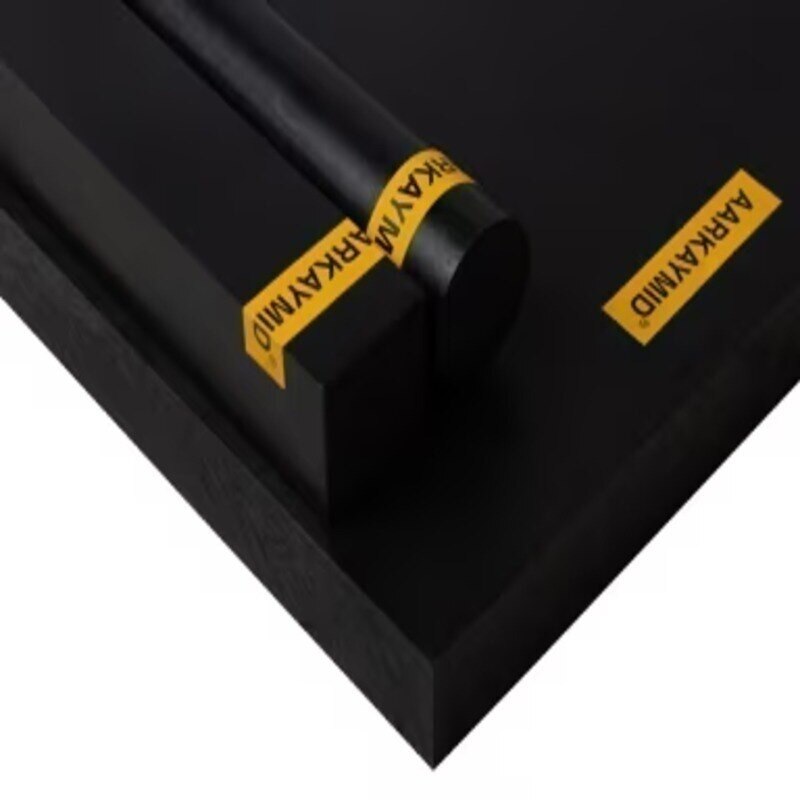
UHMW tube earns its cost when abrasive wear, sliding friction or impact causes the failure, but its low stiffness and creep limit how it can be loaded. You will be able to match the tube’s geometry, service conditions, competing materials and purchasing checks before treating a catalogue size as a finished part.
Key takeaways
- Choose UHMW when abrasion, sliding friction or impact limits service life.
- Use UHMW tube for sleeves, bushes, scrapers, liners and conveyor wear parts.
- Check load, temperature, wall thickness and machining method before selecting UHMW.
- Compare suppliers using dimensions, grade, tolerances, test data and batch traceability.
When UHMW tube is worth the extra cost
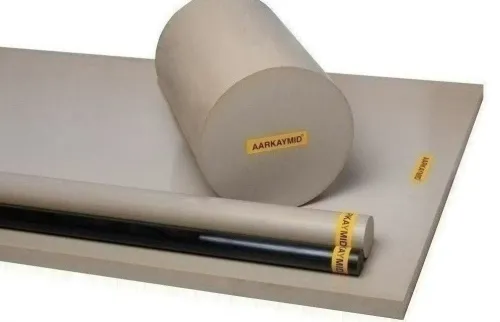
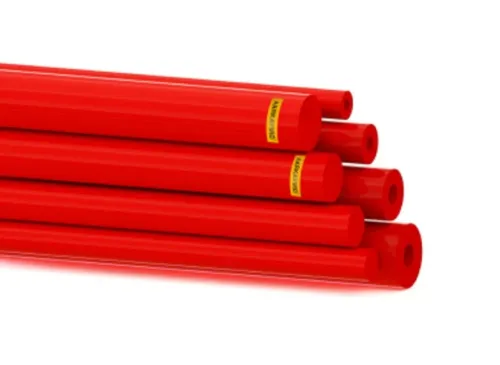
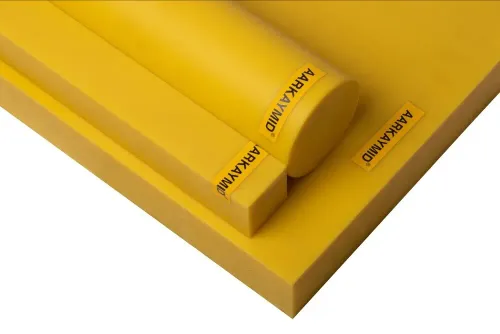
Choose UHMW tube for wear resistant polymer parts when abrasive wear, sliding friction or impact will end the part’s life before stiffness does. Its low friction and exceptional abrasion resistance can extend service in guide sleeves, wear bushes, scrapers, conveyor parts, chute liners and hopper liners.
That longer interval between replacements can justify the higher material cost.
UHMW tube benefits disappear when the part must hold a tight shape under sustained load or heat. UHMWPE has lower stiffness than nylon, acetal or reinforced engineering plastics, and creep can enlarge a bore or distort a wall.
Low friction also does not guarantee bearing performance: pressure, speed, shaft finish, contamination, heat removal and the PV limit decide whether the tube survives.
| Material | Main advantage | Choose it when |
|---|---|---|
| UHMWPE | Abrasion resistance, low friction, impact toughness | Sliding contact, abrasive particles or impact dominate |
| HDPE | Lower cost, easy fabrication | Wear is moderate and loads are light |
| Nylon | Higher stiffness and load capacity | The part must resist deformation under load |
| Acetal | Dimensional stability and machinability | You need accurate, rigid low-friction components |
| Polyurethane | Elasticity and cut or impact resistance | Compliance and shock absorption matter |
A hollow section earns its cost when you need a ready-made sleeve, guide bush, roller core, spacer, ring or liner and the bore reduces machining, weight or material waste. Specify wall support carefully: an UHMW tube is not automatically a pressure-rated pipe.
The best value comes when its wear life prevents repeated shutdowns, while the load, temperature and support remain within the grade’s limits.
How UHMW compares with HDPE, nylon, acetal and polyurethane
UHMWPE is the better choice when abrasive wear, sliding friction and impact dominate; it is the wrong choice when stiffness, tight tolerances or elevated-temperature shape retention control the design. The practical uhmw tube benefits are low friction, negligible moisture uptake and exceptional toughness, but low modulus and creep limit pressure-bearing use.
| Option | Friction | Stiffness | Moisture | Impact | Abrasion | Machinability |
|---|---|---|---|---|---|---|
| UHMWPE | Very low | Low | Negligible absorption | Excellent | Excellent | Easy to cut; control heat and chip wrapping |
| HDPE | Low | Low, below UHMWPE | Negligible absorption | Very good | Moderate | Very easy |
| Nylon | Moderate | High when dry | Absorbs moisture; dimensions shift | Good | Good to very good | Machines well; allow for moisture change |
| Acetal | Low | High | Very low absorption | Moderate | Good | Excellent; produces clean, stable parts |
| Polyurethane | Low to moderate | Flexible to medium, grade-dependent | Low | Excellent | Excellent in many abrasive contacts | Difficult; elastomeric grades need specialised tooling |
Choose HDPE for a lower-cost, easily machined part with modest wear demand. Choose nylon or acetal when stiffness and dimensional control matter more than maximum impact resistance; acetal is the safer choice around humidity. Choose polyurethane when elastic recovery and severe impact or abrasion outweigh easy machining.
UHMWPE still needs support. Thin walls can ovalise or creep under load, while heat from high speed can defeat its low-friction advantage; check pressure-velocity data, shaft finish and heat removal before selecting the tube.
Which parts gain the most from a hollow UHMW form
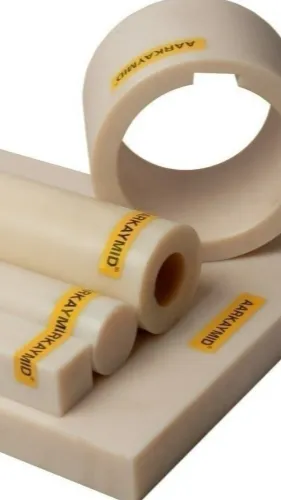
Hollow UHMW earns its cost when the finished part already needs a bore: wear sleeves, guide bushes, spacer rings and bearing-like components avoid wasting solid stock on a core that will be removed.
| Form | Best use | Why choose it |
|---|---|---|
| Tube | Guide sleeves, conveyor rollers, wear bushes and scraper hubs | The bore is already present, reducing machining, material waste and turnaround |
| Sheet | Chute liners, hopper panels and flat conveyor wear strips | Large flat areas need mounting faces, not a concentric bore |
| Solid rod | Small pins, rollers and parts requiring a solid cross-section | The core carries load that a hollow wall cannot replace |
| Finished component | Repeated production parts with fixed dimensions | You avoid machining, but pay for tighter inspection and part-specific tooling |
The strongest UHMW tube applications combine sliding contact with abrasive particles or repeated impact. A sleeve protecting a steel shaft, a guide ring supporting moving material, or a conveyor roller carrying contaminated product can use the tube’s low friction and abrasion resistance directly.
Buy a tube as finished hardware when its outside diameter, bore and length are already acceptable. Specify a machinable sleeve when you need keyways, grooves, flange faces or a tighter final bore; specify tube stock for cutting multiple rings or bushes.
Do not select a hollow section merely because UHMW has low friction. Pressure, speed, shaft finish and heat removal still control bearing-like performance, while creep can close the clearance. For slurry, chute and hopper liners, wall thickness and continuous backing matter more than choosing a tube shape alone.
How load, temperature and machining conditions decide service life
Load, temperature, support and machining decide whether an UHMW tube for wear resistant polymer parts keeps its bore, wall thickness and low-wear surface. Excessive pressure causes creep; heat accelerates deformation; poor support turns a tough sleeve into an oval one.
| Condition | What to control | Failure if ignored |
|---|---|---|
| Load and speed | Check allowable load and PV value for the actual dry, lubricated or contaminated contact | Creep, heat buildup or rapid abrasive wear |
| Temperature | Include frictional heat, surrounding temperature and UHMWPE’s high thermal expansion | Bore tightens, loosens or distorts |
| Support | Match wall thickness and backing to pressure, impact and slurry flow | The tube ovalises, buckles or wears through locally |
| Shaft and particles | Specify shaft finish, alignment and third-body contamination | Abrasive grit scores the bore and raises heat |
Choose a finished tube when its supplied bore and outside diameter already meet the assembly tolerance. Buy a machinable sleeve when you need to remove stock for a precise fit; buy stock for rings or bushes only when your process controls distortion after cutting.
- Use sharp tools with generous chip clearance.
- Take controlled cuts instead of forcing a blunt tool through the wall.
- Allow for elastic recovery and thermal expansion before measuring the bore.
- Let the part cool, then inspect bore size, ovality, wall thickness and surface damage.
- Verify batch traceability, a material test certificate and the grade or trade designation.
Local availability does not prove pressure suitability or wear life. A supplier’s process—ram extrusion, compression moulding or machining from solid—also affects wall uniformity, residual stress, straightness and tolerance.
What to specify when comparing UHMW tube suppliers
Before comparing quotes, define whether you need a finished tube, a machinable sleeve, or stock for cutting rings and bushes. A generic “UHMW tube” quotation hides differences in process, tolerance and usable wall thickness.
1. Request the polymer grade or trade designation, colour, manufacturing method and size range. Ram-extruded, compression-moulded and machined-from-solid shapes can differ in wall uniformity, residual stress, ovality and internal diameter.
2. Put the outside diameter, bore, wall thickness, length, straightness, ovality and tolerances on the purchase order. State the machining allowance if the sleeve will become a bearing, ring or bush.
3. Ask for the operating temperature, allowable load or PV data, shaft speed, lubrication condition and contamination expected in your UHMW tube applications. Do not treat a wear tube as pressure-rated pipe without a pressure calculation, creep assessment and adequate external support.
4. Require batch traceability and a material test certificate identifying the grade, lot number and test results. For an uhmw tube supplier in Thane, local stock helps delivery time, but it does not prove wear life or pressure suitability.
5. Compare minimum order quantity, available cut lengths, lead time, packaging, inspection records, replacement terms and machining support. Classic Polymers & Resins is worth asking for these details when you are comparing coloured UHMW stock with a made-to-size sleeve.
Reject a quote that gives only colour, nominal size and price. Those details cannot confirm that the tube will fit, machine cleanly or survive the stated load.
Related products
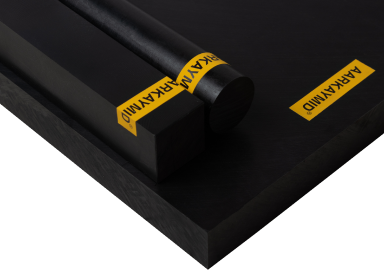 | UHMW Black UHMW is an exceptional material known for its lightweight nature and non-hygroscopic properties. View product → |
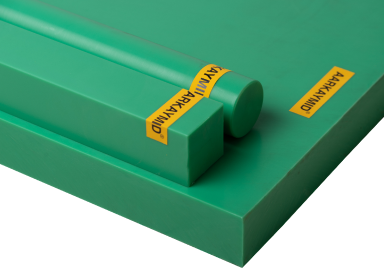 | UHMW Green UHMW is an exceptional material known for its lightweight nature and non-hygroscopic properties. View product → |
Frequently asked questions
When is UHMW tube worth its extra cost?
UHMW tube earns its extra cost when abrasive wear, sliding friction or impact causes repeated replacement before stiffness becomes the limiting factor.
How does UHMW compare with HDPE, nylon, acetal and polyurethane?
UHMW provides stronger abrasion resistance and lower friction than HDPE, while nylon and acetal offer greater stiffness and dimensional stability. Polyurethane suits high-elasticity wear applications but behaves differently under load and machining.
Which parts benefit most from a hollow UHMW form?
Guide sleeves, wear bushes, rollers, scrapers, conveyor components, chute liners and hopper liners benefit when a tube can be cut or machined into a low-friction wear surface.
What should you specify when comparing UHMW tube suppliers?
Specify the polymer grade, inside and outside diameters, wall thickness, length, dimensional tolerances, operating temperature, load, wear environment, machining requirements and material documentation.
Related product
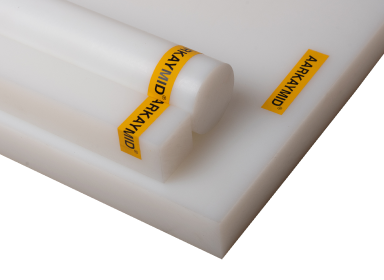 | UHMW White UHMW is an exceptional material known for its lightweight nature and non-hygroscopic properties. View product → |