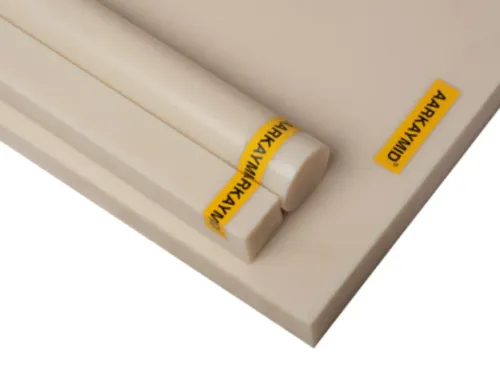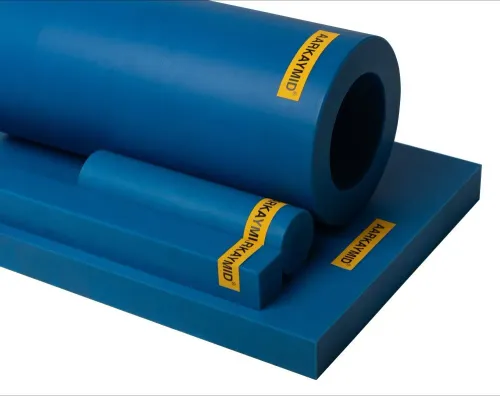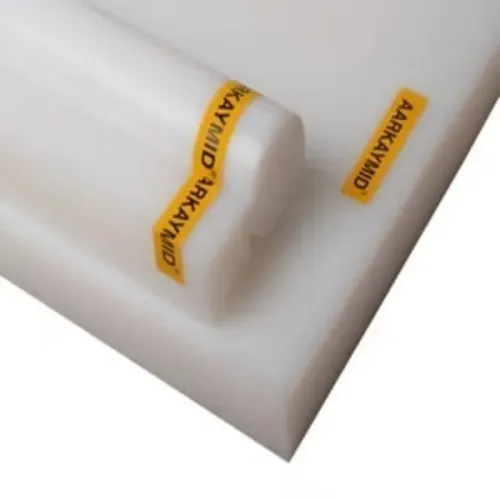

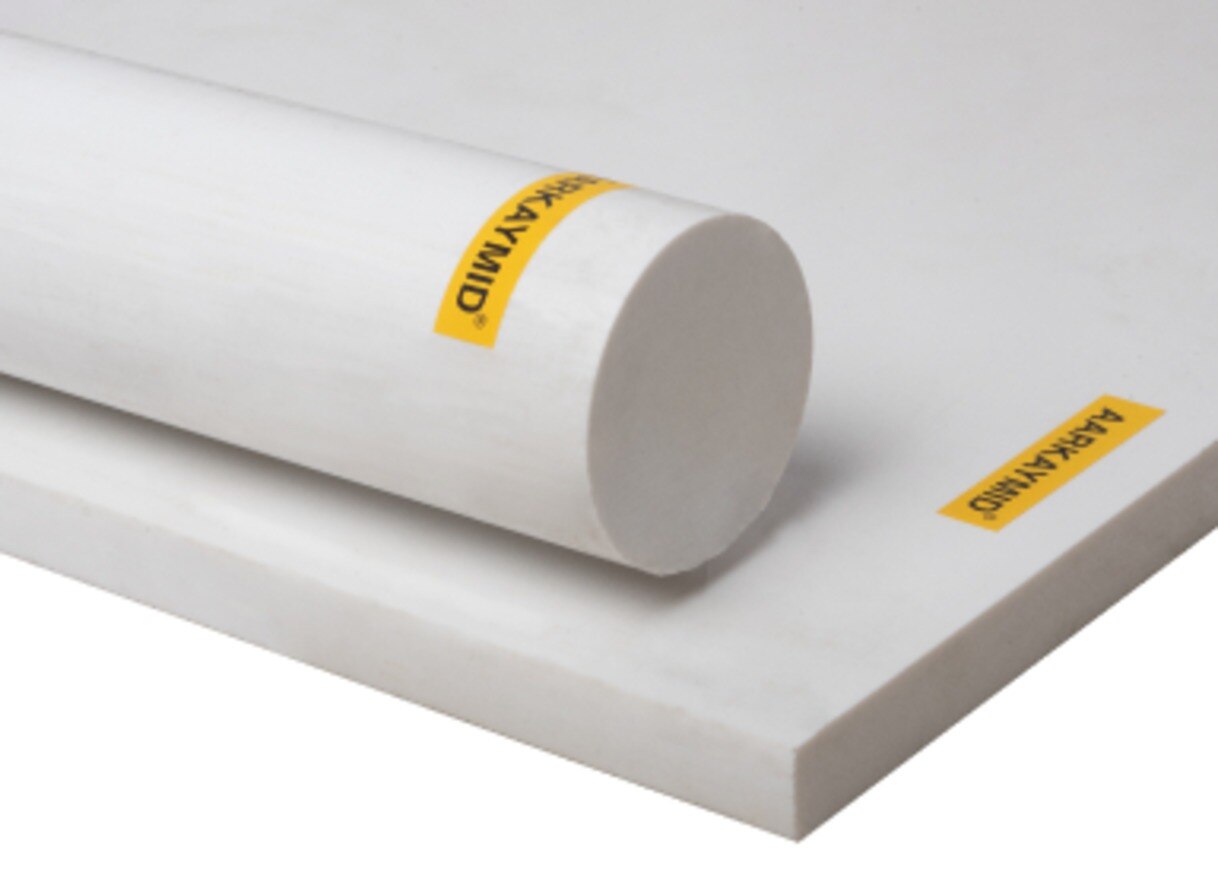
A quotation for “PET” is incomplete unless it identifies the engineering grade, stock form, dimensions, test basis and machining condition. By the end, you will know how to compare PET-P sheets and rods, specify inspection documents, and decide whether the material suits your temperature, chemical and tolerance requirements.
Key takeaways
- Specify unfilled semi-crystalline PET-P, not simply “engineering PET.”
- State density, dimensions, tolerances, grade, batch and test documents in every order.
- Use sharp tools, controlled feeds and cooling to prevent melting and dimensional drift.
- Check moisture, heat exposure, chemicals and residual stress before approving PET stock.
Which PET grade and density should you specify?
Specify unfilled, semi-crystalline PET-P when the part requires predictable machining, stiffness and wear performance. “PET” or “engineering PET” alone is not a complete material designation.
| Material | Typical identity | Purchasing decision |
|---|---|---|
| Unfilled PET-P | Engineering, semi-crystalline PET; density about 1.39–1.41 g/cm³ at room temperature | Suitable when the certificate identifies the exact grade |
| Glass-fibre-filled PET | PET with reinforcement; higher stiffness and altered density, friction and tool wear | Specify only after checking fibre content and machining guidance |
| Wear-modified PET | PET with solid lubricants or other modifiers | Confirm friction, strength and surface-finish data for the grade |
| Internally lubricated PET | PET compounded for lower friction | Do not substitute for standard PET-P without a wear and load review |
| Bottle-grade PET, APET, PETG or recycled PET | Different processing history, structure or formulation | Reject as an automatic substitute for machined PET-P |
For pet plastic density in bhopal, require the certificate to report density by ASTM D792 or ISO 1183-1, with the grade and batch number stated. A supplier’s pet engineering plastic specifications in bhopal should identify whether the stock is unfilled or compounded.
Useful unfilled PET-P reference values are tensile strength around 70–80 MPa, tensile modulus around 3.0–3.3 GPa and elongation at break roughly 3–6%. Require ASTM D638 or ISO 527 results with specimen direction, conditioning and grade, because each changes the reported value. Apply the same discipline when buying engineering pet material in bhopal.
What should a PET sheet or rod purchase specification contain?
A machinable-stock purchase order must define the grade, form, dimensions, tolerances and condition of the PET, not simply state “PET sheet” or “PET rod.” PET sheet specifications in Bhopal should identify engineering PET-P rather than APET, PETG or recycled PET.
1. For sheet, state nominal thickness, width, length, thickness tolerance, flatness, colour, surface condition, crystallinity and whether the material is annealed. Define permitted scratches, dents, pits, inclusions and voids, then specify full-sheet supply or cut-to-size pieces. Ask for the supplier’s available thickness and panel-size schedule; do not assume every size is standard.
2. For rod, specify PET-P grade, nominal diameter, standard or cut length, diameter tolerance, straightness, colour and the available oversize machining allowance. That allowance determines whether turning can remove skin defects or distortion without finishing below the drawing diameter. These are the core PET rod specifications in Bhopal.
3. Require a certificate showing the exact grade and batch, density, tensile-property test basis, crystallinity or structure information where available, moisture-conditioning state and dimensional traceability. “Engineering PET” alone does not prove compliance.
Extrusion, casting and stress-relief history can make rod and sheet from the same polymer behave differently. Ask whether the stock was annealed and whether post-machining stress relief is recommended, because residual stress can cause warpage, dimensional drift or cracking around holes and threads.
Specify packaging that supports sheets flat, separates surfaces and restrains rods without crushing them. Use edge protection and impact-resistant wrapping to prevent bending, dents and transport damage on the route to Bhopal.
How do you machine PET without melting, burrs or dimensional drift?
Heat, not spindle speed alone, causes melted edges and dimensional drift in PET-P. Use a sharp carbide or high-speed-steel tool with positive rake, a polished edge, adequate relief clearance and rigid workholding; rubbing from a dull tool creates heat even at modest speed.
1. Start turning and milling at 100–200 m/min cutting speed. Begin with 0.05–0.20 mm/rev for turning and 0.03–0.10 mm/tooth for milling, then adjust for tool diameter, depth of cut, rigidity and the supplier’s grade data.
2. Evacuate chips continuously with compressed air or intermittent coolant. Do not let chips recut, since friction smears PET; use a band saw or circular saw with a sharp, open-tooth blade and steady feed rather than dwelling in the cut.
3. Drill with a sharp point, clear the flutes and use peck drilling for deep holes or when chips begin packing. Back up thin sheet to prevent breakout, and ream only after drilling, leaving a controlled allowance of about 0.10–0.20 mm on diameter.
4. Finish with one light pass instead of repeatedly rubbing the surface. Remove burrs with a sharp scraper or fine deburring tool, then inspect holes after the part returns to room temperature.
For engineering PET material in Bhopal, record these settings against the exact grade. PET sheet specifications in Bhopal and PET rod specifications in Bhopal should also state whether stock was annealed; residual stress in thick or heavily machined material can later warp holes, threads and sharp corners.
How do heat, moisture, chemicals and residual stress affect PET parts?
A machined PET-P part can drift in service even though unfilled PET is commonly rated for continuous use near 100–110°C. Its glass-transition range is about 70–80°C, where stiffness and dimensional stability decline, while melting occurs around 250–260°C. None of these figures is a permissible machining-temperature limit; cutting heat must still be controlled.
Water absorption is low, not zero: published datasheets commonly report about 0.2–0.3% after 24 hours of immersion. Define the conditioning state and dimensional tolerance for every precision component, especially in engineering PET material in Bhopal.
Use this dimensional-control procedure:
- Condition stock and finished parts at a controlled laboratory temperature before measurement.
- Measure with calibrated equipment after the part returns to that temperature.
- Ask whether thick stock or heavily machined sections need annealing or post-machining stress relief; residual stress can warp parts or cause cracking around holes, threads, notches and sharp corners.
Require a grade-specific compatibility chart and test basis for oils, fuels, acids, alkalis, solvents, cleaning agents and hot water. Record each chemical’s concentration and temperature. PET’s notch sensitivity makes sharp corners and abrupt section changes poor design choices.
PET-P is not automatically the best bearing material. Compare it with alternatives using actual load, speed, counterface, lubrication and temperature—not one friction value.
| Material | Key trade-off | Selection check |
|---|---|---|
| PET-P | Good dimensional stability; notch-sensitive | Verify stress relief and temperature |
| POM | Greater impact toughness; different wear behaviour | Test load and counterface |
| PA6 | More moisture-driven movement | Specify conditioning state |
| PTFE compounds | Lower friction; weaker load retention | Check pressure, speed and temperature |
For PET engineering plastic specifications in Bhopal, record those conditions in the drawing and quotation.
What documents and checks should you require before approving PET stock?
Approve PET stock only when the quotation identifies the material you will receive, not merely the polymer family. A certificate stating “engineering PET” does not prove that a particular sheet or rod matches a datasheet; require the exact PET-P designation, batch number and traceability to that batch.
1. Record the form, nominal dimensions, tolerances, colour and surface condition. For PET sheet specifications in Bhopal, add crystallinity, flatness and cut-to-size format. For PET rod specifications in Bhopal, add nominal diameter, cut length, straightness and oversize machining allowance.
2. Require PET plastic density in Bhopal to be reported by ASTM D792 or ISO 1183-1, and state whether the value applies to unfilled PET-P, glass-filled, wear-modified or internally lubricated stock.
3. Require tensile strength and modulus with the test basis, such as ASTM D638 or ISO 527, including specimen direction and conditioning state. Record the moisture-conditioning state used for every result.
4. For safety-critical or precision-machined parts, define sampling frequency, calibrated dimensional inspection method, visual-defect limits, flatness or straightness criteria and signed acceptance records.
5. Ask Classic Polymers & Resins to confirm available PET-P sheet and rod sizes, cut-to-size capability, machining allowance, grade certificate and application-specific support before releasing the drawing or purchase order.
Send this quotation checklist: exact grade and batch; form and dimensions; tolerances; colour and surface limits; density and tensile test methods; conditioning state; inspection, sampling and traceability records.
Related product
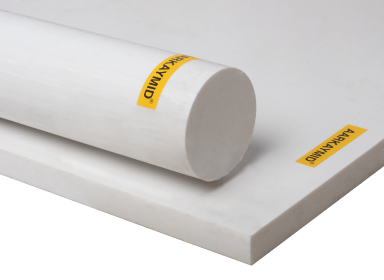 | PET PET HPM – PET is a widely utilised engineering plastic with relatively high density that shares its popularity with materials such as POM-C and MC-Nylon. |
Frequently asked questions
Which PET grade and density should you specify for industrial machining?
Specify unfilled, semi-crystalline PET-P when you need predictable stiffness, wear performance and machining. Record the exact grade and supplier-declared density because “PET” alone does not identify the material.
What should a PET sheet or rod purchase specification contain?
State PET grade, density, shape, nominal dimensions, dimensional tolerances, colour, surface condition, batch identification, packaging and required inspection documents. Include the drawing revision and acceptance criteria for critical dimensions.
How do you machine PET without melting, burrs or dimensional drift?
Use sharp, polished cutting tools, secure the stock without distortion, evacuate chips and control cutting heat. Apply feeds, speeds and passes that prevent rubbing, then allow the part to stabilise before final measurement.
How do heat, moisture, chemicals and residual stress affect PET parts?
Heat can change dimensions and reduce performance, while moisture and chemicals can affect machining or service behaviour. Residual stress can cause warping or cracking after cutting, so review the service environment and inspect parts after machining.
What documents and checks should you require before approving PET stock?
Request the certificate of conformity, batch or lot number, grade identification, declared density, dimensional inspection results and any available material test report. Check the stock for damage, contamination, warping, incorrect dimensions and an unbroken identification label.