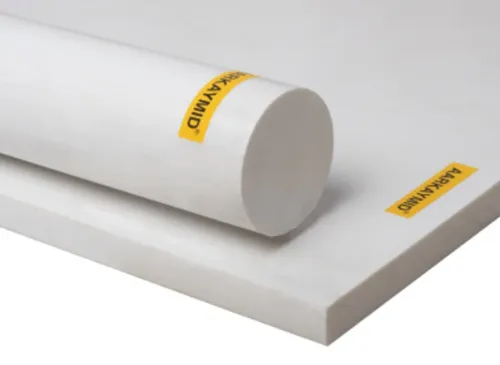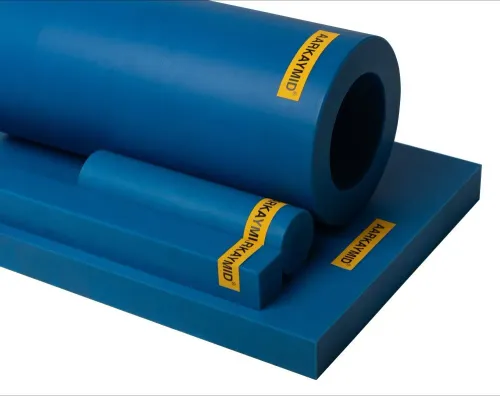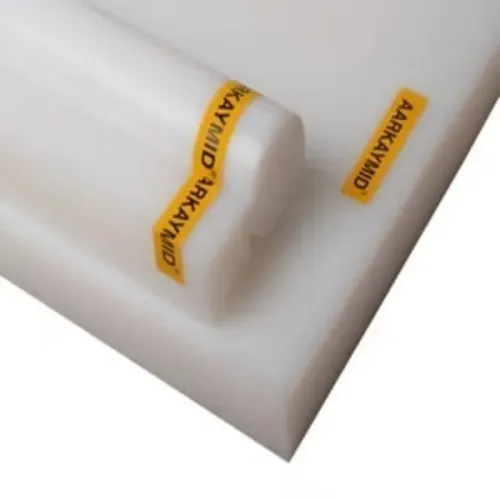

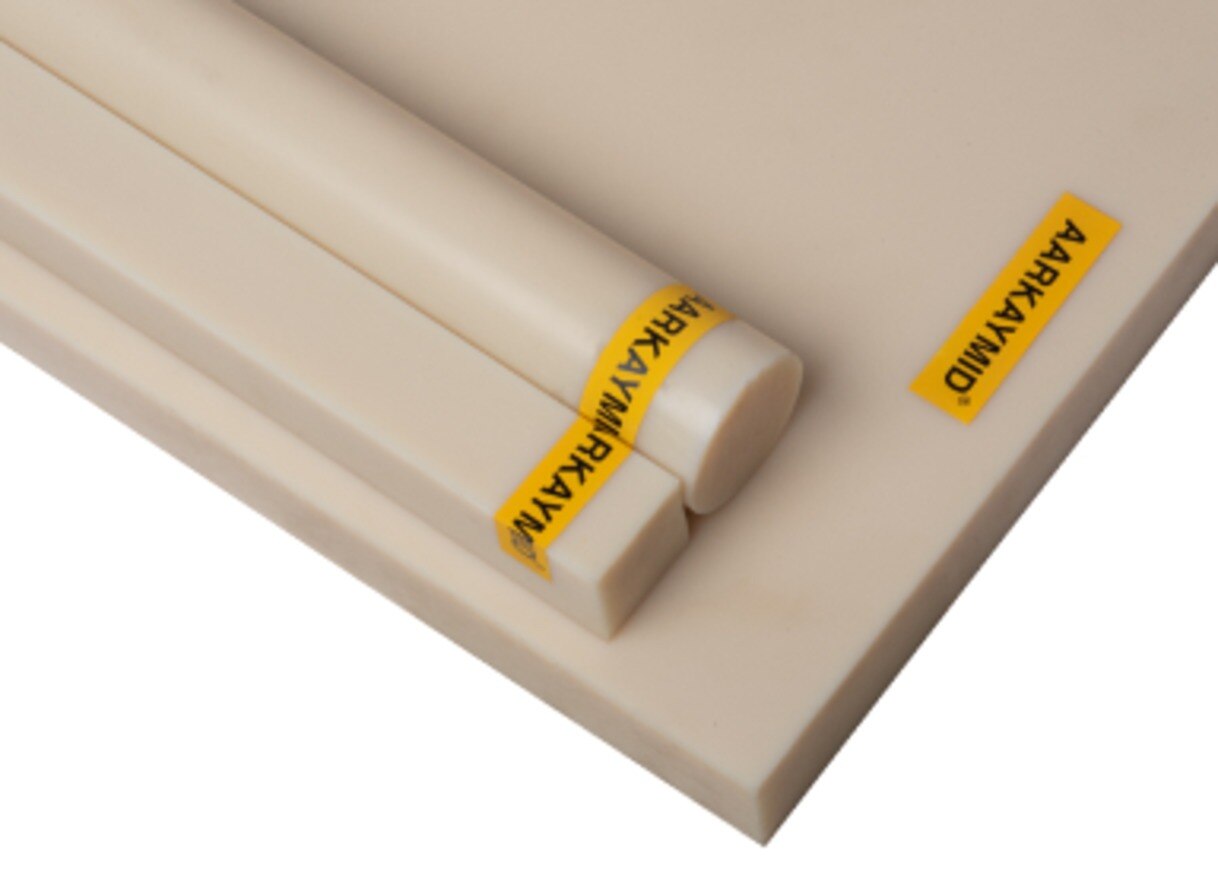
Choosing between glass-filled polyamide and unfilled cast nylon depends on the part’s load, sliding contact, moisture exposure, geometry and machining route—not on a generic “nylon” label. You will be able to specify the grade, predict the main machining risks and select acceptance tests for parts made in Bhopal’s changing humidity.
Key takeaways
- Confirm glass-fibre percentage and fibre orientation before comparing grades.
- Choose cast nylon for low-moisture stability and glass-filled polyamide for higher stiffness.
- Allow for moisture-driven size changes when setting nylon tolerances.
- Machine with sharp tools and verify dimensions after conditioning.
Start with the grade, fibre content and direction
Do not compare “nylon” by name alone. Glass-filled nylon usually means injection-moulded PA6 or PA66 with a stated glass-fibre loading, such as 15%, 30% or glass content by weight. Cast nylon usually means unfilled cast PA6, designated PA6G or nylon 6 monomer-cast.
The resin, reinforcement and additive package must be identified before any property value has meaning.
For a polyamide glass filled versus cast nylon in Bhopal specification, record:
- PA6 or PA66, glass-fibre percentage, stabilisers, lubricants and colour
- Injection-moulded or cast stock, including sheet, rod, tube or finished blank
- Fibre direction relative to the machined load; injection flow aligns fibres, while cast PA6G has no glass-fibre orientation
- Dry-as-supplied or moisture-conditioned test state, test direction, lot tolerance and stock dimensions
| Option | What it means before comparison | Main consequence |
|---|---|---|
| Glass-filled PA6 or PA66 | Resin reinforced with a stated glass percentage; properties differ along and across flow direction | Higher stiffness and creep resistance, but anisotropy, exposed fibres and lower toughness can affect machining and mating surfaces |
| Cast PA6G | Monomer-cast, normally unfilled nylon 6 with no glass-fibre direction | More uniform sliding behaviour and toughness, but lower stiffness and greater moisture-related change |
A polyamide glass filled comparison in Bhopal is invalid if it compares dry injection stock with moisture-conditioned cast stock. Request the grade, fibre loading, orientation, moisture condition and lot certificate before ranking values.
Match each material to the part’s real duty
Shafts and bushes need different answers: choose cast nylon for forgiving sliding contact, but choose glass-filled nylon when shaft deflection or compressive load controls the design. In glass filled nylon vs cast nylon in Bhopal, do not treat higher tensile strength as proof of better bearing performance.
| Part | Starting choice | Why and caution |
|---|---|---|
| Shafts | Cast nylon | Suits low-speed sliding and protects the mating surface; use glass-filled nylon when stiffness matters, then check fibre abrasion. |
| Bushes | Cast nylon | Conforms well and runs quietly; glass-filled nylon suits heavier loads only with a compatible, hardened shaft. |
| Wear strips | Cast nylon | Usually gives lower counterface damage and good sliding behaviour; avoid it where deflection causes binding. |
| Rollers | Glass-filled nylon | Better stiffness and load capacity; choose cast nylon for impact, noise reduction or gentle handling. |
| Gears | Cast nylon | Offers quieter meshing and some conformability; use glass-filled nylon for higher torque or temperature after checking tooth wear. |
| Guide blocks | Cast nylon | Preferred for smooth sliding and reduced mating-surface damage; glass-filled grades can abrade rails. |
| Insulators | Glass-filled nylon | Greater rigidity helps retain shape around fasteners; verify dielectric strength after humidity exposure. |
| Structural machine parts | Glass-filled nylon | Higher modulus limits bending; avoid sharp notches and thin sections under impact. |
For impact-loaded or vibration-isolating parts, unfilled cast nylon is often safer because glass fibres reduce elongation and notch tolerance. For either choice, compare parts after humidity conditioning at the service temperature; a dry glass-filled sample and moisture-conditioned cast-nylon sample do not form a valid glass filled nylon vs cast nylon in Bhopal comparison.
Account for humidity, temperature and dimensional change
A dry-as-moulded value can mislead a close-tolerance part. Both glass-filled nylon and cast PA6 absorb atmospheric moisture, changing dimensions, mass, stiffness and electrical properties; PA6-based grades are particularly sensitive. Temperature adds thermal expansion, while glass-fibre orientation makes movement different along and across the mould-flow direction.
For a sound polyamide glass filled comparison in Bhopal, compare like conditions: the same PA6 or PA66 grade, fibre percentage, moisture state, temperature and test direction. Comparing dry glass-filled injection stock with moisture-conditioned cast nylon proves little.
Specify these controls before ordering:
- State the resin, glass-fibre percentage, additives, stock form and required moisture condition.
- Request sealed packaging or controlled storage, a lot-specific certificate, stock dimensions and machining recommendations.
- Define the service humidity and temperature, then set dimensional limits at that condition rather than relying on a dry datasheet value.
For cast nylon close-tolerance parts, rough-machine first, allow the part to equilibrate under the intended environmental condition, then finish-machine and inspect it there. This releases machining stress before final dimensions are accepted. Measure bore, outside diameter, thickness and flatness at a recorded temperature; repeat after humidity exposure if the fit is critical.
Test creep or compression under the actual load, because moisture and heat can turn an initially accurate bush or guide into a loose or distorted part.
Machine the stock without damaging fibres or changing the fit
Sharp carbide tools and rigid fixturing protect glass fibres and cutting accuracy; cast nylon needs the same support but is less abrasive and easier to finish. Leave machining allowance for stress release and moisture movement, especially for cast nylon machining material in bhopal.
1. Rough-machine the blank, leaving finishing stock; allow it to equilibrate at the intended service temperature and humidity, then finish-machine and inspect it. Do not compare a dry glass-filled part with moisture-conditioned nylon.
| Operation | Glass-filled nylon | Cast nylon |
|---|---|---|
| Turning | Use sharp carbide, controlled heat and generous chip clearance; reduce edge wear before fibres tear out. | Use a sharp polished tool and light finishing cuts for a smoother surface. |
| Milling | Clamp rigidly, use sharp carbide cutters and climb milling where the setup permits; dull tools expose fibres and alter the fit. | Use sharp high-clearance cutters and avoid rubbing, which melts or smears the surface. |
| Drilling | Support the exit, clear chips frequently and use a stepped or peck cycle; packed chips generate heat. | Use a sharp drill, back it out to clear chips and avoid pushing a hot drill through the exit. |
| Reaming and boring | Bore close to size, then use a sharp adjustable reamer or fine boring tool; inspect for fibre pull-out. | Finish with a sharp reamer or boring tool and account for elastic recovery. |
| Threading | Prefer sharp single-point carbide tooling or a sharp tap with chip relief; avoid damaged crests. | Sharp taps and single-point tools produce clean threads, but leave clearance for thermal expansion. |
In glass filled nylon vs cast nylon in bhopal, measure mating fits after conditioning, not straight from sealed stock. Fibre direction can also make a bored hole expand differently across and along the mould-flow direction.
Specify the supply condition and prove performance before release
A Bhopal supplier must state the exact resin and supply condition, not simply “nylon.” For a polyamide glass filled versus cast nylon in Bhopal purchase, request PA6 or PA66, glass-fibre percentage and orientation, additives, stock form, colour, moisture condition, lot number and allowable lot variation.
Require sealed packaging or controlled storage, stock dimensions, machining recommendations and a lot-specific certificate.
- Confirm whether the material is dry-as-moulded, moisture-conditioned or equilibrated after machining.
- For cast nylon machining material in Bhopal, rough-machine first, let the part equilibrate at its service temperature and humidity, then finish-machine and inspect it.
- Ask Classic Polymers & Resins to identify the inspection condition on the certificate and drawing; comparing dry glass-filled stock with moisture-conditioned cast nylon produces misleading results.
Test the finished part against its actual duty, not a catalogue tensile-strength ranking.
| Test | What to measure | Release evidence |
|---|---|---|
| Dimensional stability | Bore, shaft diameter, flatness and runout after humidity exposure | Values remain within the drawing tolerance |
| Compression or creep | Deformation under the real load, temperature and duration | Fit and preload remain acceptable |
| Wear test | Wear rate and friction against the actual counterface | No unacceptable scoring, seizure or clearance growth |
| Impact test | Resistance using the expected impact geometry and temperature | No cracking or catastrophic fracture |
| Surface inspection | Roughness, fibre pull-out, burns, chips and machining tears | Counterface-contact surfaces meet the specified finish and show no damage |
Related products
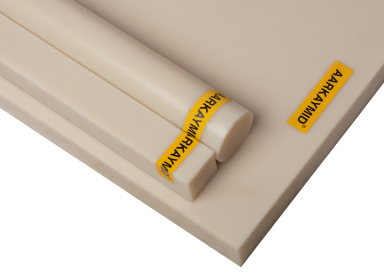 | Polyamide Glass Filled Cast Polyamide 6 (Cast Nylon 6 or PA 6) is one of the most versatile thermoplastics. View product → |
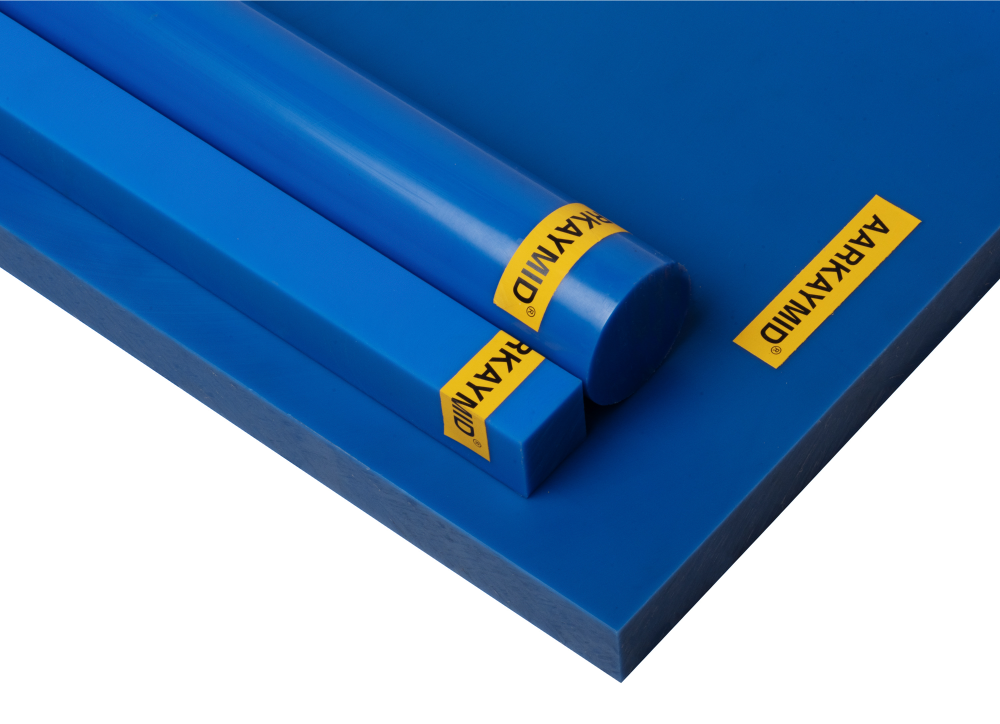 | Polyamide - Cast Heat Stabilised Grade Polyamide - Cast Heat Stabilised Grade Cast Polyamide 6 (Cast Nylon 6 or PA 6) is one of the most versatile thermoplastics. View product → |
Frequently asked questions
What should you compare first: glass-filled polyamide or cast nylon?
Compare the exact grade, glass-fibre percentage and fibre orientation. Injection-moulded PA6 or PA66 can contain 15% or 30% glass by weight, while cast nylon is commonly unfilled PA6G.
When is glass-filled polyamide a better choice for a machined part?
Use glass-filled PA6 or PA66 when the part needs higher stiffness, load capacity or dimensional resistance than unfilled cast nylon provides. Check fibre direction because properties differ along and across the flow direction.
When is cast nylon a better choice than glass-filled nylon?
Choose cast PA6G when the part needs good wear performance, impact tolerance and easier machining without exposed glass fibres. Confirm its moisture uptake and dimensional change before fixing tight tolerances.
How does humidity affect machined nylon parts?
Nylon absorbs moisture, which changes dimensions and mechanical properties. Condition the material and measure the finished part under the same humidity and temperature expected in service.
How should you machine glass-filled polyamide stock?
Use sharp, rigid tooling, control heat and support the workpiece securely. Avoid rubbing and excessive cutting temperatures, which can damage fibres, degrade the polymer or alter the final fit.
Related products
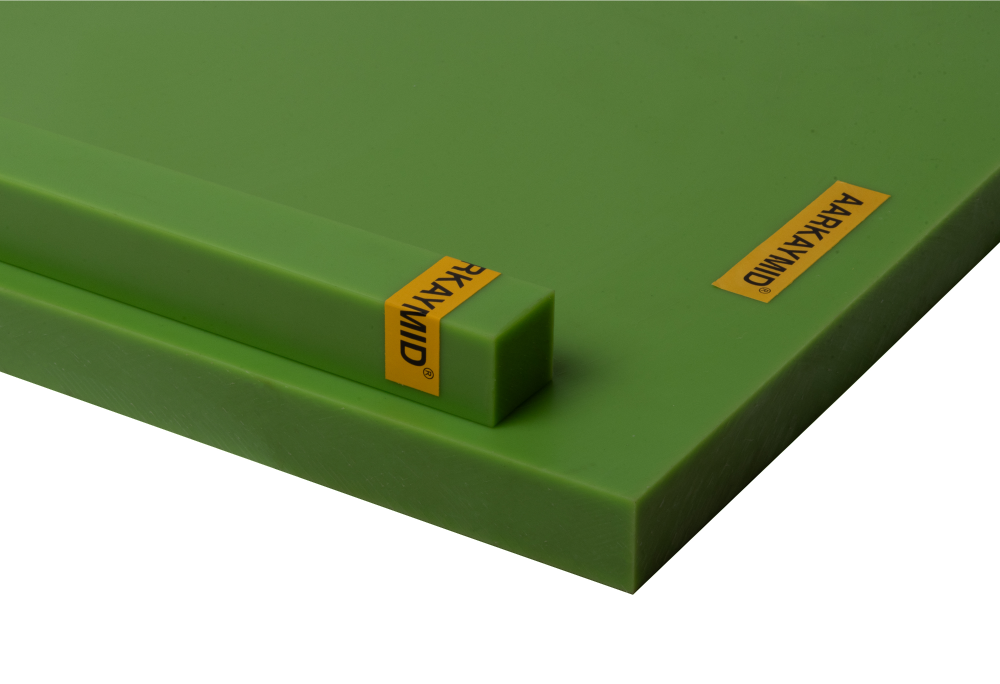 | Polyamide Green Cast Polyamide 6 (Cast Nylon 6 or PA 6) is one of the most versatile thermoplastics. View product → |
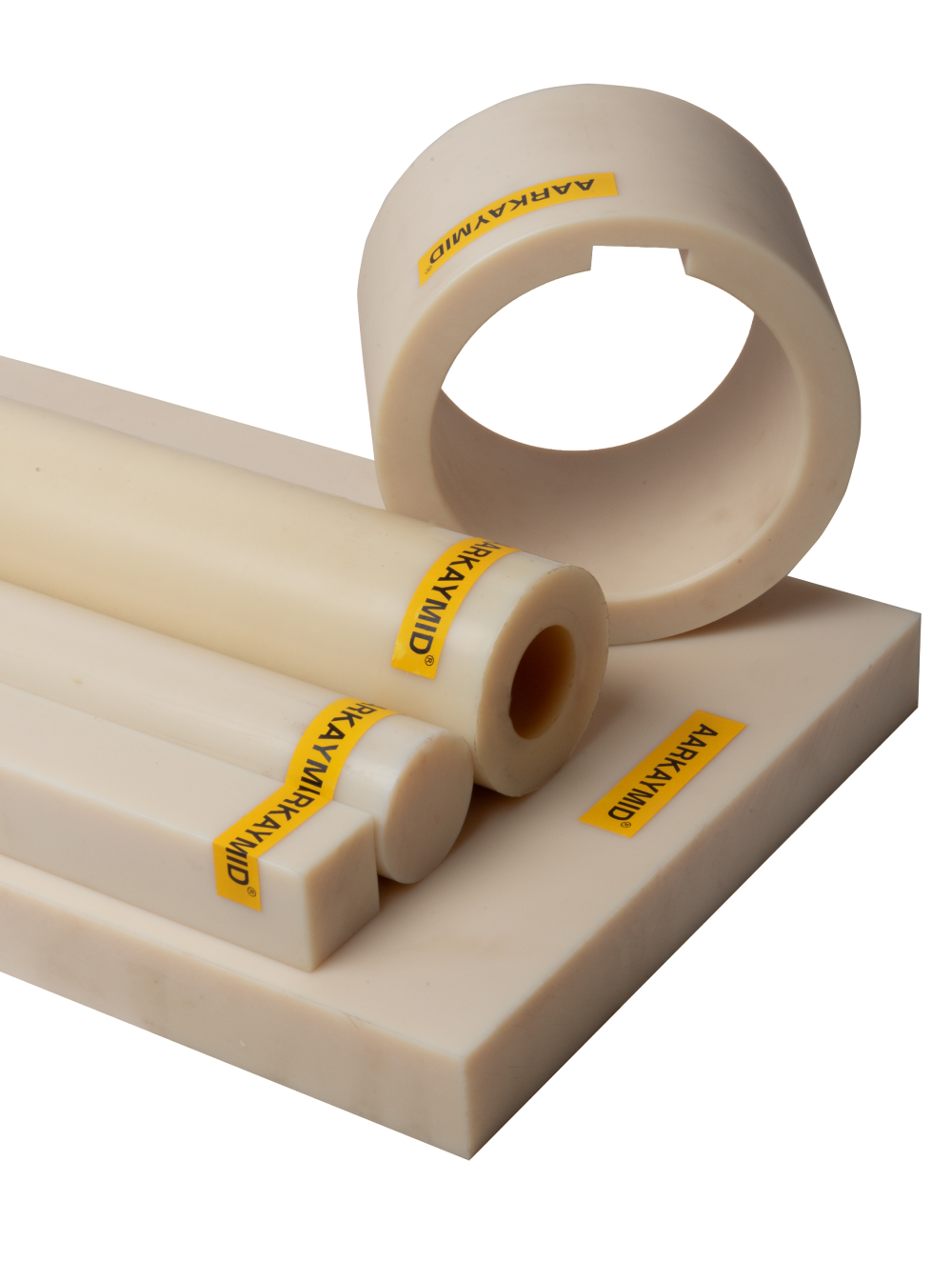 | Polyamide Natural Polyamide - Cast Polyamide Cast Polyamide 6 (Cast Nylon 6 or PA 6) is one of the most versatile thermoplastics. View product → |
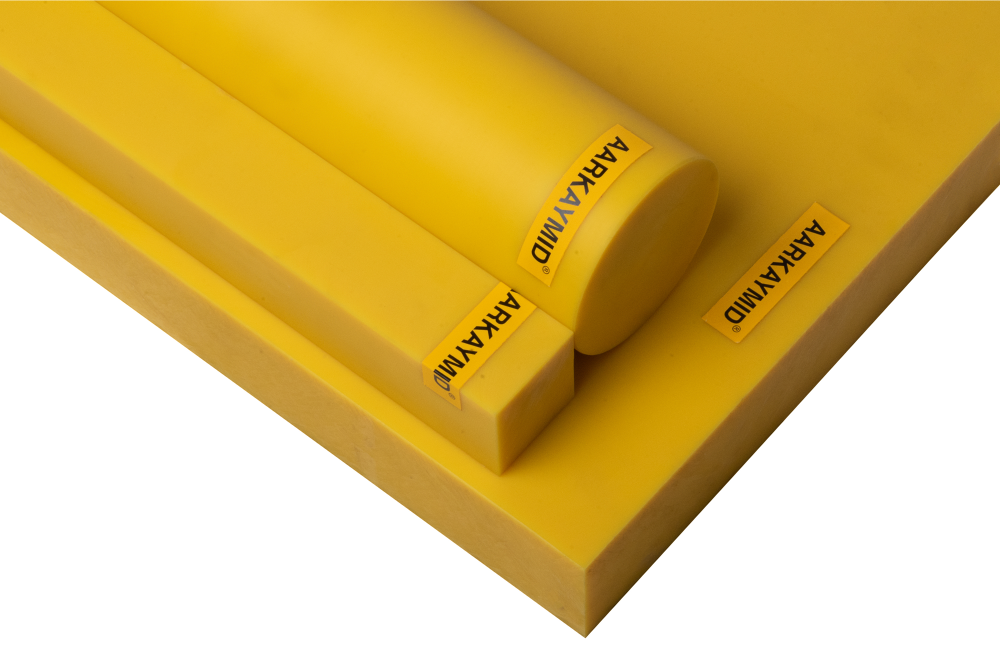 | Polyamide PA 612 Cast Polyamide 6 (Cast Nylon 6 or PA 6) is one of the most versatile thermoplastics. View product → |
 | Polyamide Yellow Dimensional Stable Polyamide Yellow Dimensional Stable Cast Polyamide 6 (Cast Nylon 6 or PA 6) is one of the most versatile thermoplastics. View product → |