
A catalogue name is not proof that the requested XLU grade is sitting in a Bhopal warehouse. You will be able to verify the material identity, confirm stock in the required form, compare alternatives and send an enquiry that produces a usable quotation rather than a generic nylon offer.
Key takeaways
- Request the producer name, base polymer, datasheet and lot number.
- Confirm physical Bhopal stock instead of relying on supplier availability claims.
- Specify dimensions, tolerances, quantity, application and delivery requirements.
- Compare moisture, wear, strength and temperature data across PA grades.
How do you verify XLU grade and actual Bhopal stock?
Polyamide XLU is a manufacturer-specific designation, not a universally defined resin name. Treat it as unverified until the seller identifies the producer, base polymer such as PA 6 or PA 66, reinforcement or filler package, grade datasheet, batch or lot number and material certificate.
A quotation calling it PA6, nylon or engineering plastic does not confirm XLU.
For polyamide xlu availability in bhopal, ask these questions in writing:
- Is the material physically in Bhopal, coming from another city, or being made to order?
- Is the available form sheet or plate, rod, tube, block, cut blank or machined component?
- What quantity, colour, dimensions, stock location and dispatch date apply to this exact lot?
- Is it virgin material, reprocessed material, mixed material or a machining offcut?
- What packaging was used, and how was the material stored against moisture? Ask for the storage and exposure history where the grade is unfamiliar.
Do not accept a catalogue listing as proof of local stock. Intercity sourcing and made-to-order cutting have different lead times and freight arrangements. Request a small cut piece or test coupon before approving production; appearance and hardness cannot reliably distinguish XLU from ordinary cast PA6, extruded PA6, PA 66 or filled nylon.
Check the delivered dimensions, batch identity, packaging and moisture condition before machining.
What must you specify when buying XLU in Bhopal?
To buy polyamide XLU in Bhopal, send a drawing-based enquiry rather than a request for “nylon stock.” State whether you need material or finished parts, then provide:
1. Finished part length, width, height, bore and outside diameter; machining allowance; stock shape (sheet, rod, tube, block or cut blank); required length, diameter or thickness; colour; quantity; and dimensional tolerances.
2. Label every dimension as as-supplied, conditioned or final-machined. Polyamide gains moisture and expands, while temperature changes size; an unlabelled dimension can produce an apparently incorrect part after storage or conditioning.
3. Ask for minimum order quantity, standard stock sizes, cut-length policy, lead time, dispatch method, freight responsibility and confirmation that delivery reaches your plant. Require the supplier to state whether stock is physically in Bhopal, transferred from another city or made to order.
4. Identify the supply route. A fabricator using customer-supplied material must confirm drawing interpretation, inspection records, traceability and tolerance capability. A material seller must provide grade, producer, batch, form, packaging and storage evidence, including exposure to ambient humidity.
5. For thin rings and long rods, specify extra machining allowance and support requirements. Clamping release can cause ovality and spring-back, so a nominally correct blank may not yield a correct finished part.
Before approval, request a cut piece or test coupon for an unfamiliar XLU designation, and obtain written acceptance criteria for final inspection.
Which XLU data-sheet values control fit and service life?
Fit and service life depend on the test conditions behind each XLU value, not the value alone. Request tensile strength, compressive strength, impact strength, hardness, elongation, coefficient of friction, wear performance, modulus where listed, density and water absorption, with an identified ISO or ASTM method for every result.
Ask the supplier to state specimen condition, test temperature, moisture state and test direction. For wear data, also request counterface material, load, speed and distance; without these details, a friction or wear number cannot predict a bearing, guide or wear strip.
| Data-sheet condition | Meaning | Comparison risk |
|---|---|---|
| Dry-as-moulded | Tested soon after moulding or drying | Can overstate stiffness and underestimate elongation after moisture uptake |
| Conditioned | Held at a stated humidity and temperature | Compare only with the same conditioning procedure |
| Equilibrium moisture | Stabilised at a stated environment | Gives a different fit and service picture from dry material |
Do not compare these three states directly. Absorbed water can increase toughness and elongation while reducing stiffness, increasing weight, changing dimensions and altering clearance until a fitted part loses its intended fit.
Request the service-temperature range, continuous temperature, peak exposure duration and the temperature at which dimensional stability becomes unacceptable for your part. Include humidity or water exposure, load direction, speed, chemical contact and allowable dimensional change; room-temperature tensile strength alone cannot establish suitability.
Obtain grade-specific compliance statements for electrical insulation, pressure containment, food contact, flame resistance or continuous high-temperature use. Never infer compliance from the word polyamide.
How should XLU compare with other polyamide grades for Bhopal plants?
A tensile-strength figure at room temperature does not establish suitability for a bearing, guide, gear, seal carrier, wear strip, roller or insulating part. Compare the grade against the duty, including load, speed, humidity, water, chemicals, temperature cycling and allowable clearance change.
| Option | Load, moisture and temperature trade-off | Suitable decision point |
|---|---|---|
| XLU grade | Review the producer’s exact formulation; performance under load, speed, water and chemicals depends on its data and conditioning basis. | Select only when documented dimensional change fits the application. |
| Extruded PA 6 | Practical stock and machining choice, but moisture can reduce stiffness and change fit. | Guides, wear strips and moderate-load parts with controlled clearance. |
| PA 66 | Higher stiffness and temperature capability than PA 6, with a stronger moisture-related dimensional trade-off. | Higher-load gears, rollers or carriers after humidity and heat checks. |
| PA 612 | Lower moisture response than PA 6 or PA 66, with different stiffness and temperature limits. | Precision guides, seal carriers and insulating parts needing tighter dimensional control. |
| Natural cast nylon | Cast internal structure, large-size availability and machining behaviour differ from extruded stock. | Large bearings, rollers and wear parts where load and size justify testing. |
| Yellow dimensional-stable polyamide | “Dimensional-stable” describes a formulation, not automatic suitability; verify water response, wear and temperature limits. | Precision parts where clearance change matters more than maximum strength. |
Compare ISO or ASTM methods, specimen direction and dry-as-moulded, conditioned or equilibrium-moisture results. For xlu grade polyamide in bhopal, ask the supplier to review the mating material, load direction and allowable clearance change.
Machine with sharp supported tools, clear chips, low heat generation and secure support. Thin rings and long rods need particular control because clamping release can cause ovality or spring-back.
What should a Bhopal XLU supplier confirm before quoting?
A reliable quote starts with evidence, not a catalogue description. Treat any polyamide XLU supplier in Bhopal as unverified until the seller identifies the grade, confirms physical stock and supports the offer with traceable documents.
1. Request the exact grade identity, producer, base polymer (PA 6 or PA 66), filler or reinforcement, virgin-material status, stock form (sheet, plate, rod, tube, block, cut blank or component), colour, dimensions, tolerance and batch or lot certificate.
2. Ask whether dimensions are as-supplied, conditioned or final-machined, and state the required machining allowance. Include minimum order quantity, cut-length policy, lead time, dispatch date and delivery destination. Polyamide dimensions change with moisture and temperature.
3. Require the datasheet to show test methods, specimen condition, test temperature and moisture state for strength, hardness, elongation, friction, wear, density and water absorption. Ask for storage condition and the water-absorption basis; dry-as-moulded and conditioned values are not interchangeable.
4. Require written confirmation that the offer is local Bhopal stock, an intercity transfer or made-to-order production. Ask for stock quantity, location and packaging history. If XLU is unfamiliar, obtain a cut piece or test coupon before approving a production lot.
Classic Polymers & Resins can provide one route for grade verification, semi-finished stock or machined components, but documentation and physical-stock confirmation remain the decision criteria. On receipt, check dimensions, batch identity, packaging and moisture exposure before machining or final inspection.
Related products
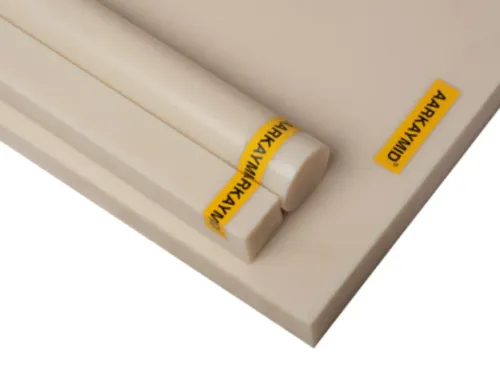
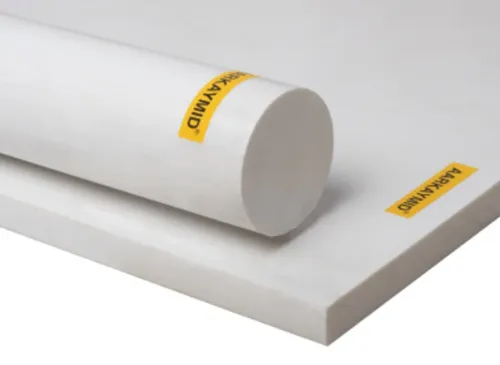
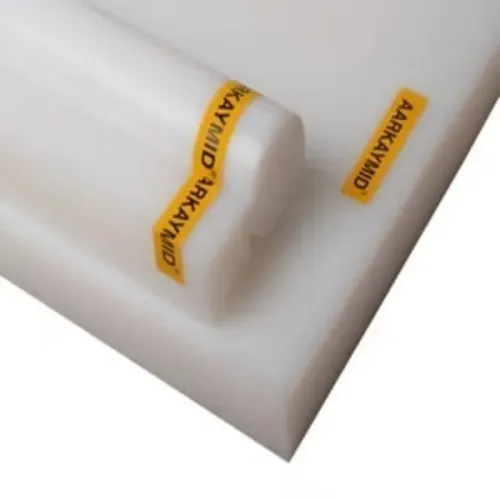
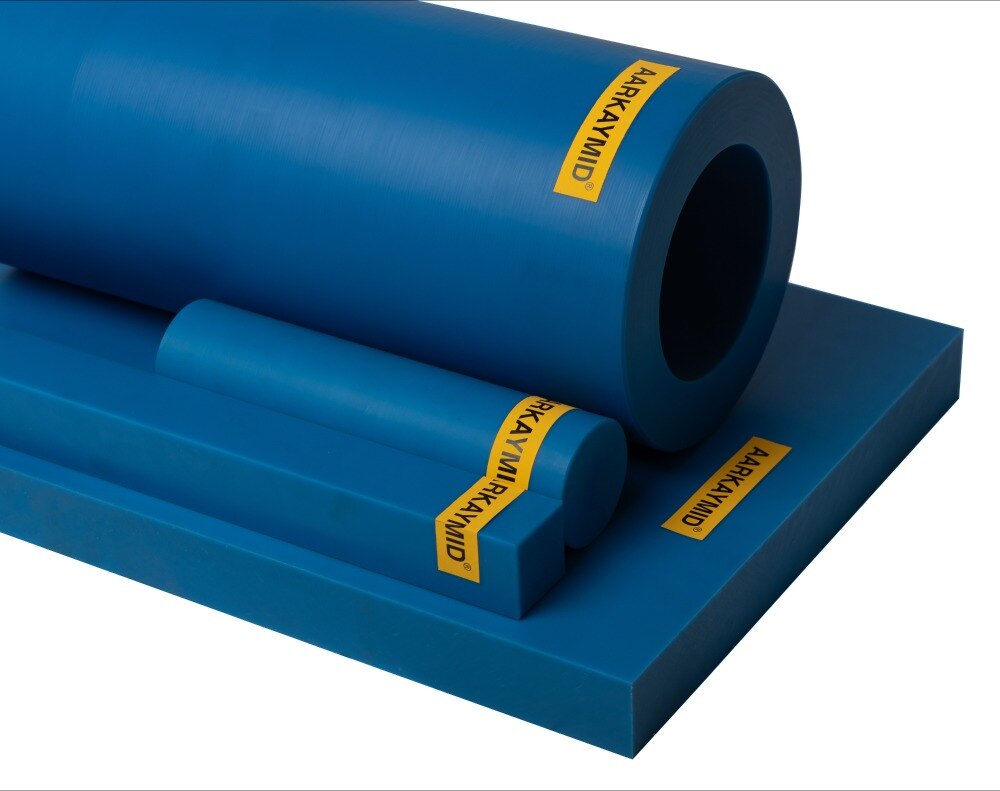
 | Polyamide XLU Grade Cast Polyamide 6 (Cast Nylon 6 or PA 6) is one of the most versatile thermoplastics. View product → |
 | Polyamide - XLU Cast Polyamide 6 (Cast Nylon 6 or PA 6) is one of the most versatile thermoplastics. View product → |
Frequently asked questions
How do you verify XLU grade and actual Bhopal stock?
Ask the supplier to identify the producer, PA 6 or PA 66 base, filler package, datasheet revision, batch number and material certificate. Confirm the quantity, form, dimensions and storage location of stock physically available for dispatch from Bhopal.
What must you specify when buying XLU in Bhopal?
State whether you need sheet, rod, tube, finished parts or another form. Include dimensions, tolerances, quantity, application loads, temperature, chemicals, wear conditions, electrical needs, delivery date and required inspection documents.
Which XLU data-sheet values control fit and service life?
Check tensile strength, modulus, compressive strength, impact strength, water absorption, coefficient of thermal expansion, continuous-use temperature, friction, wear data and dimensional tolerances. Match test methods and conditioning states before comparing values.
How should XLU compare with other polyamide grades for Bhopal plants?
Compare XLU with PA 6, PA 66, cast nylon and reinforced grades using the same moisture condition, temperature, load, wear test and dimensions. Select the grade that meets the service conditions rather than the lowest quoted price.
What should a Bhopal XLU supplier confirm before quoting?
The supplier should confirm the exact manufacturer designation, base polymer, reinforcement, stock form, available quantity, lot traceability, datasheet, certificate, dimensions, tolerances, price basis, lead time and delivery location.