
A nylon part can leave the machine within tolerance and still bow, shrink, close its bore or change shape after release. By controlling moisture condition, cutting heat, stress release, support and inspection timing, you can separate a machining fault from dimensional movement that occurs later.
Key takeaways
- Control moisture exposure before machining and after roughing.
- Use staged roughing, sharp tools and restrained workholding.
- Condition finished parts before accepting final dimensions.
- Specify material grade, conditioning, tolerances and inspection points.
Why polyamide changes shape during and after machining
Polyamide changes size because it exchanges moisture with the surrounding air. Moisture uptake swells the material; drying causes shrinkage. A natural polyamide blank therefore carries a dimensional history from storage, conditioning and machining, not just the dimensions set by the program.
This moisture-driven movement is a major cause of polyamide machining warping after the cutting has ended.
- Residual stresses from casting or extrusion can relax when machining removes the supporting material. Crystallinity changes from processing and reheating also alter local dimensions.
- Cutting heat softens polyamide and increases thermal expansion. Dull tools, rubbing and blocked chip clearance intensify the effect and can leave melted or torn surfaces.
- Removing much more material from one side releases stress unevenly. A thin wall, web, ring or long unsupported section can deflect under the cutter or an over-tight clamp, then spring back when released.
Separate cutting distortion from later dimensional movement by checking the part in the fixture and again after unclamping. A bore that is round under clamping but closes or becomes oval after release indicates elastic deflection or residual-stress relief during machining.
A part that is initially correct but changes during controlled storage points to moisture or temperature equilibration. Record dimensions, temperature, humidity and elapsed time; repeat the measurement after the component stabilises. That pattern identifies polyamide component warping caused during cutting versus movement that continues afterward.
A stable cast-nylon machining workflow
Condition the blank before cutting, rough it in stages, let stresses relax, then finish to size with controlled heat. This sequence reduces cast nylon dimensional problems more reliably than correcting changing dimensions with CNC offsets.
1. Identify the material as cast nylon, not merely “natural nylon,” and record its grade, diameter or thickness, moisture history and conditioning state. Keep stock sealed during storage, especially through Bhopal’s humid and monsoon periods.
2. Condition the blank and allow it to reach a uniform temperature before clamping. Use the agreed service or inspection condition; otherwise moisture uptake or drying will alter the result after machining.
3. Rough-machine both sides or opposing features in balanced passes, leaving a measurable finishing allowance. Remove material gradually so one-sided stress release does not bow the blank, taper the outside, or shift a bore.
4. Unclamp the rough part and allow it to relax or receive the grade-appropriate stress-relief treatment. Support thin webs, rings and plates close to the cutting zone without crushing them.
5. Finish-machine after relaxation, removing only the remaining allowance. Use sharp, polished tools with positive rake and adequate clearance; a dull edge rubs, raises heat and pushes nylon away from the cut.
6. Control heat with high cutting speed, moderate feed and shallow finishing passes, supported by dry compressed air or a controlled coolant method. Do not let chips recut or pack into a bore.
Measure only after the component has cooled and stabilised in the defined inspection environment. Record that conditioning state beside each critical dimension.
Warning signs that reveal nylon machining distortion
A bore that is round under the fixture but tight or oval after release shows that clamping or cutting force deflected the wall. The spring-back is evidence of nylon machining distortion, not a simple measuring error.
Look for geometry changes that appear immediately after unclamping:
- A thin plate lifts at its edges or rocks on a flat table. The fixture compressed it, or the cut removed material unevenly.
- A turned ring becomes oval, with the widest dimension aligned with the clamping points. Excessive chuck pressure or insufficient support is the likely cause.
- A flat face becomes concave or convex. One side released more residual stress than the other, or heat and stock removal were uneven.
- A long web or unsupported wall bends toward the cutter, then returns partly after the pass. Cutting force exceeded the section’s stiffness.
| Geometry change | What it indicates | Confirmation |
|---|---|---|
| Bore closes after release | Wall deflection from clamping | Measure while clamped and again after release |
| Unequal wall thickness around a bore | Off-centre setup or uneven stock removal | Compare readings at four positions |
| Taper at the free end | Unsupported-section deflection | Support the section and repeat a light finish pass |
| Glossy, torn or smeared band | Rubbing heat from a dull tool or packed chips | Inspect the cut surface and check tool sharpness |
If the part changes shape only after cooling or humidity exposure, record that separately from distortion created during cutting.
How to condition and measure the finished component
Choose the conditioning state from the part’s intended service environment, then bring both the component and reference standard to that defined temperature and relative humidity before inspection. A warm, recently machined part can pass inspection and still move during shipment or installation.
| Condition | What the measurement represents | When it applies |
|---|---|---|
| As-machined, unconditioned | Immediate process result, not stable service size | Use only to diagnose cutting distortion |
| Controlled laboratory condition | Repeatable comparison between parts and batches | Use for drawing acceptance when no service environment is specified |
| Defined service condition | Expected installed dimension after moisture and temperature equilibration | Use when the component operates in a specified temperature and humidity range |
For Bhopal production, state the conditioning temperature, relative humidity, exposure duration, and elapsed time after machining in the inspection record. Include hot-season storage and monsoon exposure in the decision; sealed, moisture-controlled storage prevents uncontrolled moisture changes before measurement.
Use a CMM, height gauge, bore gauge, or calibrated micrometer according to the geometry. Support the part as it is supported in service, or measure it free from clamping forces on clearly identified datums. Record several points across a face, bore, or thin wall: a single reading can hide ovality, taper, or a concave face.
Cooling the cut with compatible flood coolant controls machining heat; it does not condition the finished nylon. Dry the component, prevent contamination, and allow it to equilibrate before inspection. This separation helps identify polyamide component warping caused during cutting rather than dimensional movement caused by moisture uptake or stress relaxation.
What to specify when buying machined polyamide in Bhopal
Require the supplier to define the material, its conditioning history and the inspection condition before accepting a drawing size. For polyamide natural components warping in bhopal, “natural nylon” is insufficient: the blank’s form, grade, moisture exposure and machining sequence all affect the result.
Ask Classic Polymers & Resins to identify these details on the quotation and material certificate.
| Material choice | Require in the specification | Why it matters |
|---|---|---|
| Cast nylon PA6 | Cast form, grade, batch number and stock dimensions | Cast and extruded nylon can have different stress, shrinkage and moisture histories |
| Extruded PA6, PA12 or PA66 | Exact polymer, extrusion form and supplier data sheet | “Extruded nylon” does not predict the same movement as cast stock |
| Any hygroscopic polyamide | Conditioning temperature, relative humidity and duration | Moisture uptake swells nylon; drying causes shrinkage |
Your purchase order should also require:
- Roughing and finishing allowances, with balanced cuts on opposite faces; removing one side heavily can release stress and bow the part.
- Temporary support or sacrificial stock for thin walls, rings and plates.
- Cutting-fluid or dry-machining method, tool material, sharpness and heat-control limits.
- Final inspection only after the part and reference standard reach the agreed temperature and humidity.
- Recorded dimensions before and after conditioning, plus permitted post-machining relaxation and storage in sealed moisture-controlled packaging.
For polyamide machining warping, require the supplier to state whether the deviation appeared immediately after unclamping or after humidity equilibration. That distinction identifies cutting distortion rather than later dimensional movement.
Related product
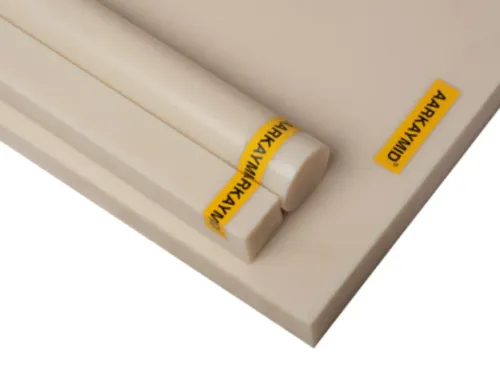
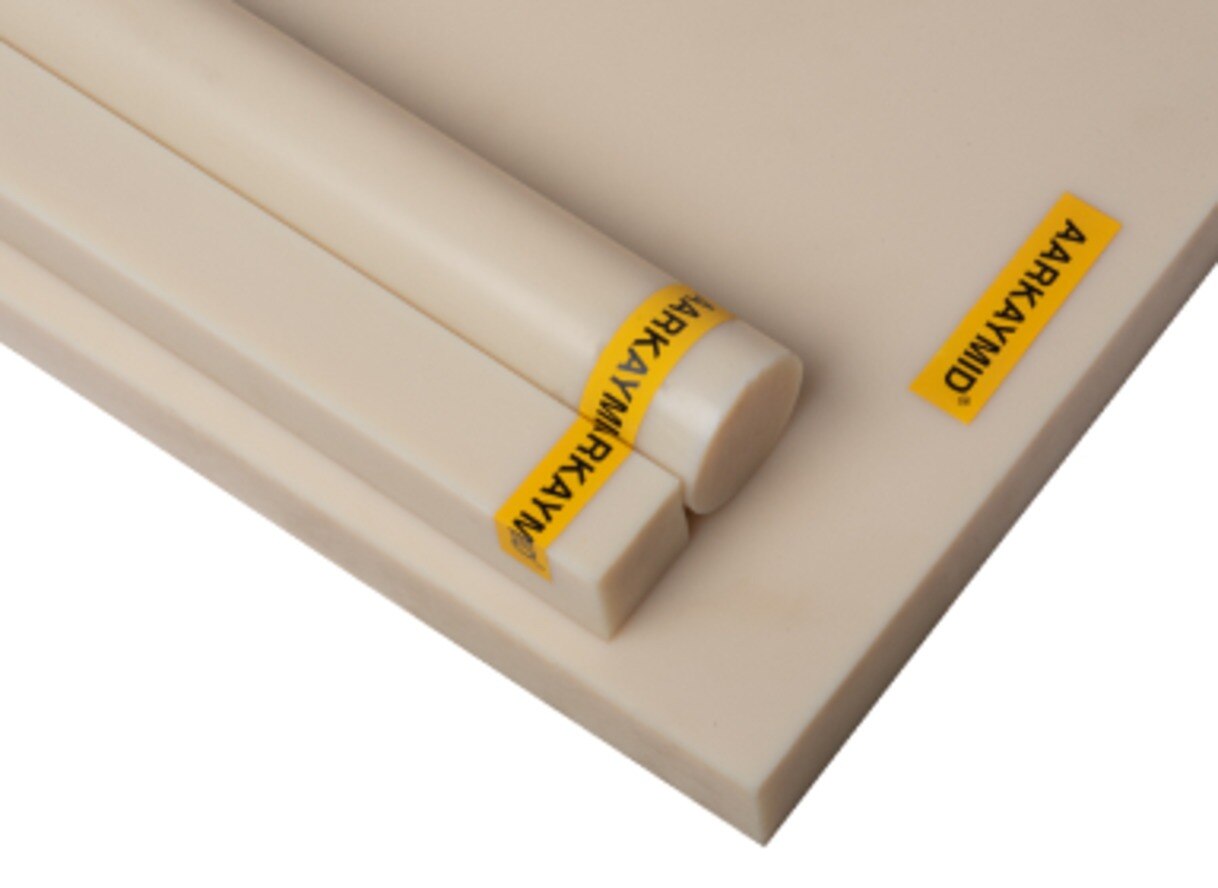
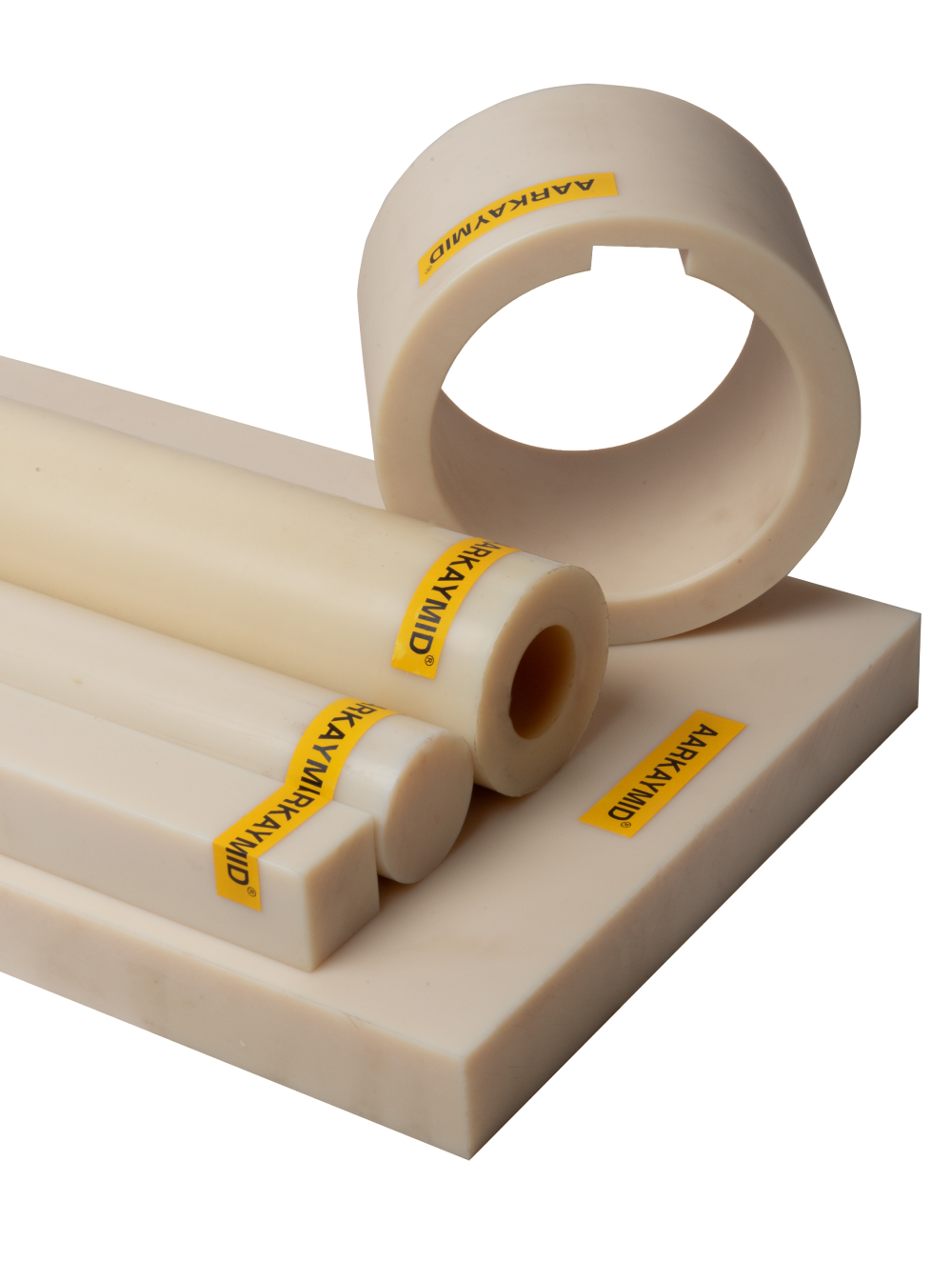 | Polyamide Natural Polyamide - Cast Polyamide Cast Polyamide 6 (Cast Nylon 6 or PA 6) is one of the most versatile thermoplastics. View product → |
Frequently asked questions
Why do natural polyamide components warp after machining?
Polyamide absorbs and releases moisture, so machining can expose internal stress and cause swelling, shrinkage or shape changes after cutting.
How can you reduce polyamide machining warping?
Keep blanks and parts in a controlled environment, use staged roughing, allow stress relaxation, and avoid excessive clamping force.
What warning signs indicate nylon machining distortion?
Look for bowing after unclamping, changing bore size, tapered walls, uneven faces and dimensions that shift after conditioning.
How should you measure a finished polyamide component?
Condition the component before final inspection, then measure it at defined points with calibrated instruments and record the temperature and moisture history.
What should you specify when buying machined polyamide in Bhopal?
State the polyamide grade, blank condition, drawing tolerances, conditioning method, inspection requirements and the dimensions that control fit or function.