
An urgent replacement fails when “stabilized” describes a color or sales label instead of a defined formulation, temperature rating and dimensional condition. You will be able to identify the grade, test its suitability for the load and environment, and place a faster order for correctly sized stock or finished parts.
Key takeaways
- Name the stabilization treatment before requesting an MC nylon grade.
- Check temperature, load, speed and PV limits against the real application.
- Separate available material size from cut, machined and dispatch-ready stock.
- Record moisture, tolerances, finish and substitute limits on the purchase order.
Define the Stabilization Before You Request a Grade
“Stabilized” on a quotation does not identify one universal material. It must name the treatment or additive package: heat-stabilized, UV-stabilized, internally lubricated, or dimensionally stabilized MC nylon. These choices alter friction, wear, colour, machinability, strength and regulatory suitability.
| Option | What it means | What to require |
|---|---|---|
| Heat-stabilized | Better property retention during prolonged heat exposure than unmodified cast nylon | Exact grade designation, continuous-use and short-term temperature limits, heat-aging and load-at-temperature data |
| UV-stabilized | Improved resistance to sunlight and ultraviolet exposure | UV exposure basis and retained-property data |
| Internally lubricated | Additives reduce friction or wear in sliding contact | Dry-running or lubricated PV data, counterface requirements and additive disclosure |
| Dimensionally stabilized | Processing or conditioning intended to reduce movement after machining | Conditioning state, moisture basis and dimensional-tolerance data |
Do not select by colour; colours overlap across compounds. If a quotation says only “stabilized MC nylon,” reject the ambiguity and request the manufacturer or compounder datasheet for the named mc nylon stabilized grade.
Put the exact designation in the order, along with the batch or lot number and certificate of conformity. For safety-critical service, request density, hardness, tensile properties, moisture condition and thermal rating for that batch. Heat-stabilized is not an unlimited-temperature guarantee.
Use Temperature, Load and PV Data to Check the Application
A heat-stabilized MC nylon grade works only when its temperature, load, speed and PV data cover the actual duty—not merely its catalog tensile strength. Request the exact grade’s continuous-use temperature, short-term limit, heat-aging results and load-at-temperature data. Heat stabilization slows property loss; it does not permit unlimited high-temperature service.
| Operating input | What to confirm | Why it matters |
|---|---|---|
| Temperature | Continuous range, peak temperature and exposure duration | Heat can reduce strength, stiffness and wear resistance |
| Load | Allowable pressure and actual bearing pressure | Excess pressure causes creep, deformation or seizure |
| Sliding speed | Surface speed and start-stop frequency | Speed generates frictional heat |
| PV and duty cycle | Pressure-velocity limit, running time and rest periods | A passing PV value can fail under continuous duty |
| Counterface and lubrication | Mating material, surface roughness, oil, grease or dry running | Wear depends on the opposing surface and lubrication state |
For a bearing, wear ring, guide roller or sliding pad, send the supplier pressure, speed, temperature and duty cycle together. Ask for PV data under comparable counterface conditions; a generic strength figure cannot validate wear life. Check dry-running separately from lubricated service because the allowable pressure, speed and temperature can change.
Include the expected humid or wash-down environment when confirming fit and clearance.
Match the Grade to Bearings, Pads, Gears and Guide Parts
Stabilized MC nylon suits bearings, wear rings, guide rollers, sliding pads, gears and guide strips when low weight, corrosion resistance and machinability matter more than maximum temperature capacity. Specify stabilized mc nylon parts against the actual load, speed and counterface—not a generic tensile-strength figure.
| Component | Suitable duty | Selection check |
|---|---|---|
| Bearings and bushings | Rotating or oscillating shafts | Allowable pressure, speed, PV limit, clearance and lubrication |
| Wear rings and sliding pads | Guided motion and moderate impact | Wear rate, mating surface finish, temperature and duty cycle |
| Gears and guide rollers | Low-noise transmission or material guidance | Tooth load, pitch speed, shock load and counterface hardness |
For dry running, choose a grade with documented friction and wear data at the required PV value; heat stabilization alone does not make ordinary MC nylon self-lubricating. Oil or grease can reduce friction and heat, but confirm chemical compatibility and prevent lubricant starvation at startup.
A rough shaft accelerates wear, while an excessively smooth counterface can retain too little lubricant.
Put these details on the drawing or purchase order:
- Operating temperature, load, speed and duty cycle
- Shaft or mating material, surface roughness and hardness
- Dry-running or lubricated service, fit and running clearance
- Required wear life and inspection temperature
Use test data from the intended counterface and environment before approving the grade.
Control Moisture, Thermal Expansion and Machining Movement
A close-tolerance MC nylon part is not dimensionally finished when it leaves the machine. Nylon 6 absorbs moisture, which changes dimensions, reduces stiffness and increases toughness; heat stabilization does not remove that sensitivity. State the required conditioning state, such as as-machined, dry, or moisture-conditioned, and define the permitted dimensional change.
Build these controls into the drawing and purchase order:
- Use the supplier’s coefficient of thermal expansion (CTE) to calculate movement: dimensional change equals original length × CTE × temperature change. Specify the inspection temperature and expected service temperature.
- Inspect stabilized MC nylon parts after the specified stress-relief or conditioning cycle, not only immediately after machining.
- Rough-machine cast rod, tube or plate with enough material for movement, apply supplier-specified stress relief or conditioning, then finish-machine and inspect.
- Confirm the raw stock’s actual oversize, straightness, wall thickness and cut length. Nominal stock size is not the same as usable machining allowance.
- Check critical fits at the humidity and temperature of the installation, especially in wash-down rooms, outdoor equipment or humid plants.
A dry-room measurement can become an interference fit after moisture uptake. Put the conditioning state, allowable moisture-related change, inspection temperature, final dimensions and fit clearance on the controlled drawing.
Find Available Stock Without Confusing Size With Readiness
An “in-stock” answer is not a dispatch commitment. Ask whether the sheet, rod, tube or near-net cast shape is physically in the supplier’s warehouse, being converted from another size, imported after order, or still awaiting production. Tie the confirmed dispatch date to the named stabilized grade and the exact dimensions.
Request these details in writing:
- Grade designation, heat-stabilization or dimensional-stabilization description, batch or lot number, and certificate of analysis
- Stock form: raw cast material or finished machined part
- Nominal diameter, width, thickness, tube bore and wall, cut length, straightness, and the actual oversize left for machining
- Quantity available now, warehouse location, and earliest dispatch date
- Datasheet revision, inspection certificate, and traceability from the stock to the quoted grade
A stabilized MC nylon supplier in Ludhiana should also identify whether it holds local stock or will procure it. Classic Polymers & Resins can be asked to separate ready-to-machine cast stock from parts requiring machining, inspection and conditioning. That distinction prevents a nominally available rod from becoming a long machining job.
For close tolerances, confirm the machining route before approving shipment: rough machine, stress-relieve or condition as specified, finish machine, then inspect at the drawing’s stated temperature. Do not accept generic nylon as a substitute without matching cast construction, stabilization, dimensions and service data.
Related products
 | Polyamide MC Stabilized Grade Cast Polyamide 6 (Cast Nylon 6 or PA 6) is one of the most versatile thermoplastics. View product → |
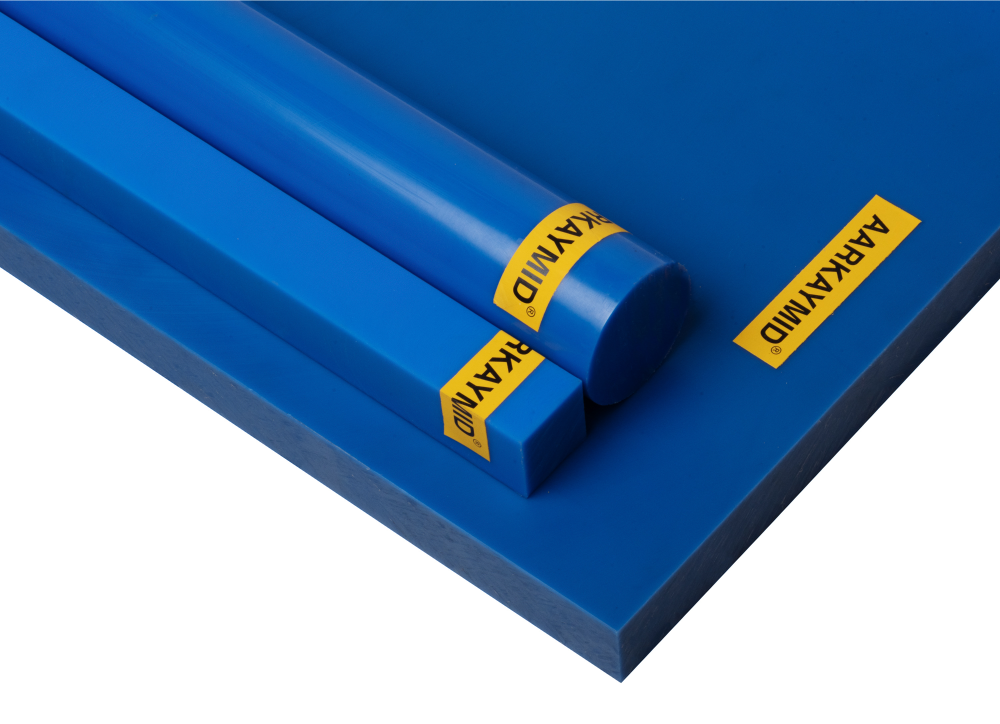 | Polyamide - Cast Heat Stabilised Grade Polyamide - Cast Heat Stabilised Grade Cast Polyamide 6 (Cast Nylon 6 or PA 6) is one of the most versatile thermoplastics. View product → |
Compare Substitutes and Lock the Requirements Into the Order
Approve a substitute only against the same load, speed, temperature, counterface, lubrication and clearance. The fastest safe replacement for an MC nylon stabilized grade is another documented cast-PA6 grade with equivalent reinforcement, lubricant package, hardness and wear data—not an unspecified nylon rod.
| Option | Comparison | Accept only when |
|---|---|---|
| Standard cast nylon | Lower thermal and dimensional stability | The duty is cooler and tolerances are relaxed |
| PA 612 | Lower moisture uptake, but different strength and thermal behaviour | You recalculate load, clearance and temperature |
| MoS2-filled MC nylon | Better dry-running friction and wear | The mating surface tolerates its compound |
| POM | Lower moisture movement and good precision | Its PV, temperature and creep data pass |
| UHMW-PE | Very low friction, but lower stiffness and load capacity | Deflection and temperature remain acceptable |
| PTFE | Lowest friction, but high creep and weak wear resistance unfilled | Load is low or the grade is filled and tested |
| Machined metal | Higher stiffness and temperature capacity, but greater weight and corrosion or lubrication demands | The counterface, weight and corrosion controls are suitable |
Write these items into the order:
- State whether you are buying raw rod, tube or plate, or finished stabilized MC nylon parts.
- Require grade designation, datasheet, batch number, certificate of conformity and confirmed dispatch date.
- For stock, confirm actual dimensions, machining allowance, straightness, wall thickness, cut length and physical availability.
- For parts, state temperature range, load, speed, mating finish, lubrication, fit, clearance and inspection temperature.
- Ask whether stock is local, converted from cast material or procured after order.
Frequently asked questions
What does stabilized MC nylon mean?
It describes a specified treatment or additive package, such as heat stabilization, UV stabilization, internal lubrication or dimensional stabilization. Ask the supplier to name the exact package because each option changes friction, wear, strength, colour, machinability and suitability.
How do you check whether stabilized MC nylon suits an application?
Compare the grade with the operating temperature, load, sliding speed and pressure-velocity value. Include shock loads, start-stop cycles, chemical exposure and the mating surface rather than checking compressive strength alone.
Which stabilized MC nylon grade suits bearings, pads, gears and guides?
Choose from the application demands: internally lubricated grades suit lower-friction sliding, heat-stabilized grades suit elevated service temperatures, and dimensional-stability treatments help where moisture or tolerance movement threatens fit. Confirm the manufacturer’s data for the actual part geometry.
How does moisture affect MC nylon parts?
MC nylon absorbs moisture, which changes dimensions and can alter stiffness. Control storage and conditioning, specify the moisture state for inspection, and allow for movement during machining when tight fits matter.
How can you verify that stabilized MC nylon is ready for urgent delivery?
Ask whether the stock is raw sheet, rod or tube, cut to size, machined, inspected and packed for dispatch. Confirm the available dimensions, quantity, batch identification, tolerances, drawings and delivery date instead of treating nominal size as completed stock.
Related product
 | Polyamide Natural Cast Polyamide 6 (Cast Nylon 6 or PA 6) is one of the most versatile thermoplastics. View product → |