
A nylon tube becomes a useful wear part only when its bore, mating shaft, load, speed, temperature and moisture condition match the application. By the end, you will be able to distinguish standard and MoS2-filled nylon, compare them with other bearing materials, calculate the dimensions that matter and prepare a specification that can be tested rather than guessed.
Key takeaways
- Match bore, outside diameter and wall thickness to the load path.
- Use MoS2 nylon when reduced sliding friction matters under dry contact.
- Check moisture, temperature and creep before fixing the final fit.
- Qualify the tube under its actual load, speed, temperature and environment.
How a nylon tube becomes a wear-resistant machine part
A nylon tube becomes a machine part when its geometry is matched to a load path. The bore supports or guides a shaft, the outside diameter locates the part in a housing, and the wall thickness carries radial load. This arrangement reduces metal-to-metal contact and creates a replaceable sacrificial surface that tolerates intermittent impact.
- Bushing: supports a rotating or oscillating shaft.
- Sleeve: protects a shaft or lines a larger bore.
- Spacer: maintains separation while carrying compression.
- Roller: provides a lightweight rolling surface.
- Guide ring: keeps a moving rod or shaft aligned.
- Wear strip: takes sliding contact away from the machine frame.
- Bearing surface: carries motion directly against a mating component.
A nylon tube selected for fluid conveyance is not automatically suitable for sliding contact. Chemical compatibility and nominal bore dimensions do not predict friction, wear, pressure capacity or heat generation. A nylon tube for wear resistant parts needs a tribological specification matched to the actual duty, not merely a tube shape.
Record the operating data that controls the contact:
- Coefficient of friction and wear rate
- Radial pressure and sliding speed
- Operating and peak temperature
- Dry, lubricated or contaminated service
- Shaft hardness, surface finish and alignment
A friction-resistant nylon tube can still fail quickly against a rough shaft, abrasive debris or excessive load. The wall may deform, the bore may wear oversize, and the shaft may lose support. Shape makes the part; verified tribological performance makes it suitable.
What MoS2 adds to nylon during sliding contact
A MoS2 nylon tube is meaningfully different from standard cast nylon because molybdenum disulfide is compounded into the polyamide as a solid lubricant. It helps reduce start-up friction, running friction and sliding wear in dry or lightly lubricated service.
Lower friction does not guarantee longer life. A friction resistant nylon tube can still fail quickly when the duty includes:
- A rough, soft or poorly finished shaft
- Misalignment or edge loading
- Abrasive dust trapped at the interface
- Excessive pressure, speed or temperature
| Option | Sliding behaviour | Best fit |
|---|---|---|
| Standard cast nylon | Useful balance of strength and wear resistance | General bushings and moderate sliding loads |
| MoS2-filled nylon | Improved dry-running behaviour and lower friction | Start-stop motion and limited lubrication |
| Acetal | Low moisture movement and smooth sliding | Dimensional stability matters |
| UHMW-PE | Strong impact and abrasion resistance | Dirty, impact-prone contact |
| PTFE | Very low friction, but lower load capacity and creep resistance | Light loads and easy movement |
| Bronze | High load capability with lubrication | Lubricated bushes and heavy machinery |
| Hardened steel | High hardness and load capacity | Lubricated contact with controlled alignment |
MoS2 can also alter ductility, impact resistance, machinability and surface finish, so use data for the exact compound rather than the label alone. The correct choice depends on load, speed, shaft condition, debris and lubrication—not simply on whether the tube is called wear resistant.
Which operating conditions decide whether polyamide will wear slowly
Polyamide wears slowly only when the load, geometry and environment keep the application within its limits; wear resistant polyamide is not a universal grade. Calculate contact pressure from radial load divided by projected contact area, then multiply it by sliding velocity to obtain PV: pressure × speed.
PV limits belong to the exact grade, geometry and test conditions. A catalogue limit for one tube cannot be transferred to another bore, wall thickness or counterface, and allowable PV usually falls as pressure or speed rises. Temperature also changes stiffness, strength, lubricant behaviour and wear.
| Operating condition | What goes wrong | Design control |
|---|---|---|
| High radial load or small projected area | Excessive pressure deforms and wears the bore | Increase contact area or reduce load |
| High sliding speed | Frictional heat accelerates wear | Reduce speed or improve cooling and lubrication |
| Misalignment or sharp edges | Edge loading cuts or crushes the tube | Align shafts and add suitable edge geometry |
| Rough or soft shaft | Abrasion removes polymer quickly | Use a harder, smoother shaft with controlled roughness |
| Excessive polishing | Lubricant retention can fall | Specify a finish suited to the lubricant |
| Dust or leaking seals | Particles embed and create a grinding surface | Seal the joint and provide debris escape |
A friction resistant nylon tube can show low initial friction yet suffer rapid dimensional wear. Clean, lubricated contact extends service life; record lubricant condition, shaft roughness, load, speed, temperature and counterface when comparing grades.
Pin-on-disk results are comparable only when normal load, speed, sliding distance, counterface and environment match. A published coefficient of friction is not a design value for every tube.
How moisture, heat and creep change the fit of a nylon tube
A bore measured in a dry workshop can become tighter or looser in service because nylon absorbs moisture and expands. Moisture usually increases toughness and elongation, but reduces stiffness, yield strength and dimensional stability; bore growth can remove running clearance and raise friction.
| Service change | Effect on nylon tube | Fit consequence |
|---|---|---|
| Higher humidity or water absorption | Swelling and plasticisation | Smaller shaft clearance |
| Higher temperature | Thermal expansion and lower stiffness | Changed shaft fit, friction and wear |
| Shaft heating | Shaft diameter increases | Reduced running clearance |
| Sustained compressive load | Creep and stress relaxation | Lost press-fit interference or increased movement |
Define the conditioning state before machining or inspection. Measure the tube at its actual humidity and temperature, or condition it to a documented state, then include these inputs in the clearance calculation:
- Moisture expansion of the selected grade
- Thermal expansion of the tube and shaft
- Shaft growth at operating temperature
- Creep under the applied load and service duration
A press-fit bush, spacer or seal support can relax under continuous compression even when its short-term strength looks adequate. That change can loosen interference, alter sealing or let the tube move.
Temperature changes stiffness, strength, creep and wear together. Hot water, steam and humid service require grade-specific chemical and ageing data. Obtain the selected PA6, PA66, PA12, cast, reinforced or filled nylon’s continuous-use and peak-temperature limits; do not apply one temperature limit to every geometry.
How to specify, machine and qualify a nylon wear tube
1. Record the duty before ordering stock: polymer type, cast or extruded route, filler package, conditioning state, bore, outside diameter, wall thickness, length, shaft diameter, radial load, sliding speed, temperature, lubrication and expected service life. A “nylon tube” for fluid conveyance lacks the friction and wear evidence needed for a bearing or guide.
2. Calculate running clearance or press-fit interference from conditioned tube and shaft dimensions, not only dry as-machined measurements. Include moisture uptake, thermal expansion, shaft growth and creep under load. Specify concentricity, ovality, wall-thickness uniformity, dimensional tolerances and machining allowances; cast and extruded stock can differ in internal stress, achievable length and machining response.
3. Machine a trial part after the specified conditioning treatment, then inspect the bore, outside diameter and surface finish. For a mos2 nylon tube, request the exact compound designation and filler percentage rather than accepting the generic label polyamide mos2 parts. Filler content can change ductility, impact resistance, machinability, colour and finish.
4. Qualify the actual geometry, or a representative bearing, under the real radial load, sliding speed, counterface, temperature, lubrication and contamination. Measure friction plus wear depth or mass loss, and compare the result with the required service life.
Classic Polymers & Resins can help match tube stock to the grade and dimensions, but the supplier’s datasheet and application test must control the final design.
Related products
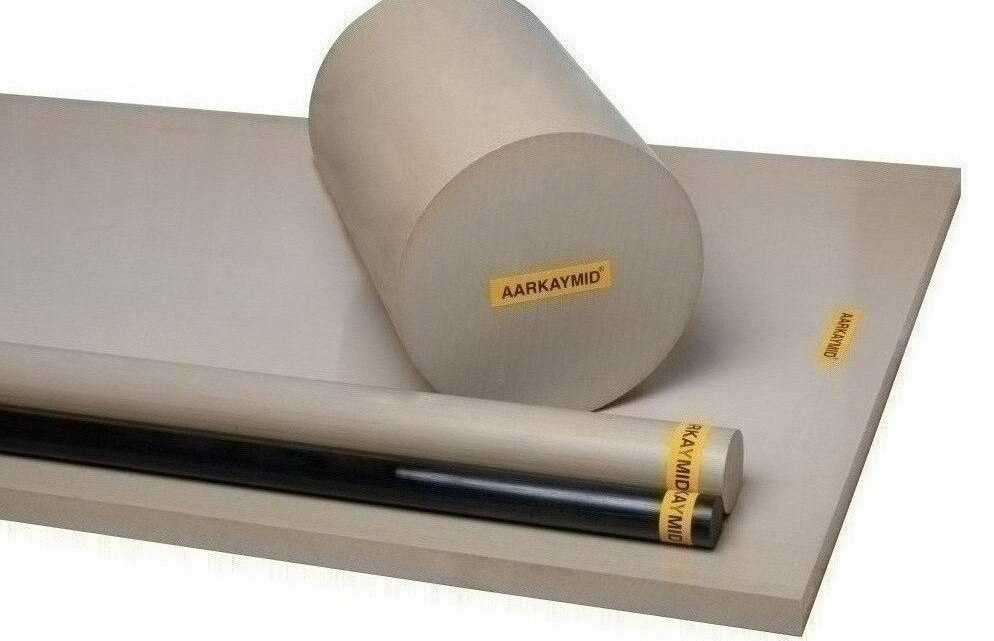
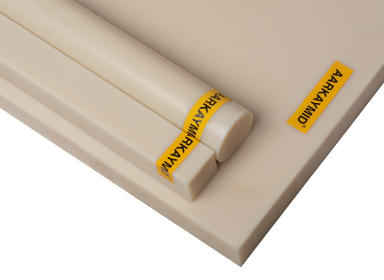 | Polyamide Natural Cast Polyamide 6 (Cast Nylon 6 or PA 6) is one of the most versatile thermoplastics. View product → |
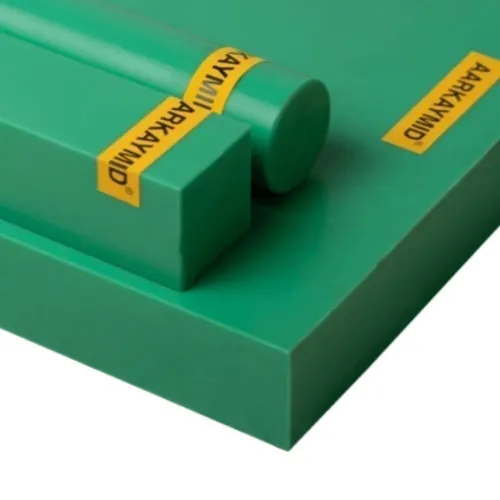
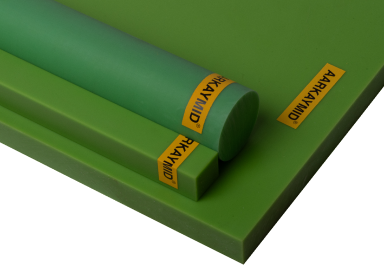 | Polyamide Green Cast Polyamide 6 (Cast Nylon 6 or PA 6) is one of the most versatile thermoplastics. View product → |
Frequently asked questions
How does a nylon tube become a wear-resistant machine part?
Use the bore to guide the shaft, the outside diameter to locate the tube, and the wall thickness to carry radial load. This creates a replaceable sacrificial sliding surface.
What does MoS2 add to nylon during sliding contact?
Molybdenum disulfide reduces friction within the polyamide during sliding contact, making MoS2 nylon useful where dry-running friction and wear matter.
Which operating conditions determine whether polyamide wears slowly?
Load, sliding speed, contact pressure, temperature, lubrication, shaft finish and abrasive contamination determine wear performance. Evaluate them together rather than choosing material by name alone.
How do moisture, heat and creep change a nylon tube's fit?
Moisture changes nylon's dimensions and stiffness, heat increases expansion and softening, and sustained load causes creep. Include those effects when setting bore clearance and wall dimensions.
How should you specify, machine and qualify a nylon wear tube?
Specify the polyamide grade, MoS2 content when required, dimensions, tolerances, operating conditions and shaft material. Machine without overheating, then qualify the finished tube under its actual load, speed and environment.
Related products
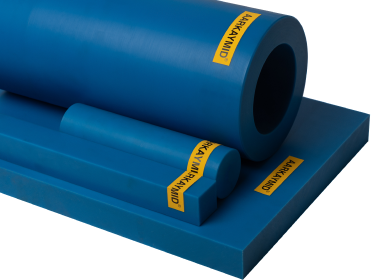 | Polyamide XLU Grade Cast Polyamide 6 (Cast Nylon 6 or PA 6) is one of the most versatile thermoplastics. View product → |
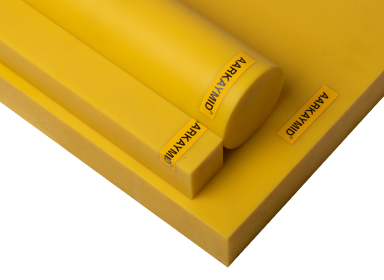 | Polyamide Yellow Dimensional Stable Polyamide Yellow Dimensional Stable Cast Polyamide 6 (Cast Nylon 6 or PA 6) is one of the most versatile thermoplastics. View product → |
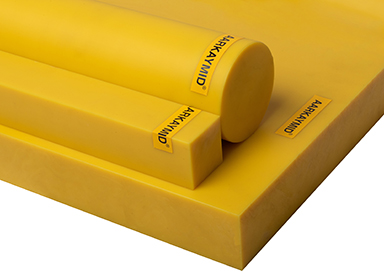 | Polyamide PA 612 Cast Polyamide 6 (Cast Nylon 6 or PA 6) is one of the most versatile thermoplastics. View product → |
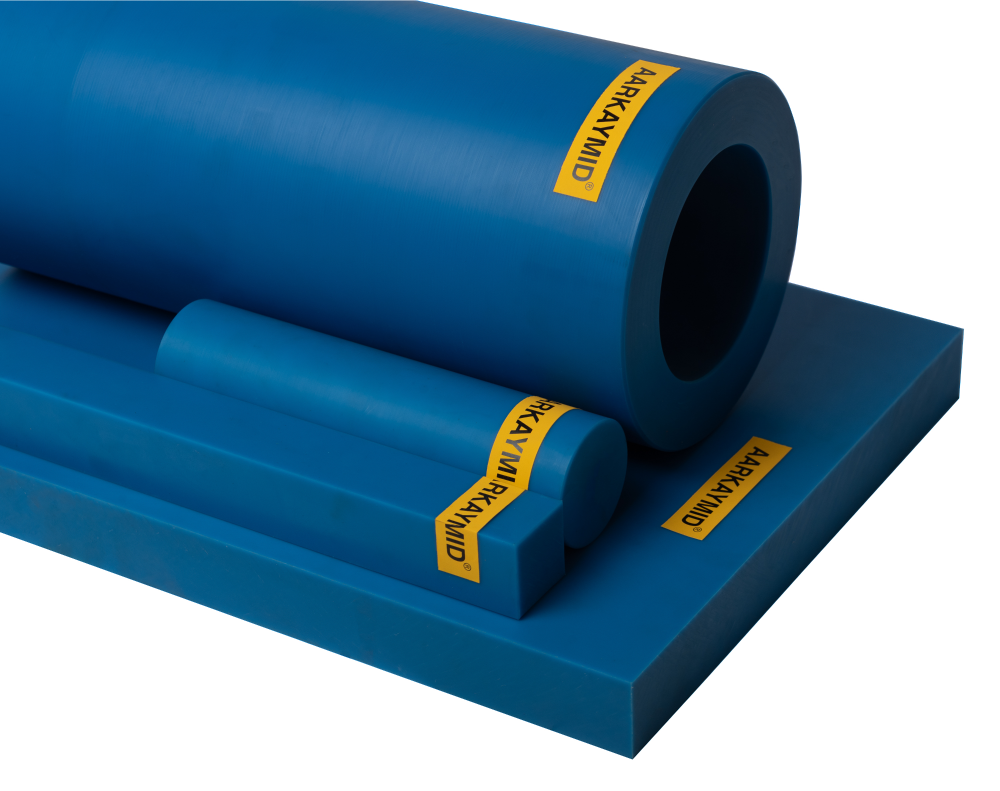 | Polyamide - XLU Cast Polyamide 6 (Cast Nylon 6 or PA 6) is one of the most versatile thermoplastics. View product → |