
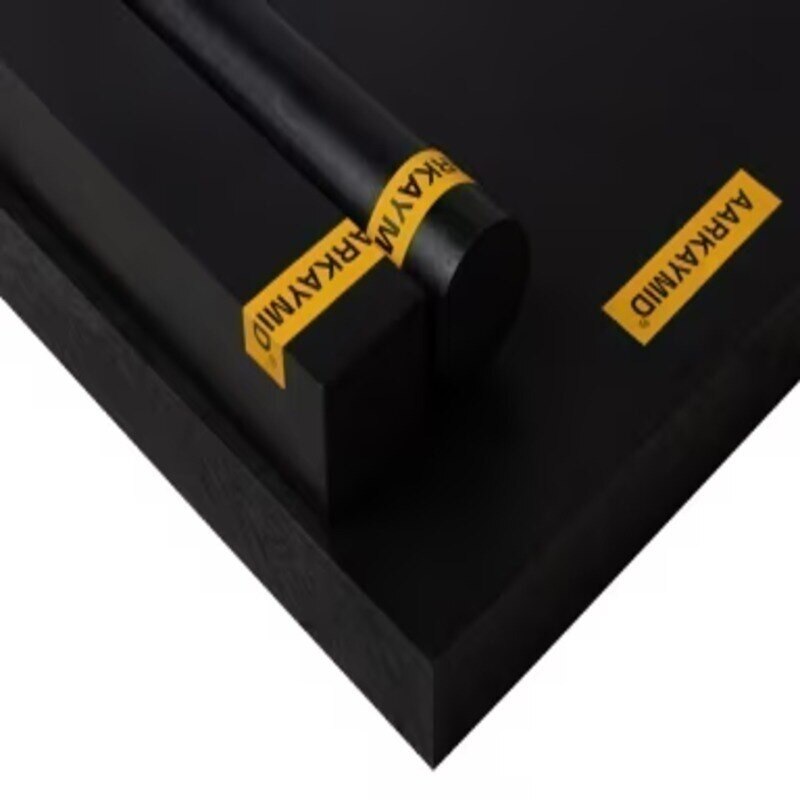
A tube quotation is incomplete when it names only UHMW and a nominal diameter. You need a defined material grade, OD and ID, tolerances, application conditions, inspection documents and delivery terms before you can compare suppliers or approve the part for service.
Key takeaways
- Specify OD, ID, wall thickness and tolerances instead of nominal pipe size.
- Match UHMW-PE grade to load, wear, temperature and chemical exposure.
- Request processing details, inspection records, batch traceability and material documents.
- Send drawings, service conditions and quantities for comparable quotations.
What should a UHMW tube supply include?
A complete UHMW tube supply confirms the tube form, dimensions, material and delivery conditions. Do not accept “UHMW” or a nominal pipe size as the specification: UHMW-PE tube dimensions are usually agreed separately by outside diameter (OD), inside diameter (ID), wall thickness and tolerances.
1. Request the supply and dimension details: finished stock, raw tube, made-to-order extrusion, or tube machined from billet, rod or plate; OD; ID; wall thickness; straight length; cut-length options; OD, ID and wall tolerances; straightness; ovality; surface finish; minimum order quantity; and lead time.
Ask whether the quoted UHMW tube availability means finished pieces on the shelf, raw tube awaiting cutting, or a production slot.
2. Identify the material precisely. Record the exact UHMW-PE grade, natural or black colour, molecular-weight designation, density, hardness, coefficient of friction, wear data, impact strength and electrical properties.
Request an ASTM D4020 reference where applicable, but do not treat ASTM D4020 as a dimensional standard: it does not guarantee a tube diameter, wall tolerance or pressure rating.
3. Confirm how the tube will arrive and be protected. State the standard length, permitted cut lengths, packaging against crushing or bending, lot segregation and storage history. Thermal expansion can alter a tube’s fit against metal parts, so request the measurement temperature and inspection method with the uhmw tube specifications.
How do you specify dimensions for the actual application?
Start with the mating part, not a nominal pipe size. For a shaft, bearing, roller, chute, guide, liner, spacer, fluid-contact part or insulation application, state the required outside diameter (OD), inside diameter (ID), wall thickness, unsupported length, mating shaft or housing, running clearance and cut length.
1. State whether each dimension applies to raw tube, cut tube or the finished machined part. For uhmw tube specifications, request OD and ID tolerances, wall-thickness variation, straightness, roundness or ovality, cut-length tolerance and surface finish for both relevant surfaces.
2. Define how the supplier will verify those values: measurement temperature, datum points, gauge or instrument, sampling frequency and inspection method. UHMW-PE expands far more than metal, so a bore that fits cold can tighten or loosen in service.
3. Give the supplier the engineering inputs for collapse under external pressure, sustained load and creep: temperature, fluid, unsupported length, wall geometry, loading duration and required safety factor. Include machining stock when the tube will receive a bore, groove, flange or other feature.
4. Reject the design or choose another material for high-temperature service, tight-tolerance bearing fits, high-pressure containment, severe creep loading or solvent-bonded joints. UHMW’s low friction and abrasion resistance do not overcome its limited stiffness.
Good uhmw tube purchasing therefore requires a drawing or controlled dimension sheet, not only “tube” and a diameter.
Which UHMW grade and material alternative fit the service?
Choose the grade from the service, not from “UHMW” alone. Compare hardness, abrasion wear, friction, impact, creep, temperature range and electrical behaviour for natural, black, conductive, dissipative, food-contact and other regulated grades; additives can change each property.
Check water, oils, fuels, solvents, acids, alkalis and oxidising chemicals at the actual concentration, temperature, exposure time and stress state. A tube that resists an unstressed aqueous solution can fail under load, heat or solvent exposure.
For food-contact service, ask an UHMW tube supplier to identify:
- The applicable regulation and exact grade declaration or certificate
- The permitted temperature limit and food type
- Whether the declaration covers repeated-use conditions
Your UHMW tube specifications should include those documents, not merely “food grade.”
| Option | Best advantage | Main trade-off |
|---|---|---|
| UHMW | Wear, impact and low friction | Low stiffness, creep and limited temperature |
| Nylon | Stiffness and machining | Moisture uptake and lower chemical resistance |
| PTFE | Lowest friction and broad chemical resistance | Creep, low wear strength and cost |
| Polyurethane | Elastic impact and abrasion resistance | Higher friction and machining difficulty |
| HDPE | Chemical resistance and economy | Less wear performance and stiffness |
| Acetal | Stiffness, finish and dimensional control | Oxidising-chemical sensitivity |
| Metal tube | Pressure, stiffness and temperature | Weight, friction, corrosion and joint work |
| Machined UHMW bore-and-sleeve assembly | Nonstandard bore and replaceable wear surface | More machining, joints and replacement downtime |
What processing, inspection and documents belong in the order?
Specify every machining operation, not just the finished length. The order can include cut-to-length pieces, turned ends, drilled holes, grooves, slots, counterbores, flanges and finished bores. State whether each dimension applies before or after machining, and require control of tool selection, clamping, heat buildup, bore distortion, burrs, residual stress, surface damage and achievable tolerances.
An extruded tube is economical for repeat volumes when its standard OD, ID and wall meet the design. Machining from solid UHMW-PE stock justifies its waste when you need a nonstandard bore, flange or tighter feature control.
Ask the UHMW tube supplier to identify whether quoted uhmw tube availability means finished stock, raw tube or a production slot.
Use this receiving and order procedure:
- Record OD, ID, wall thickness, ovality, straightness, cut length, surface damage, colour consistency and identification marks; specify the measurement temperature, method and tolerances.
- Require a certificate of conformity, batch or lot number, dimensional inspection report, technical data sheet and safety information.
- Add REACH, RoHS or food-contact declarations when the application or customer requires them.
- Define packing with internal support against crushing and bending, clean protective wrapping, contamination control and ultraviolet protection.
- Require lot segregation and storage history, especially for stocked tubes held before dispatch.
Reject or quarantine pieces that arrive bowed, crushed, mixed between lots or marked beyond the agreed surface limit. Inadequate support can turn an acceptable tube into a distorted one during transport.
What should you send a supplier to obtain a comparable quotation?
Send one drawing or sample with this uhmw tube purchasing checklist:
- Application temperature, load, speed, mating material, media and concentration
- Required UHMW-PE grade, colour, OD, ID, wall thickness, straight length, quantity and delivery location
- Machining features, inspection requirements, tolerances and required documents
- Packing requirements and protection against crushing, bending or heat in transit
Ask the uhmw tube supplier to state whether dimensions are available as finished stock, raw tube or a production slot. Confirm the measurement temperature, OD and ID tolerances, wall variation, straightness, ovality, cut-length tolerance and surface finish. Do not treat ASTM D4020 as proof of a particular diameter, pressure rating or dimensional tolerance.
Compare every quotation using the same cost lines, not material price alone.
| Quotation basis | What to record | What it changes |
|---|---|---|
| Standard stock | Material, cutting, freight, minimum order and delivery charges | Usually fastest; verify cut accuracy and stock condition |
| Made-to-order extrusion | Material, tooling, setup, minimum quantity, freight and lead time | Economical for repeat volumes; confirm production slot |
| Machined tube | Solid-stock material, machining, tooling, waste, inspection, freight and expedited delivery | Suits unusual bores or tighter features; costs more through waste |
Ask whether the supplier will reserve the batch and provide replacement continuity. Use this checklist when comparing Classic Polymers & Resins with other suppliers, after confirming that the requested tube form and dimensions are available.
Frequently asked questions
What should a UHMW tube supply include?
Confirm the tube form, OD, ID, wall thickness, tolerances, UHMW-PE grade, quantity, delivery condition and required documents.
How do you specify UHMW tube dimensions for an application?
Provide the required OD, ID, wall thickness, length, dimensional tolerances, end condition and any drawing features such as holes, grooves or threads.
Which UHMW grade or material alternative fits the service?
Choose the grade by load, sliding speed, abrasion, impact, temperature, chemicals and static-control needs; compare PTFE, HDPE, nylon or other polymers when those conditions demand different performance.
What processing, inspection and documents belong in the order?
State cutting or machining requirements, surface and end-finish expectations, inspection points, dimensional reports, batch identification, certificate requirements and packaging.
What should you send a UHMW tube supplier for a comparable quotation?
Send a drawing or dimension table, material grade, service conditions, quantity, lengths, tolerances, processing requirements, inspection documents and delivery location.