
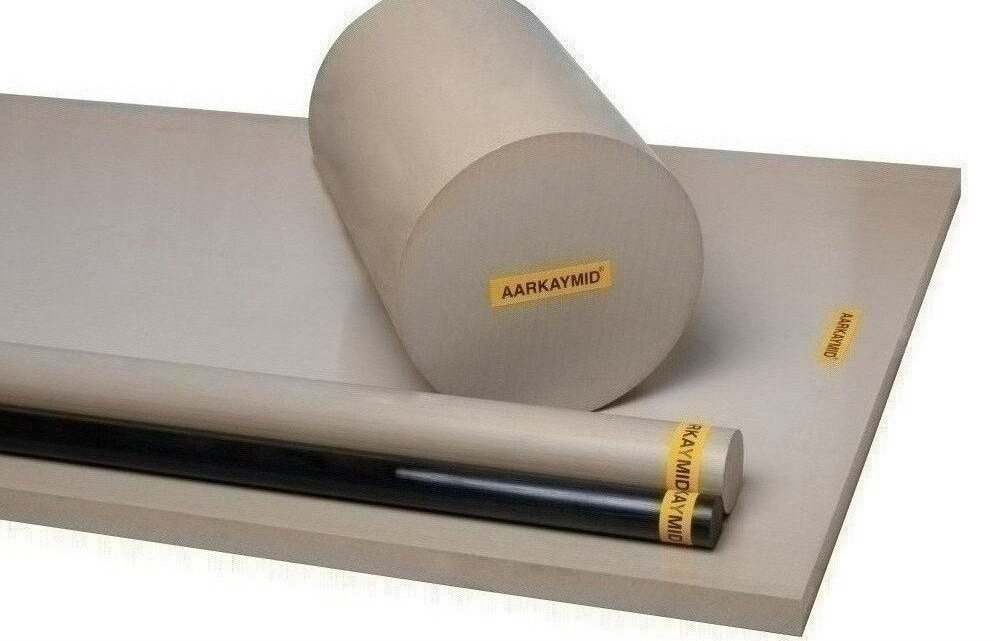
Choosing an XLU nylon tube starts with identifying whether you need a sliding-wear component or a pressure-rated fluid tube; the same hollow stock can serve as a bushing blank but is not automatically qualified for conveying fluids. By the end, you will be able to match XLU to an application, specify the dimensions and service conditions, check moisture and chemical effects, and give a machinist or supplier a usable purchasing brief.
Key takeaways
- Confirm the producer’s exact XLU grade datasheet before ordering.
- Compare bore, wall thickness, tolerances and operating temperature—not the XLU name alone.
- Account for moisture absorption before fixing dimensions or clearances.
- Inspect tube surfaces, dimensions and fittings after installation.
What XLU means—and why it matters in a nylon tube
XLU is generally a commercial designation for internally lubricated cast polyamide 6 (PA 6), not a universal ASTM or ISO material specification. It is commonly sold under names such as Nylatron XLU. Ask for the producer’s exact grade datasheet before treating “XLU” as a defined material.
The lubricant is incorporated into the nylon to reduce friction and improve sliding-wear performance. Compared with unfilled cast nylon, that benefit reduces the basis for assuming maximum tensile strength, stiffness or impact resistance. XLU industrial tubes therefore suit sliding parts, not every nylon-duty application.
| Material | Primary advantage | Selection caution |
|---|---|---|
| XLU cast PA 6 | Low friction and sliding wear | Verify grade-specific strength, stiffness and pressure data |
| Standard cast PA 6 | Strong, machinable wear stock | Higher friction without internal lubrication |
| PA 612 | Lower moisture response and useful chemical resistance | Confirm strength and temperature data for the grade |
| Extruded PA 6 | Process consistency and tubing dimensions | Do not assume the same wear performance as cast XLU |
| PA 12 | Lower moisture uptake and flexible tubing potential | Check stiffness, chemical resistance and pressure rating |
| PA 66 | Higher stiffness and strength potential | Moisture response and processing consistency need comparison |
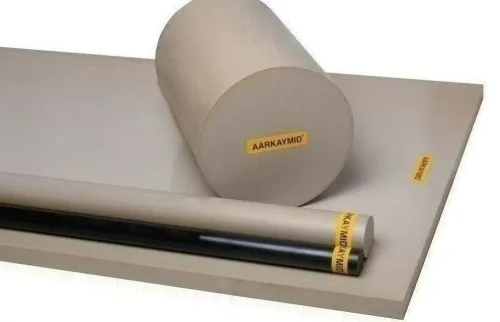
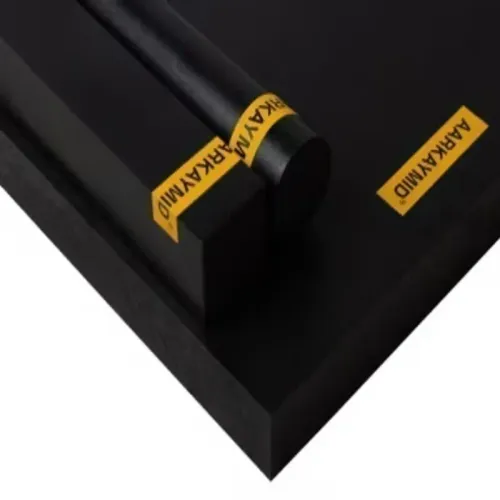
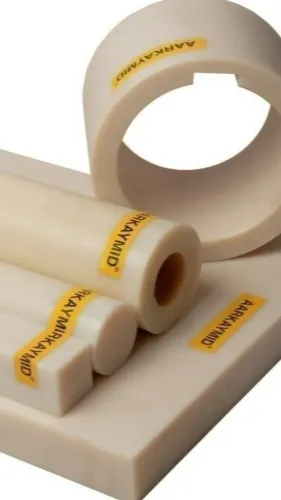
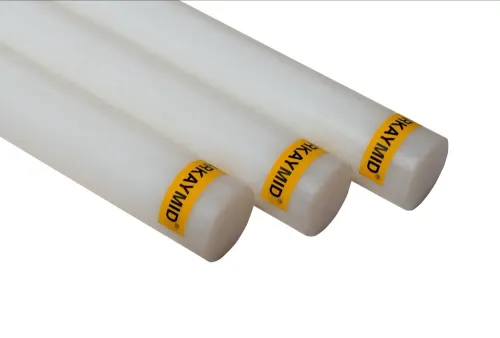
Many polyamide XLU applications use cast hollow stock machined into rings, sleeves, bushings or wear guides. “Tube” therefore does not prove that the product is an extruded, pressure-rated tube. Many XLU tube manufacturing parts are machinable stock rather than qualified fluid conduits; obtain burst, creep and fatigue data before using them in a pressure system.
Where XLU nylon tubes work as manufacturing parts
XLU nylon tubes work best as machined stock for parts that need low friction and sliding-wear resistance, not as automatically pressure-rated hose. Common XLU nylon tube industrial applications include:
| Part made from tube | Operating function |
|---|---|
| Spacers and isolation sleeves | Provide controlled spacing or electrical separation |
| Bushings and bearing liners | Support oscillating or rotating shafts |
| Wear rings, guide rings and wear sleeves | Reduce damage at sliding interfaces |
| Rollers, pulley components and chain guides | Operate where continuous lubrication is difficult |
| Cable guides and routing elements | Provide low-friction cable movement |
| Seals and protective sleeves | Protect surfaces where the design and chemical exposure support nylon |
| Low-pressure air or fluid lines | Convey media only after pressure and material data are verified |
The internally incorporated lubricant reduces friction and external lubrication needs in these XLU nylon components. That benefit drives the selection of xlu industrial tubes; it does not create a universal pressure rating.
For a rotating part, calculate clearance from shaft tolerance, moisture swelling, thermal expansion, misalignment and frictional heat. A tight room-temperature fit can seize after humidity uptake or temperature rise.
Use a tube for air or fluid only after verifying the exact wall thickness for pressure, temperature, burst, creep, fatigue and permeation. Do not treat bearing-grade PV data as pressure-system qualification. A pressure-line decision needs separate evidence.
How to specify and compare an XLU tube before ordering
Specify the exact grade and form before comparing prices. For xlu nylon components, require inside diameter, outside diameter, wall thickness, cut length, straightness, roundness, concentricity, dimensional tolerances, colour, allowable surface defects, and the conditioning or moisture state used for inspection.
Also provide the service envelope:
- Operating temperature, pressure, sliding speed, radial or axial load, duty cycle, required wear life and lubrication condition.
- Grade-specific hardness, tensile strength, stiffness, water absorption, friction and PV data.
- The continuous-temperature basis for a loaded bearing, including frictional heat. A catalogue maximum temperature is not a permissible loaded bearing temperature.
A complete request for xlu tube manufacturing parts should identify whether the stock is cast or extruded. Compare these alternatives:
| Option | Advantage | Limitation |
|---|---|---|
| PTFE | Chemical resistance and low friction | Lower stiffness and creep resistance |
| POM/acetal | Dimensional stability and stiffness | Less forgiving in some chemical or wear duties |
| UHMW-PE | Strong wear resistance | Lower temperature capability |
| Polyurethane | Elasticity and impact compliance | Less rigid and dimensionally stable |
| Metal tubing | Pressure strength and heat resistance | Weight, corrosion concerns and machining cost |
| Extruded nylon | More consistent tubing dimensions | May not match cast XLU wear performance |
| Cast XLU | Machinable wear stock for polyamide XLU applications | Requires machining and grade-specific validation |
Choose based on replacement frequency, machining time and total maintenance cost, not material price alone. XLU prioritises sliding wear; it does not automatically provide the strength, stiffness or pressure qualification of another material. Verify burst, creep, fatigue and permeation data before using it as pressure tubing.
How moisture, chemicals and machining change the design
Cast nylon absorbs atmospheric moisture, changing dimensions, mass, stiffness and electrical properties. Decide whether inspection occurs dry, after conditioning at the intended service humidity, or after immersion, then measure every part in the same state used for the fit calculation.
1. Validate the service environment before approving polyamide XLU applications. Check oils, fuels, coolants, water, solvents, detergents and cleaning agents at the actual concentration, temperature and exposure time. Treat acids, strong alkalis, oxidizers, continuous water exposure and elevated temperature as triggers for compatibility data or an immersion and mechanical-retention test.
2. Define the machining method for the intended XLU nylon tube industrial applications. Use sharp, properly supported tools, generous chip clearance, light finishing cuts and active heat control. Support thin walls internally or externally, leave allowance for stress relaxation and dimensional movement, and never force a flexible tube to final size in one heavy cut.
3. Turn outside diameters; bore or ream inside diameters. Let the part cool and stabilise before checking roundness and wall thickness, because heat and released machining stress can move both dimensions after cutting.
4. Use the exact grade datasheet for numerical temperature, pressure, friction-coefficient and tolerance limits. The XLU name alone supplies none of them, so do not approve a design from a generic catalogue value.
How to install, inspect and procure XLU industrial tubes
Choose a slip fit when an XLU tube must accommodate thermal expansion or moisture movement. Use a press fit only after calculating interference at the conditioned service temperature and humidity; a tight room-temperature fit can seize after nylon absorbs moisture.
- Control axial movement with a shoulder, retaining ring, clamp or compatible adhesive. Do not rely on friction alone in a vibrating assembly.
- For air or fluid routing, confirm the manufacturer’s minimum bend radius or install a rigid guide. Use clamps and bend supports to prevent crushing, kinking and ovalisation.
- Deburr the ends and chamfer insertion edges. Prevent shaft misalignment, and verify that assembly forces cannot collapse a thin wall.
- Inspect inside diameter, outside diameter, roundness, wall thickness, cut length and visible defects against the purchase drawing. Record the batch or lot, storage or conditioning state and measurement condition.
- Specify the exact XLU grade, cast or extruded form, dimensions, tolerances, colour, allowable defects and required inspection report. Add service fluid, pressure, temperature, radial or axial load, sliding speed and duty cycle.
- For rotating XLU industrial tubes or other XLU nylon components, include shaft tolerance, misalignment, frictional heat and required wear life. A bearing-grade PV value does not qualify a tube for pressure service.
- State whether the part will become machined xlu tube manufacturing parts, cast hollow stock or pressure-rated tubing. Classic Polymers & Resins can help match cast hollow stock or machined polymer components to these data, but the grade datasheet and application conditions remain necessary.
Related products
 | Polyamide XLU Grade Cast Polyamide 6 (Cast Nylon 6 or PA 6) is one of the most versatile thermoplastics. View product → |
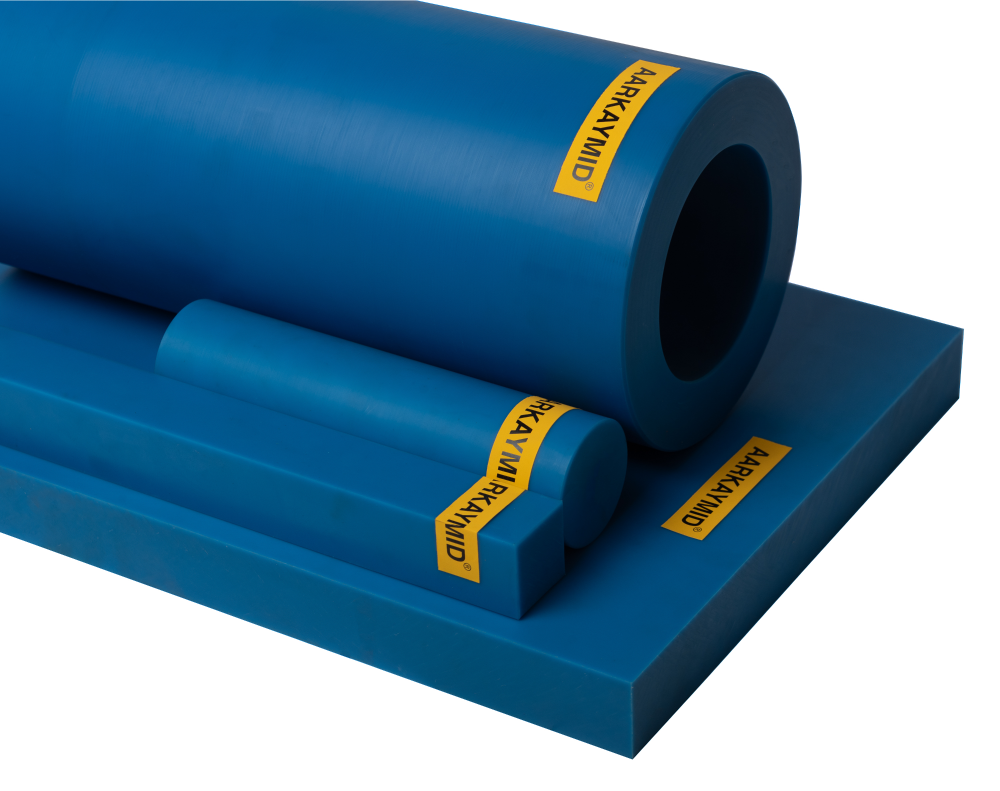 | Polyamide - XLU Cast Polyamide 6 (Cast Nylon 6 or PA 6) is one of the most versatile thermoplastics. View product → |
Frequently asked questions
What does XLU mean in a nylon tube?
XLU is generally a commercial designation for internally lubricated cast polyamide 6, or PA 6. It is not a universal ASTM or ISO material specification, so ask for the producer’s exact grade datasheet.
Where are XLU nylon tubes used as manufacturing parts?
They are used for wear sleeves, bushings, spacers, rollers, guides, bearings, insulating supports and other parts that need low friction, wear resistance and machinability.
What should you compare before ordering an XLU tube?
Compare the exact grade, tube dimensions, bore and outside-diameter tolerances, temperature limits, moisture-conditioning data, chemical resistance and machining allowance.
How do moisture, chemicals and machining affect XLU tube design?
Moisture changes nylon dimensions and mechanical properties, chemicals can cause swelling or degradation, and machining can alter fit through heat, residual stress and tool pressure.