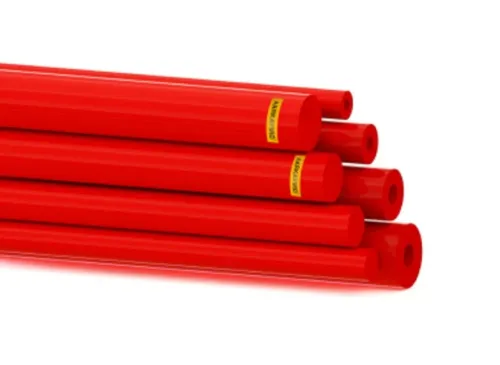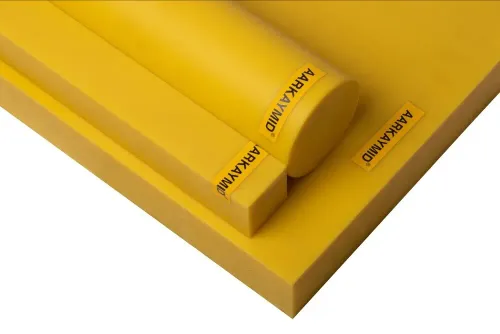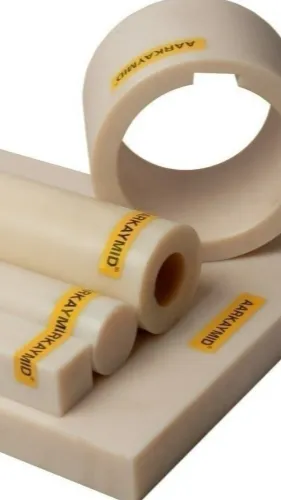

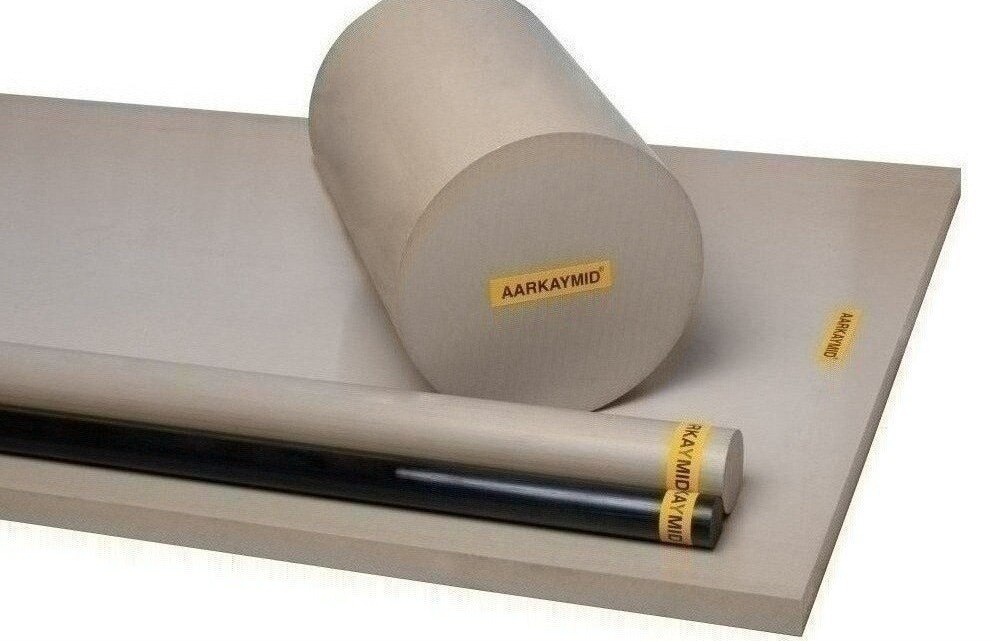
An extruded nylon tube is usually a supporting component in a protective-panel assembly, not a replacement for the flat panel face. The right choice depends on the tube’s geometry, polyamide grade, moisture condition, loading, environment and the specific protection the assembly must provide; by the end, you can specify, compare and qualify it without treating “nylon tube” as a complete material specification.
Key takeaways
- Use nylon tube as a spacer, sleeve, rail or guard—not as a continuous panel face.
- Compare nylon grades with UHMW-PE, acetal, polycarbonate and metal for the actual duty.
- Size wall thickness and support spacing for load, deflection, moisture and creep.
- Specify dimensions, tolerances, environment, tests and installed-assembly acceptance criteria.
Where a Nylon Tube Fits in a Protective-Panel Assembly
No, an extruded nylon tube cannot replace the face of a conventional industrial protective panel. Its hollow, cylindrical geometry leaves open space, so it cannot create a continuous flat barrier unless you cut, split, flatten or integrate the tube into a frame.
An extruded nylon tube for protective panels fits where the assembly needs a structural or contact component:
- Guard rails around an opening
- Edge protectors on panel boundaries
- Stand-off spacers between a panel and its frame
- Frame members for a lightweight guard
- Cable-routing sleeves
- Wear sleeves over shafts or contact surfaces
- Isolators between dissimilar materials
- Rollers for sliding or folding guards
- Impact-contact inserts at bump points
These duties differ from panel-face functions. Dust containment, chemical-splash blocking, visual guarding and enclosing a moving machine require a continuous surface with controlled gaps and attachment points. A tube can support, space, cushion or protect that system, but it cannot seal or visually close it by itself.
Choose a flat extruded nylon sheet when the barrier needs nylon’s mechanical and wear properties. Choose polycarbonate when transparency matters, or a metal guard when high stiffness, heat resistance or severe impact governs the design. For a continuous panel face, the tube is an accessory; it is not the barrier.
Choose the Polyamide Grade and Compare the Alternatives
Before approving extruded nylon tube applications, compare PA6, PA66 and PA12 against the actual load, humidity and temperature—not against the generic word “nylon.” PA6 and PA66 generally provide higher stiffness than PA12 but absorb more moisture; PA12 often gives better dimensional stability and impact behaviour when humidity changes matter.
| Material | Main advantage | Limitation or suitable use |
|---|---|---|
| PA6 | Stiffness, strength and availability | Greater moisture-related change |
| PA66 | High stiffness and temperature capability | Moisture uptake and dimensional change |
| PA12 | Dimensional stability and impact behaviour | Lower stiffness than PA6 or PA66 |
| Flat extruded nylon sheet | Continuous panel surface | Not a hollow tube component |
| Cast nylon tube | Thick sections and machined shapes | Compare tolerances and properties with extrusion |
| Polyethylene | Lower moisture uptake | Lower stiffness in selected duties |
| Acetal | Low moisture uptake and sliding performance | Check chemical and temperature limits |
| UHMW-PE | Very low-friction wear | Lower stiffness and difficult bonding |
| Polycarbonate | Transparency and impact visibility | Check chemical compatibility |
| ABS or PVC | Lower cost, forming or enclosure options | Mechanical performance can be below nylon |
| Metal guard | High stiffness and heat resistance | Greater mass, corrosion or electrical-conductivity concerns |
Use dry-as-moulded and conditioned data separately when setting clearances, interference fits, clamp loads or deflection limits. Request the exact extruded polyamide tube grade, including plasticized, glass-fibre-reinforced, heat-stabilized, UV-stabilized or flame-retardant formulation.
Flame performance requires a grade-specific UL 94 result at the actual wall thickness. A “flame-retardant” claim alone proves nothing about V-0, V-1 or V-2 performance.
Size the Tube for Load, Deflection and Long-Term Creep
A tube survives as a guard, support or spacer only when its geometry, restraint and service conditions match the load. Use this selection procedure:
1. Record the outside diameter, inside diameter, wall thickness, total length, unsupported span and allowable deflection. For a hollow circular section, bending stiffness depends on the second moment of area: I = π/64(Do⁴ − Di⁴). Increasing outside diameter usually raises stiffness more effectively than adding the same amount of wall thickness.
2. Define the load case: static force, impact energy, mounting method, clamp or bolt spacing, contact area and load direction. Check beam deflection, then check local crushing beneath clamps, bolts and impact points; a tube can dent locally while its calculated span deflection remains acceptable.
3. State operating temperature, chemical exposure and UV exposure. Use material data at the actual service condition, not only dry catalogue values.
4. Treat sustained compression as a separate creep calculation. Nylon spacers can lose preload or flatten, especially with heat and humidity. Increase bearing areas, use metal washers, reduce sustained stress or specify a creep-rated reinforced grade.
5. For people protection, moving machinery or safety-critical equipment, test a representative installed assembly at the actual span, mounting load, temperature and humidity. Include the specified impact energy and inspect deflection, crushing, cracking and retained preload; catalogue strength alone is insufficient.
Account for Moisture, Chemicals, Heat, UV and the Intended Protection
Apparently suitable nylon tube fails when moisture, chemistry, heat, UV or installation changes its dimensions or strength. Nylon absorbs atmospheric moisture, so dimensions, stiffness and mechanical behaviour shift; use supplier data at the humidity and temperature expected in service, then verify it with humidity conditioning and temperature cycling.
Compare the intended protection before selecting the material:
- Impact needs toughness and energy absorption.
- Abrasion needs wear resistance.
- Electrical insulation needs stable dielectric performance.
- Chemical splash needs grade-specific compatibility.
- Dust containment needs a continuous seal.
- Visual guarding needs an unbroken, transparent or opaque barrier.
A tube can support some duties, not all. Use a flat panel for containment or guarding.
| Exposure | Check before approval | Failure risk |
|---|---|---|
| Acid, alkali, solvent, oil, grease or hydrocarbon | Exact polyamide, concentration, temperature and exposure time | Swelling, embrittlement or strength loss |
| Heat | Supplier data at the actual continuous and peak temperatures | Softening, creep or loss of stiffness |
| Outdoor UV | UV-stabilized or carbon-black-containing grade | Surface degradation and cracking |
| Compressed air or hydraulic fluid | Pressure rating at operating temperature, service life and safety factor | Burst or leakage |
Pressurized internal service is a separate pressure-tube design; do not infer capability from mechanical tubing. During fabrication, thin walls can ovalize, clamps can crush them, and sawing heat can distort the ends. Inspect OD, ID, wall variation and cut ends after cutting, then verify the installed assembly under actual loads and exposures.
Write a Purchase Specification and Qualify the Installed Assembly
Ask for a controlled specification, not “nylon tube” on a quotation. For an extruded nylon tube supplier in thane, use this template:
- Material: PA6, PA12 or PA66; exact grade and formulation; natural or black colour; UV-stabilized or flame-retardant requirement, including UL 94 rating at the specified wall thickness.
- Geometry: OD, ID, wall thickness, OD and ID tolerances, maximum wall-thickness variation, ovality, straightness and cut-length tolerance.
- Conditions: measurement moisture condition; operating temperature range; chemical exposure, concentration and duration; unsupported length; allowable load, deflection and impact energy.
- Supply: required certificates, controlled sample length, and expected annual quantity.
“Nylon tube” does not establish grade equivalence, pressure capability, UL 94 performance or outdoor life. Request the manufacturer’s dry-as-moulded and conditioned dimensional and mechanical data; do not set clamp loads or clearances from dry data if the assembly sees humidity.
Classic Polymers & Resins becomes useful when this enquiry identifies the tube’s interface with a machined or assembled polymer component, rather than relying on catalogue wording.
Qualify the installed assembly, not just a short dry sample:
- Apply the actual clamp load and test at humidity, temperature cycling, impact, chemical exposure and UV levels representing service.
- Inspect OD, ID, wall variation and cut ends after installation and testing.
- Record preload retention, cracking, wear and deflection. Reject the design if creep, ovalization or chemical damage changes the panel’s protective function.
Related products
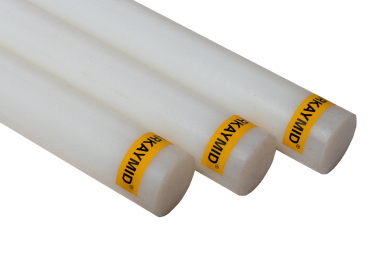 | Polyamide Extruded Extruded Polyamide / Nylon Plastic material, is available in standard stock shapes such as sheets, rods or tubes and can be machined to requirement. View product → |
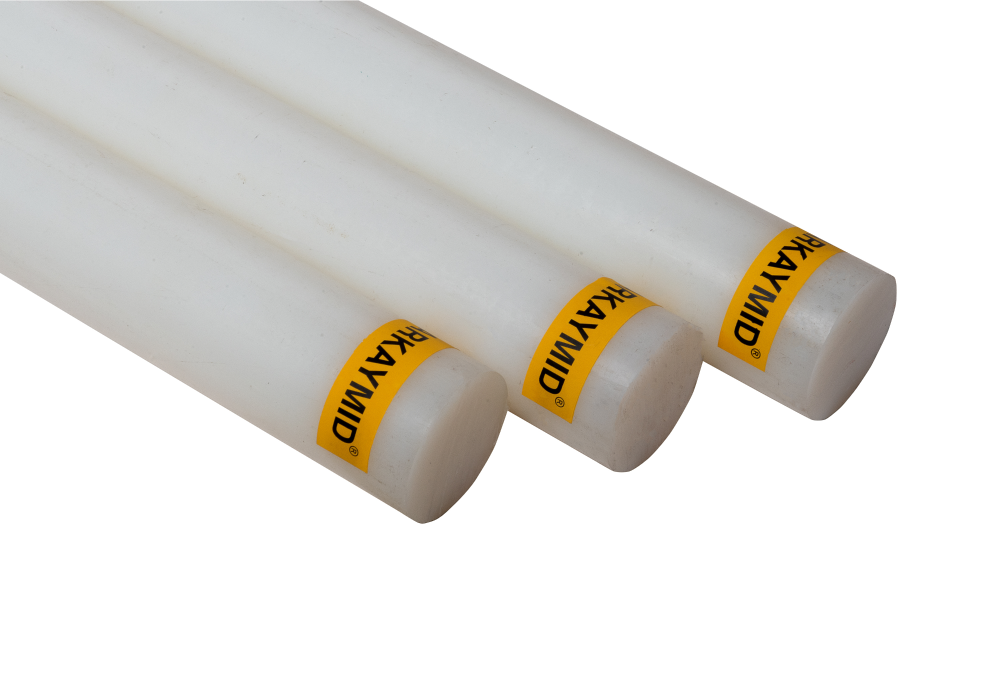 | Polyamide - Extruded Nylon PA 6 Polyamide - Extruded Nylon PA 6 Extruded Polyamide / Nylon Plastic material, is available in standard stock shapes such as sheets, rods or tubes and can be machined to requirement. |
Frequently asked questions
Can an extruded nylon tube replace a protective-panel face?
No. Its hollow cylindrical shape leaves open space, so it cannot form a continuous flat barrier without cutting, flattening or integrating it into a frame.
Where does an extruded nylon tube fit in a protective-panel assembly?
Use it as a spacer, sleeve, standoff, edge guard, cable guide or frame component when the assembly does not require a continuous impact-resistant face.
How should you choose between nylon and alternative materials?
Compare the nylon grade with UHMW-PE, acetal, polycarbonate and metal against load, wear, moisture absorption, chemical exposure, temperature, UV and required transparency.
What must a purchase specification for extruded polyamide tube include?
State the polyamide grade, inside and outside diameters, wall thickness, length, tolerances, colour, surface finish, environment, test method and packaging requirements.