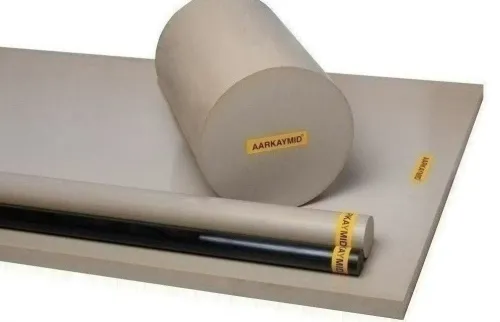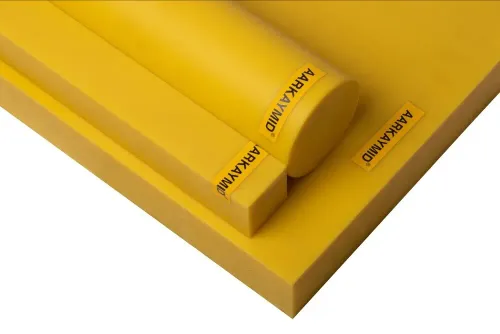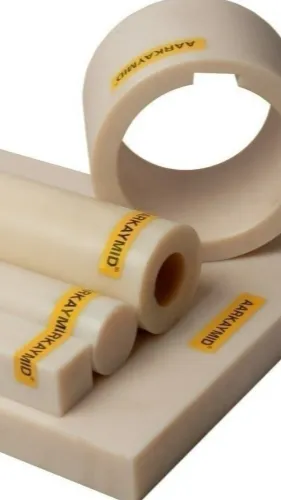

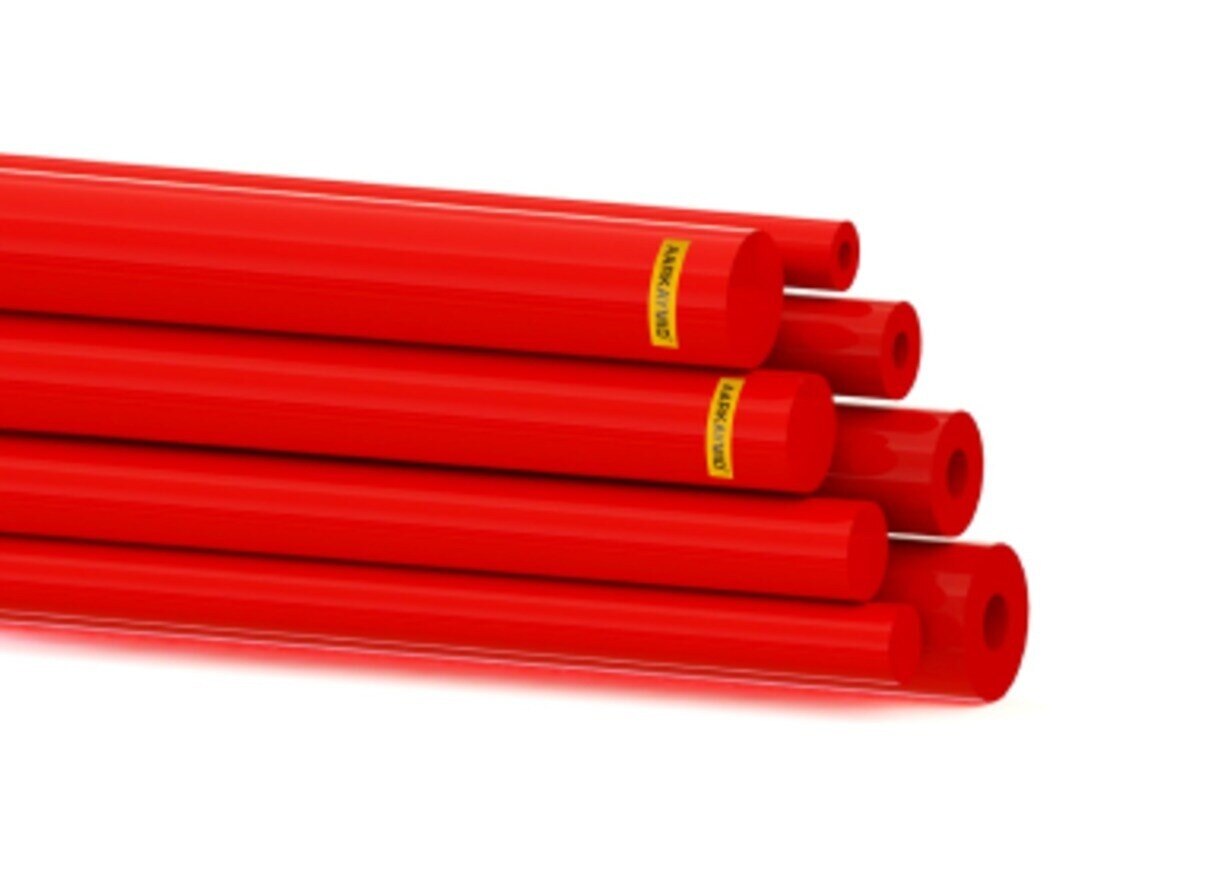
A polyurethane plate can produce useful machined parts, but it will not behave like Delrin, nylon, or PEEK when you clamp, cut, measure, and release it. You will be able to decide whether the grade fits your part, set realistic tolerance expectations, choose a machining method, and specify the material clearly before requesting a quote.
Key takeaways
- Identify cast polyurethane or TPU before choosing tools or cutting conditions.
- Support the plate firmly to limit deflection, vibration, and elastic recovery.
- Control heat because polyurethane softens, smears, and changes size during machining.
- Compare creep, compliance, and chemical resistance against the application’s actual demands.
Start with the polyurethane grade, not the word PU
Cast polyurethane elastomer plate and thermoplastic polyurethane (TPU) plate are different starting points for precision machining. Cast grades are formed by pouring and curing a reactive system; TPU plate is melted and processed thermoplastically. Their chip formation, elastic recovery, residual stress, creep, and thermal expansion can differ even at the same Shore value.
| Option | Typical behaviour | Machining implication |
|---|---|---|
| Cast polyurethane elastomer | Broad hardness range, resilient, wear-focused, post-cure dependent | Check stress relief, support, and recovery before holding a tight dimension |
| Thermoplastic polyurethane plate | Heat-history dependent, often more uniform, still elastic and creep-prone | Control heat and verify dimensions after conditioning |
Shore A or Shore D hardness is an indentation result, not a prediction of machinability, tensile strength, wear life, or dimensional stability. A supplier’s stock thickness or flatness tolerance does not become the finished-part tolerance. Thin, lightly supported parts can deflect, creep, spring back, or change size after release, making rigid metal-like tolerances unrealistic.
For polyurethane plate for precision machining businesses, request:
- Polymer family, cast or thermoplastic route, density, tensile and tear data, abrasion method and result, compression set, operating-temperature range, chemical limits, plate thickness, flatness, post-curing details, and conditioning requirements.
- Define measurement temperature, support state, clamping condition, and inspection timing on critical drawings. These details matter whether you call the material PU material for machinists or specify a documented grade under its full trade designation.
Use sharp tools and supported setups to control the cut
A polished, sharp cutter with positive geometry cuts polyurethane; a dull edge rubs, heats, smears, and pulls the plate out of position. Choose a high-rake, low-rubbing edge, then prove the geometry, cutting speed, feed rate, and flute count on the selected grade instead of copying metal or rigid-plastic charts.
- Back the plate continuously with a rigid surface. Clamp across broad areas with low pressure, keep unsupported overhang minimal, and avoid point clamps that dent or lift the workpiece.
- Mill with continuous chip evacuation, no dwell, and several light passes. Use the same discipline for turning: keep the tool moving and remove only controlled amounts.
- Drill with a sharp, polished drill, clear chips frequently, and prevent the bit from dragging during breakthrough. Deburr with a sharp scraper or very light cutting pass; aggressive abrasion can tear the edge.
- Stop and reassess if the surface becomes glossy or smeared, the cut feels hot, dimensions drift during the cycle, or long elastic strings wrap around the tool. Those signs indicate rubbing, insufficient evacuation, or excessive heat.
For PU plate machining use, test coolant on the actual formulation before production. Water-based fluids, oils, cleaning agents, and additives can cause swelling, softening, hydrolysis, or stress cracking; expose a sample, then recheck dimensions after it equilibrates.
The core rule for pu material for machinists is simple: validate the complete process on the grade, not on a generic polyurethane chart.
Set the process around deformation, recovery, and heat
A machined dimension is not final when the cutter stops. Soft or thin plate can deflect into the fixture, close around a tool, spring back after release, or shrink as it cools, so pu plate machining use demands a process built around deformation and recovery.
- Rough the feature, then allow a relaxation period before finishing.
- Remove stock symmetrically from opposing faces to reduce bow and twist released from casting or sheet stress.
- Take the final light pass from a rigid, continuous backing surface with broad, low-pressure support.
Compare the dimension while clamped, immediately after machining, and after the part has equilibrated at a defined temperature. Record the support condition and inspection timing; a drawing tolerance without those conditions can produce an argument rather than a controlled result.
Hardness changes how polyurethane cuts and behaves in service:
| Hardness | Machining and surface effect | Dimensional and service effect |
|---|---|---|
| Harder grade | Cleaner edges, less compression, more predictable finishing | Less rebound and conformity; usually better dimensional stability and wear resistance |
| Softer grade | More smearing, tearing, and tool-induced deflection | Greater conformity and impact absorption, but more compression and recovery |
For polyurethane plate for precision machining businesses, hardness alone is not enough. A loaded part can fail through permanent deformation even when its Shore value looks suitable, so check compression set under ASTM D395 or ISO 815-1.
Compare that result with the expected load, temperature, and hold time; it often matters more than hardness when the part remains compressed.
Match polyurethane’s compliance to the application and the alternative
Choose polyurethane plate when the finished component needs resilience, abrasion resistance, noise reduction, or conformity—not when it must behave like a rigid datum. Suitable polyurethane plate applications include seals, gaskets, wear pads, wear strips, scraper blades, guide pads, liners, rollers, bump stops, vibration-isolation parts, impact cushions, fixtures, and flexible tooling.
Choose another material for:
- Rigid structural parts, very thin unsupported walls, stable press fits, or sustained high loads
- Continuous high-temperature service, solvent exposure, or strict thermal stability
- Low-moisture dimensional control and long-term accuracy under load
For PU material for machinists, compare the actual grade against the job:
| Option | Stiffness and wear | Impact, chemical and temperature capability | Machining behavior |
|---|---|---|---|
| Polyurethane | Compliant, resilient, abrasion-resistant | Excellent impact absorption; verify solvents and service temperature | Elastic recovery, creep, heat buildup, and deflection complicate tight tolerances |
| Cast nylon | Stiffer with strong wear performance | Good impact performance; moisture can change dimensions | Machines more predictably but needs allowance for moisture |
| Acetal or Delrin | Stable, stiff, low-friction wear surface | Moderate impact and chemical resistance; limited high heat | Clean, predictable machining and dimensional control |
| Polycarbonate | Moderate stiffness; high impact resistance | Excellent impact resistance; solvent sensitivity requires checking | Machines cleanly with controlled heat |
| Polypropylene | Low stiffness and low density | Strong chemical resistance; limited load stiffness | Easy to cut but flexible and prone to deflection |
| PEEK | High stiffness and wear resistance | Strong temperature and chemical capability | Machines well with disciplined tooling but costs more |
If a wear strip must conform to a moving surface, polyurethane plate applications make sense. If the part must hold a press fit or dimension under load, acetal, cast nylon, or PEEK is safer.
Specify the part and supplier data before committing to a quote
A quote based on “PU plate, Shore 90” is not a specification. The right polyurethane plate for precision machining businesses requires documented stock data before you judge machinability, dimensional recovery, or service life in polyurethane plate applications.
1. Ask the supplier to identify the cast or thermoplastic route and polymer family, then state Shore A or Shore D and the nominal value. Request density, tensile and tear properties, abrasion method and result, compression set, operating-temperature range, chemical-resistance limits, plate thickness and flatness tolerances, post-curing, and conditioning requirements.
2. Check test methods, not just numbers. ASTM D2240 or ISO 868 measures indentation hardness; ASTM D412 or ISO 37 reports tensile behaviour; ASTM D395 or ISO 815-1 measures compression set after sustained deformation. Each answers a different question.
3. Put temperature, support, clamping state, and inspection timing on the drawing. Elastic recovery and creep can change dimensions after release, so stock flatness is not finished-part flatness.
4. Qualify threaded holes, press fits, bonded faces, fasteners, shafts, bearings, and housings as assemblies. Polyurethane compliance changes load distribution at every interface, even when the part contains no mixed material.
5. Give the complete data packet to Classic Polymers & Resins and request a documented grade and stock condition matched to your process, not an unspecified plate.
Related product
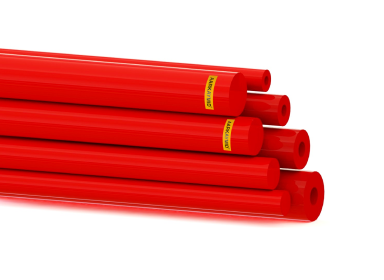 | PU (Polyurethane) Polyurethane is an extraordinary elastomeric material renowned for its exceptional physical properties. View product → |
Frequently asked questions
What is the difference between cast polyurethane plate and TPU plate for machining?
Cast polyurethane is poured and cured from a reactive system, while TPU plate is melted and processed thermoplastically. Their chip formation, elastic recovery, residual stress, creep, and thermal expansion can differ even at the same Shore value.
How do you control deformation when machining polyurethane plate?
Use sharp tools, firm workholding, and support close to the cutting zone. Account for elastic recovery and avoid clamping pressure that distorts the plate before cutting.
Why does heat matter when machining polyurethane plate?
Friction and poor chip evacuation can soften polyurethane, cause smearing, and alter the part’s dimensions. Set cutting conditions to reduce heat and inspect the finished part after it returns to its unstressed shape.
What supplier information should you request before buying polyurethane plate?
Request the exact grade, material type, Shore hardness, plate dimensions, manufacturing method, batch or lot identification, tolerances, and application data such as temperature, chemicals, load, and wear conditions.